




Breast Cancer
Latest News
Advertisement
Latest Videos
CME Content































Advertisement
More News

Obesity significantly increases the risk of dying of breast cancer in premenopausal women with ER-positive early disease.
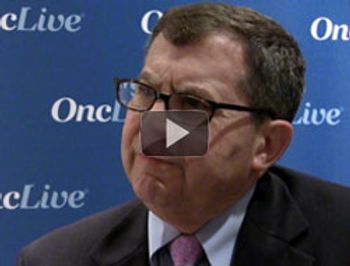
Hyman B. Muss, MD, professor of oncology, University of North Carolina, director, Geriatric Oncology, Lineberger Comprehensive Cancer Center, discusses evaluating cardiac toxicity in patients with breast cancer.

Henry M. Kuerer, MD, PhD, FACS, professor of surgery, Department of Surgical Oncology, The University of Texas MD Anderson Cancer Center, discusses the overtreatment of DCIS.
Judith A. Salerno, MD, MS, president, CEO, Susan G. Komen, comments on donations to breast cancer research.

Fresh insights into outcomes for patients with low-risk, HER2-positive breast cancer suggest that adjuvant chemotherapy regimens with or without trastuzumab (Herceptin) should be considered as options for managing this growing population
Judy C. Boughey, MD, associate professor of surgery, director, Breast Surgical Oncology Training Program, Mayo Clinic, on breast conservation in patients with multiple ipsilateral tumors.

The value of surgery in some women with metastatic breast cancer was challenged by data from studies presented at the recent San Antonio Breast Cancer Symposium

Debu Tripathy, MD, co-leader, Women's Cancer Program, University of Southern California Norris Comprehensive Cancer Center, discusses advances in the treatment of metastatic breast cancer.

Although the potential for next-generation sequencing of breast cancer tumors to improve treatment strategies is widely recognized, questions swirl about the optimal use of such increasingly available technologies in clinical practice for today's patients.

Ellen T. Matloff, MS, CGC, director, Yale Cancer Genetic Counseling Program at the Yale School of Medicine/Yale Cancer Center, gives an overview of the recent changes to the field of genetic testing.

A wide-ranging analysis of more than 5500 breast cancer tumors that combined genomic and protein expression testing has identified promising targets to explore for treating patients with poor prognoses, with particularly notable findings involving androgen receptor (AR) expression
Judith A. Salerno, MD, MS, president, CEO, Susan G. Komen, discusses access to care for patients with breast cancer.
Grant W. Carlson, MD, professor of surgery, Emory University School of Medicine, chief, Division of Plastic Surgery, Emory University Hospital, discusses treating younger patients with breast cancer.
Sunil Verma, MD, MSEd, FRCPC, associate professor, University of Toronto, chair, Breast Medical Oncology, Sunnybrook Odette Cancer Centre, discusses targeting HER2 in early-stage breast cancer.

The recent approval of pertuzumab as part of a combination neoadjuvant treatment for patients with early-stage breast cancer has paved the way for wider use of the regimen in preoperative settings.
An updated guideline from ASCO regarding the use of sentinel lymph node (SLN) biopsy in early stage breast cancer supports the use of the procedure over axillary lymph node dissection (ALND) in a larger group of patients than previously recommended.

Julia White, MD, professor, director, Breast Radiation Oncology, vice chair, Clinical Research, The Ohio State University Comprehensive Cancer Center, discusses the potential to cure patients with metastatic breast cancer.

Donald A. Berry, PhD, is a leader in the development of innovative statistical methodology for the improvement of clinical trial design and analysis, especially the Bayesian methods used in the I-SPY program.
Judy C. Boughey, MD, associate professor of surgery, director, Breast Surgical Oncology Training Program, Mayo Clinic, discusses implications for axillary radiation following review of the ACOSOG Z11 trial.

The adaptive I-SPY 2 trial has found that a neoadjuvant regimen of neratinib and standard chemotherapy is beneficial for high-risk patients with hormone receptor (HR)-negative, HER2-positive stage II/III breast cancer

The combination of palbociclib and letrozole more than doubled PFS and showed a non–statistically significant 4.2-month improvement in OS for patients with ER-positive, HER2-negative metastatic breast cancer.

The CDK4/6 inhibitor LY2835219 demonstrated promising single-agent activity in heavily pretreated patients with HR-positive metastatic breast cancer.

Breast cancer patients whose chemotherapy is initiated >60 days following surgery experience worse survival outcomes

Hyman B. Muss, MD, professor of oncology, University of North Carolina, director, Geriatric Oncology, Lineberger Comprehensive Cancer Center, discusses maximizing cardiac function in patients with breast cancer.
Amid a growing recognition of the need to improve the process of developing oncology drugs, the novel I-SPY 2 clinical trial in breast cancer has demonstrated the potential to deliver new, effective treatment options more rapidly to patients who would most benefit while dramatically reducing the time and costs currently required to evaluate experimental therapies.
Advertisement
Advertisement
Trending on OncLive
1
Single-Center, Retrospective Data Show Low Rate of Lifileucel Infusion Following Referral in Advanced Melanoma
2
Long-Term Cilta-Cel Data Show Low Rates of PFS Events in Standard-Risk R/R Myeloma
3
Real-World Data Support Clinical Benefit With Lifileucel in Previously Treated Advanced Melanoma
4
Dr Riedell on the Long-Term Efficacy of Tisa-Cel in R/R Follicular Lymphoma
5