




Sarcomas
Latest News
Advertisement
Latest Videos

CME Content

































Advertisement
More News

The long-acting IL-7 agent efineptakin alfa was tolerable and led to responses in patients with Kaposi sarcoma, including in HIV-associated disease.
R. Lor Randall, MD, FACS, discusses the enrollment criteria for a trial investigating surgical outcomes in patients with proximal femur metastases.

Neeta Somaiah, MD, highlights the evolving sarcoma treatment paradigm within the past 5 years, including the FDA approval of afamitresgene autoleucel.
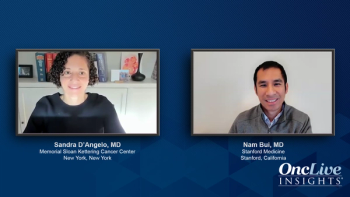
A panelist discusses how the logistical challenges of delivering T-cell receptor (TCR) therapy include coordinating lymphodepletion timing, managing the multiweek manufacturing process, ensuring proper handling and chain of custody of cellular products, and requiring specialized treatment centers with cell therapy expertise and infrastructure.
A panelist discusses how the postinfusion challenges with afamitresgene autoleucel (afami-cel), such as cytokine release syndrome and immune effector cell–associated neurotoxicity syndrome, are generally manageable and time limited compared with the chronic cumulative toxicities seen with conventional chemotherapy regimens, though careful monitoring and prompt intervention remain essential.
Mirdametinib is approved in select plexiform neurofibromas, experts preview top ASCO GU abstracts, NCCN updates ctDNA stance in several tumors, and more.

The FDA has approved vimseltinib for the treatment of patients with tenosynovial giant cell tumor.
Neeta Somaiah, MD, discusses ongoing research with novel agents that have emerged and those that could soon emerge in the sarcoma treatment paradigm.
A panelist discusses how afamitresgene autoleucel (afami-cel) therapy could potentially transform the treatment landscape for relapsed/refractory (R/R) synovial sarcoma by offering a targeted cellular therapy option with demonstrated efficacy in heavily pretreated patients, though its optimal positioning in the treatment sequence will need to be determined through additional clinical experience and data.
A panelist discusses how the standard first-line approach for synovial sarcoma typically involves anthracycline-based chemotherapy (often doxorubicin with ifosfamide) while considering factors such as patient age, performance status, and tumor burden to determine the specific regimen intensity and duration.
John Andrew Livingston, MD, MS, discusses responses with gemcitabine, docetaxel, and hydroxychloroquine in advanced, metastatic osteosarcoma.
A panelist discusses how although liquid biopsy offers potential advantages in terms of convenience and repeatability, tissue biopsy remains the current standard for MAGE-A4 testing because of the need for accurate protein expression assessment and established validation protocols, though ongoing research may eventually support complementary use of liquid biopsy approaches.
A panelist discusses how the main challenges in MAGE-A4 testing include optimizing the timing of both human leukocyte antigen (HLA) and MAGE-A4 expression testing, establishing standardized testing protocols across institutions, and ensuring adequate tissue availability for testing, while recommending early screening at diagnosis or first relapse to allow sufficient time for treatment planning if patients become eligible.
R. Lor Randall, MD, FACS, discusses the utility of routine intraoperative frozen section in soft tissue sarcomas and the impact of added costs.
A panelist discusses how key barriers to broad afamitresgene autoleucel (afami-cel) adoption include manufacturing turnaround times, the need for specialized cell therapy centers, testing requirements, and coordination of lymphodepletion timing, though these challenges are being actively addressed through improved processes and infrastructure development.
A panelist discusses how afamitresgene autoleucel (afami-cel) therapy could be optimally sequenced after first- or second-line standard treatments while patients maintain good functional status, though the exact positioning would depend on individual patient factors, such as MAGE-A4 expression levels, prior therapy responses, and overall clinical condition.
A panelist discusses how afamitresgene autoleucel (afami-cel) therapy should be considered early in the treatment journey after initial standard of care when patients still have good performance status and adequate organ function to maximize the potential benefit of this cellular therapy approach.
A panelist discusses how T-cell receptor (TCR) therapy offers potential advantages over chimeric antigen receptor (CAR) T therapy in solid tumors due to its ability to recognize intracellular antigens through human leukocyte antigen (HLA) presentation and its generally better safety profile with lower cytokine release syndrome rates, though TCR therapy faces its own challenges, including HLA restriction and potential cross-reactivity risks.
Yvonne Mowery, MD, PhD, discusses the SU2C-SARC032 trial of pembrolizumab plus radiotherapy followed by surgery in soft tissue sarcoma.
The addition of pembrolizumab to preoperative radiation therapy followed by surgery prolonged DFS in patients with soft tissue sarcoma of the extremity.
Breelyn Wilky, MD, discusses the importance of disease screening and early diagnosis in the treatment of patients with sarcoma.
The FDA granted breakthrough therapy designation to lete-cel for patients with unresectable or metastatic myxoid/round cell liposarcoma.

OST-HER2 shows promise in patients with recurrent, fully resected lung-only metastatic osteosarcoma.
Panelists discuss how the approval of afamitresgene autoleucel (afami-cel) as the first T-cell receptor (TCR) therapy marks a pivotal milestone that could accelerate development and acceptance of TCR-based treatments by establishing regulatory precedent, validating the therapeutic approach, and providing real-world evidence of safety and efficacy in solid tumors.
The FDA has granted breakthrough therapy designation to GSK5764227 for the treatment of relapsed/refractory osteosarcoma.
Advertisement
Advertisement
Trending on OncLive
1
Single-Center, Retrospective Data Show Low Rate of Lifileucel Infusion Following Referral in Advanced Melanoma
2
Real-World Data Support Clinical Benefit With Lifileucel in Previously Treated Advanced Melanoma
3
Long-Term Cilta-Cel Data Show Low Rates of PFS Events in Standard-Risk R/R Myeloma
4
Dr Riedell on the Long-Term Efficacy of Tisa-Cel in R/R Follicular Lymphoma
5