




Gynecologic Oncology
Latest News
Advertisement
Latest Videos





CME Content

































Advertisement
More News
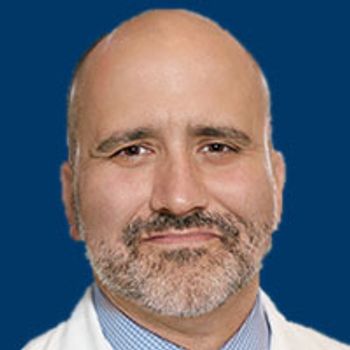
David O’Malley, MD, discusses clinical trials in ovarian cancer and others under investigation.

Leigha Senter, MS, LGC, discusses the current state of genetic testing for patients with ovarian cancer.

Charles A. Leath III, MD, gynecologic oncologist at the University of Alabama at Birmingham, discusses agents under investigation in cervical cancer.

Robert L. Coleman, MD, FACOG, FACS, discusses ongoing research efforts in cervical cancer.

Floor J. Backes, MD, discusses the safety profile from a phase I study looking at lenvatinib and weekly paclitaxel in women with recurrent endometrial cancer.

Ghanshyam Yadav, MD, discusses the differences between type 1 and type 2 uterine cancer.

Robert L. Coleman, MD, FACOG, FACS, professor and Ann Rife Cox Chair in Gynecology, Department of Gynecologic Oncology and Reproductive Medicine, Division of Surgery, The University of Texas MD Anderson Cancer Center, discusses investigational treatment strategies in cervical cancer.

As PARP inhibitors have now moved into the frontline maintenance setting in ovarian cancer, researchers are now seeking to even further capitalize on use of these agents, including indications in treatment-naïve patients.

Charles A. Leath III MD, gynecologic oncologist at the University of Alabama at Birmingham, discusses results of the phase III GOG 240 trial in advanced cervical cancer.

Floor J. Backes, MD, discusses the next steps regarding a phase I trial investigating lenvatinib and weekly paclitaxel in women with recurrent endometrial cancer.

Sarah Ferguson, MD, discusses how the results from the LACC trial, which compared minimally invasive surgery with open surgery in patients with IA1, IA2, or IB1 cervical cancer, are impacting surgery in the cervical cancer field.

We traveled to Pittsburgh, Pennsylvania, for a State of the Science Summit™ on Ovarian Cancer, which featured insights from the University of Pittsburgh Medical Center faculty.
David S. Hong, MD, discusses the potential of moving tisotumab vedotin (HuMax-TF-ADC) to the frontline setting in cervical cancer.

Floor J. Backes, MD, discusses the rationale and results from a phase I study exploring lenvatinib and weekly paclitaxel in women with recurrent endometrial cancer.
The UK’s National Institute for Health and Care Excellence has approved rucaparib for the maintenance treatment of patients with relapsed ovarian, fallopian tube, or peritoneal cancer that has responded to platinum-based chemotherapy.

Robert L. Coleman, MD, FACOG, FACS, professor in the Department of Gynecologic Oncology and Reproductive Medicine, The University of Texas MD Anderson Cancer Center, discusses the use of immunotherapy in patients with cervical cancer.

Ana Oaknin, MD, principal investigator, Gynecological Malignancies Group, Vall d’Hebron Institute of Oncology, head of Gynecologic Tumors Unit, senior medical oncologist and attending physician, Medical Oncology Department, Vall d’Hebron University Hospital, discusses the rationale for the phase I/II GARNET trial in endometrial cancer.

Reagan M. Street, MD, MMS, discusses the shift toward targeted treatment in advanced ovarian cancer partly brought on by PARP inhibitors and the importance of hierarchical genomic testing.
Treatment with the MEK inhibitor trametinib significantly improves progression-free survival and leads to a strong trend toward improved overall survival in recurrent, low-grade serous ovarian cancer.

The combination of nivolumab and ipilimumab appears to have durable clinical activity in patients with recurrent or metastatic cervical cancer.

Nivolumab monotherapy demonstrated promising activity in a small number of patients with recurrent or metastatic cervical, vaginal, and vulvar cancer.
We traveled to Pasadena, California, for a State of the Science Summit™ on Ovarian Cancer, which featured insights from City of Hope faculty.

The FDA has granted an accelerated approval to the combination of lenvatinib and pembrolizumab for the treatment of patients with advanced endometrial carcinoma that is not microsatellite instability-high or mismatch repair deficient, and who have disease progression following prior systemic therapy but are ineligible for curative surgery or radiation.

Ghanshyam Yadav, MD, discusses research surrounding the combination of the PARP inhibitor olaparib and the pan-HER TKI neratinib, which proved to be highly synergistic and had significant activity in preclinical models of HER2-positive uterine serous carcinoma.

In the past 5 years, the FDA has awarded 4 drugs 9 new indications for the treatment of advanced ovarian cancers. Although these approvals represent a welcome expansion of the therapeutic toolkit for this challenging malignancy, the arrival of new options has outpaced efforts to discover the best use for each medication.
Advertisement
Advertisement
Trending on OncLive
1
Single-Center, Retrospective Data Show Low Rate of Lifileucel Infusion Following Referral in Advanced Melanoma
2
Real-World Data Support Clinical Benefit With Lifileucel in Previously Treated Advanced Melanoma
3
Outcomes With Bridging Therapy Correlate With Cilta-Cel Efficacy, Safety in Multiple Myeloma
4
Long-Term Cilta-Cel Data Show Low Rates of PFS Events in Standard-Risk R/R Myeloma
5