
Daniel A. Ermann, MD, and colleagues shared real-world data on first-line BTK inhibitors in older patients with chronic lymphocytic leukemia.
Daniel A. Ermann, MD, and colleagues shared real-world data on first-line BTK inhibitors in older patients with chronic lymphocytic leukemia.

Sun Young Rha, MD, PhD, and colleagues discuss the sutvova; benefits of a zanidatamab-based combination over trastuzumab plus chemotherapy in HER2-positive gastroesophageal adenocarcinoma, irrespective of PD-L1 status.
Michael G. Fradley, MD, and colleagues spotlight the impact of AFib and BTK inhibitor selection in patients with CLL or SLL.

Ryan D. Chow, Ronac Mamtani, MD, MSCE, and Ramy Sedhom, MD, spotlight a real-world analysis of upfront enfortumab vedotin dose reduction in bladder cancer.
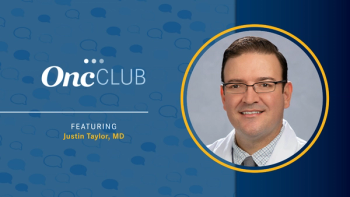
Justin Taylor, MD, discusses a study of ChatGPT's responses to potential questions from patients with hematologic malignancies.
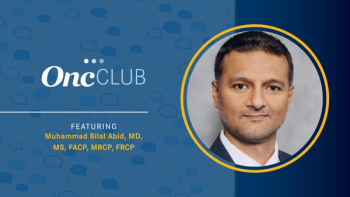
Muhammad Bilal Abid, MD, MS, FACP, MRCP, FRC, and colleagues discuss what the removal of REMS programs means for CAR T-cell therapy management.
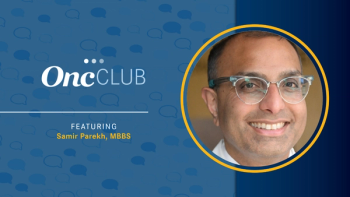
Samir Parekh, MBBS, details a case study on targeted therapy for CAR-positive T-cell lymphoma after anti-BCMA CAR T-cell therapy.
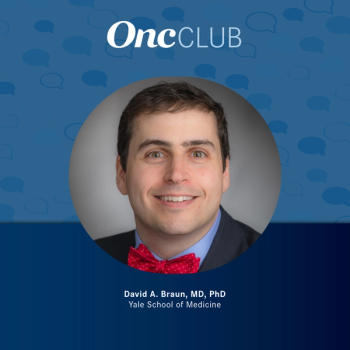
David A. Braun, MD, PhD, discusses research on microenvironmental mechanisms of impaired antitumor immunity in chromophobe renal cell carcinoma.
Shailee S. Shah, MD, discusses the feasibility of using immune checkpoint inhibitors in patients with cancer and neurologic autoimmune disorders.
Shyam A. Patel, MD, PhD, and Jonathan M. Gerber, MD, discuss the use of IHC testing for earlier identification of TP53 mutations MDS and AML.
Emil Lou, MD, PhD, FACP, Branden Moriarity, PhD, and Beau Webber, PhD, on the applicability of CISH knockout to bolster TIL responses in GI tumors.
Henry M. Kuerer, MD, PhD, FACS, CMQ, discusses lessons learned from a nonrandomized clinical trial evaluating selective elimination of surgery for invasive breast cancer.
Mark Tyson II, MD, MPH, and Jacob Moyer, BS, discuss the real-world use of nadofaragene firadenovec in non–muscle-invasive bladder cancer.
Saurabh Dahiya, MD, FACP, and Shyam A. Patel, MD, PhD, discuss their research into the risk of developing second primary cancers following CAR T-cell therapy and how this risk, though low, may be mitigated.
Rachna T. Shroff, MD, MS, FASCO, discusses lessons learned from the phase 3 SWOG S1815 trial evaluating triplet chemotherapy in newly diagnosed, advanced biliary tract cancer.
Yvonne Mowery, MD, PhD, discusses the phase 2 SU2C-SARC032 trial (NCT03092323) investigating the addition of pembrolizumab (Keytruda) to preoperative radiotherapy and surgery in patients with soft tissue sarcoma.
Alexander Watson, MD, DPhil, FRCPC, discusses the rationale for and key findings from a retrospective analysis examining the ways that oncogene overlap could identify clinically relevant thresholds for MET, KRAS, and HER2 gene copy number gain in non–small cell lung cancer.
Ashkan Emadi, MD, PhD, discusses the scientific rationale for this venetoclax plus pegcrisantaspase and preclinical data that supported the phase 1 study; detailed the findings from the phase 1 trial; and explained the potential role for this regimen in the management of acute myeloid leukemia.
Alex F. Herrera, MD, discusses key data from the phase 3 S1826 trial (NCT03907488) evaluating nivolumab plus AVD vs brentuximab vedotin plus AVD in adolescent and adult patients with stage III or IV advanced-stage classic Hodgkin lymphoma.
Shyam A. Patel, MD, PhD, discusses data from a meta-analysis that explored donor-engrafted clonal hematopoiesis's effects in allogeneic and autologous stem cell transplantation.

Sagar Lonial, MD, FACP, discusses findings from the observational CoMMpass study, which evaluated subtypes of multiple myeloma and identified high-risk genetic markers in patients with this disease.
Emil Lou, MD, PhD, FACP, discusses data from a study evaluating whether tumor-stroma proportion can predict chemoresistance and other outcomes in patients with ovarian cancer.
Kara N. Maxwell, MD, PhD, discusses data from a review published in JAMA Oncology which found that despite BRCA mutations being known actionable alterations, genetic testing rates for these aberrations are significantly lower in males compared with females.
Heinz-Josef Lenz, MD, discusses the findings of a retrospective study examining the correlation between HER2 expression and treatment outcomes in colorectal cancer.
Amin Nassar, MD, and Elias Bou Farhat, MD, discuss data from a retrospective study that examined whether next-generation sequencing could be utilized alongside standard immunohistochemistry to detect mismatch repair deficiency that might otherwise be missed in patients with colorectal cancer or endometrial cancer.
Michael Feigin, PhD, discusses the benzodiazepines lorazepam and alprazolam and their varying impacts on progression-free survival outcomes for patients with pancreatic cancer.
Paul G. Richardson, MD, discusses safety and efficacy findings observed with mezigdomide in combination with dexamethasone in heavily pretreated patients with relapsed/refractory multiple myeloma.
Jennifer M. King, MD, discusses the need for improved guidance when determining the appropriate management strategy for patients with residual nonretroperitoneal testicular cancer and findings from a study on the association between the presence of teratoma in the primary orchiectomy and the rate of teratoma in this disease.