

Conference Coverage
about 11 hours ago
Adjuvant Pembrolizumab Sustains DFS Benefit in Resected NSCLCabout 15 hours ago
Ris-Rez Improves PFS in Relapsed/Refractory OsteosarcomaLatest Content

Oct 26, 2026 | News
INCB161734 Plus Chemotherapy Continues to Elicit Responses in KRAS G12D–Mutated PDAC

Adjuvant Pembrolizumab Sustains DFS Benefit in Resected NSCLC
Oct 26, 2026

Extended DeLLphi-304 Follow-Up Confirms Durable Survival Benefit With Tarlatamab in Previously Treated SCLC
Oct 26, 2026

Rinatabart Sesutecan Improves Survival in Platinum-Resistant Ovarian Cancer
Oct 26, 2026

Iza-Bren Improves PFS vs Platinum Chemo in EGFR-Mutated NSCLC After Third-Generation TKI
Oct 26, 2026





Advertisement
OncLive TV

















Shorts

0:40
The OncLive Content Team Gets Creative at ESMO 2026
2 days ago
by
Riley Kandel
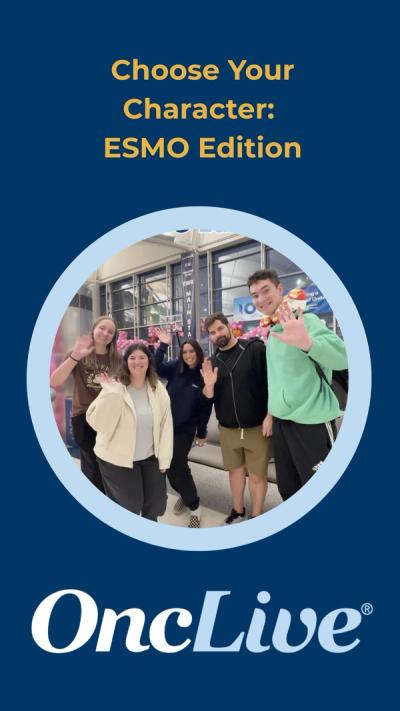
0:22
Choose Your Character: ESMO Edition
4 days ago
by
Riley Kandel

1:47
Previewing Key GU Oncology Data Anticipated at ESMO 2026
4 days ago
by
Praful K. Ravi, MD
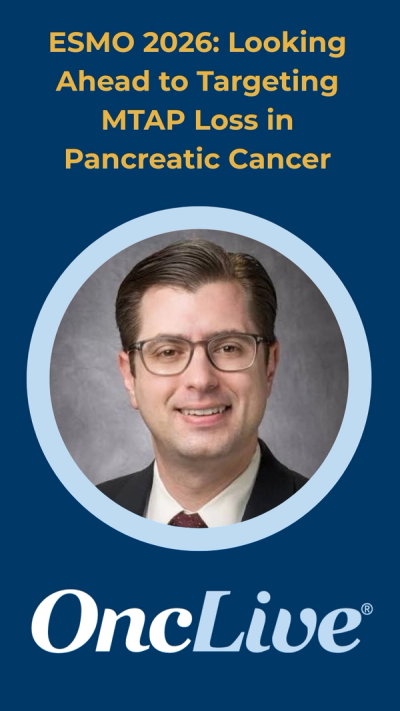
1:03
ESMO 2026: Looking Ahead to Targeting MTAP Loss in Pancreatic Cancer
4 days ago
by
Brandon G. Smaglo, MD, FACP

1:04
Exploring Advances in Clinical Trial Design and FDA Collaboration
11 days ago
by
Chinmay Jani, MD

1:04
Building Clinical Trial Expertise Through OncLive’s Workshop
11 days ago
by
Chinmay Jani, MD
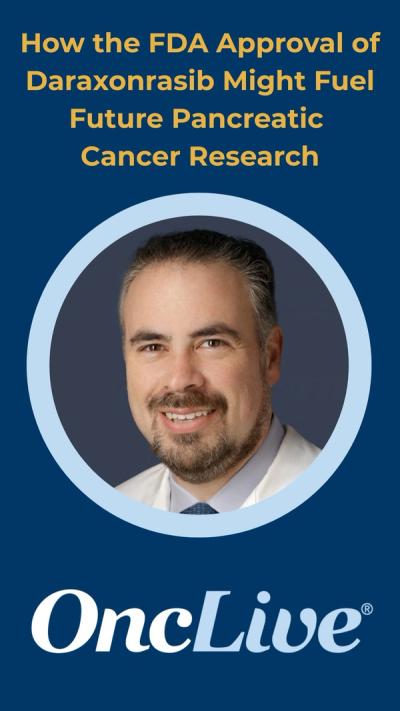
1:43
How the FDA Approval of Daraxonrasib Might Fuel Future Pancreatic Cancer Research
11 days ago
by
Benjamin Weinberg, MD

0:48
Understanding Development From Bench to Bedside
11 days ago
by
Ruth Moges, MD

2:00
Exploring the Promise of Clinical Trials Through Inside the Trial
11 days ago
by
Benjamin P. Levy, MD

0:48
Strengthening Clinical Trial Education and Collaboration Through Inside the Trial
11 days ago
by
Joshua Reuss, MD, Georgetown Lombardi Comprehensive Cancer Center




















































All News
Advertisement
Advertisement

Sac-TMT extended survival and improved response rates vs chemotherapy in endometrial cancer that had progressed after chemotherapy and immunotherapy.

KEYNOTE-412 ctDNA data tie early clearance to longer survival with pembrolizumab plus chemoradiotherapy in HPV-negative head and neck cancer.

Single-agent pembrolizumab extended progression-free survival vs carboplatin and paclitaxel in mismatch repair–deficient endometrial cancer.

Frontline savolitinib plus osimertinib improved progression-free survival vs osimertinib alone in EGFR-mutated, MET-overexpressing lung cancer.

The FDA approved talazoparib plus enzalutamide for HRR-positive, metastatic androgen pathway modulation–naive or -sensitive prostate cancer.

The next-generation, whole genome, tumor-informed Oncodetect MRD test tracks up to 5000 variants vs up to 200 in the first-generation assay.
Risvutatug rezetecan delayed progression vs gemcitabine and docetaxel in patients with osteosarcoma after 2 or more prior systemic therapies.

A new clinical trial will investigate whether a simple blood test could help detect breast cancer as early as Stage I.

Phase 3 data showed a significant PFS improvement with trastuzumab pamirtecan vs chemotherapy in HR-positive, HER2-low metastatic breast cancer.
The FDA granted breakthrough therapy designation to enzomenib for relapsed/refractory acute leukemia with a KMT2A rearrangement.
Advertisement

The top 5 OncLive TV videos of the week cover insights in CRC at ESMO 2026, dMMR rectal cancer, chronic neutropenia, pediatric LGG, and MSS CRC.

Niraparib/Dostarlimab Plus CRT Displays Efficacy but Has Toxicity Concerns in Locally Advanced HNSCC
Adding niraparib and dostarlimab to definitive CRT improved 1-year PFS in cisplatin-fit patients, although toxicity drove frequent discontinuations.

Updated FONTANA data show torvu-sam activity across FRα expression levels in platinum-resistant ovarian cancer.

In HARMONi-GI1, ivonescimab plus chemotherapy extended survival over durvalumab plus chemotherapy in untreated advanced biliary tract cancer.

Sonesitatug vedotin is a potential new SOC in select Claudin 18.2–positive gastroesophageal carcinoma.

Divarasib extended survival over first-generation KRAS G12C inhibitors in a head-to-head phase 3 trial in previously treated lung cancer.

In SAFFRON, the oral EGFR/MET inhibitor pairing extended survival over platinum/pemetrexed in MET-driven lung cancer that progressed on osimertinib.

Tovecimig plus paclitaxel improved objective response over paclitaxel alone in previously treated advanced biliary tract cancer in COMPANION-002.

Adding LK101 to tislelizumab-based first-line maintenance yielded early antitumor activity and signs of immune activation in advanced NSCLC.
Adding durvalumab and enfortumab vedotin around cystectomy extended survival in muscle-invasive bladder cancer without cisplatin options.

Adding pembrolizumab to adjuvant radiation did not meet prespecified superiority criteria in patients with stage I/II high-intermediate–risk dMMR endometrioid endometrial cancer in the phase 3 NRG-GY020 trial.
Adding tarlatamab-dlle to durvalumab maintenance extended survival in extensive-stage small cell lung cancer in the phase 3 DeLLphi-305 trial.
Adding intismeran autogene to pembrolizumab cut the risk of recurrence and distant metastasis in resected high-risk melanoma in INTerpath-001.

Adding darolutamide to androgen deprivation and primary or salvage radiation lowered metastasis risk in very high-risk localized prostate cancer.

INCA33890 combined with standard-of-care therapy produced responses in first- and third-line metastatic microsatellite stable colorectal cancer.

An exploratory TROPION-Breast02 analysis showed CNS PFS and intracranial response benefits with datopotamab deruxtecan in TNBC with brain metastases.

Adding durvalumab to BCG induction and maintenance reduced high-risk recurrences in patients with papillary-only bladder tumors in POTOMAC.
Interim DUO-E data showed longer median survival with chemotherapy plus durvalumab and olaparib maintenance that did not reach significance.

Perioperative enfortumab vedotin plus pembrolizumab showed no clinically meaningful HRQOL detriment in cisplatin-eligible MIBC.

Circulating tumor DNA findings from CROWN tied TP53 status and tumor fraction to outcomes with first-line lorlatinib in ALK-positive lung cancer.
Neoadjuvant T-DXd produced faster imaging responses vs ddAC in DESTINY-Breast11, but imaging poorly predicted pCR.

Abemaciclib plus fulvestrant showed a numerical yet nonsignificant overall survival trend after CDK4/6 inhibitor progression in final postMONARCH data.

INCB123667 with bevacizumab showed antitumor activity in heavily pretreated, cyclin E1–overexpressing platinum-resistant ovarian cancer.

Selective CDK4 inhibitor atirmociclib plus fulvestrant reduced risk of progression or death by 40% vs investigator's choice of therapy in the phase 2 FOURLIGHT-1 trial.

Signifcant efficacy improvements were shown with iza-bren in HR+/HER2-negative breast cancer.

The FDA approved dostarlimab in rectal cancer and pembrolizumab in tumors with high mutational burden, Europe cleared teclistamab in myeloma, and more.
The claudin 6–targeted antibody-drug conjugate ixotatug vedotin showed antitumor activity in recurrent germ cell tumors, including after transplant.

An exploratory analysis of the phase 3 KEYNOTE-B15 trial found that ctDNA status was strongly prognostic for event-free survival regardless of treatment arm.
The KEYNOTE-866 trial did not meet its EFS primary end point with perioperative pembrolizumab added to neoadjuvant cisplatin and gemcitabine.
The sacituzumab govitecan, enfortumab vedotin, and zimberelimab triplet produced early, durable responses in untreated metastatic urothelial cancer.
Surufatinib plus serplulimab and cisplatin/etoposide produced a 69.8% ORR in advanced extrapulmonary neuroendocrine carcinoma.

Efficacy outcomes in KEYNOTE-905 were consistent with a contribution of both enfortumab vedotin and pembrolizumab in cisplatin-ineligible MIBC.
Patient-reported outcomes from the phase 3 lidERA trial show preserved functioning and less frequent joint pain with giredestrant vs standard endocrine therapy.
Arcotatug tavatecan improved PFS and OS vs physician’s choice in previously treated, CLDN18.2-positive advanced gastric and GEJ cancer.
Exploratory subgroup analyses of the phase 2 DOVACC trial suggested a possible signal with the triplet in HRD-negative and PARP inhibitor–naive disease.
Advertisement
Advertisement
Trending on OncLive
1
Sac-TMT Improves PFS and OS, Is Under FDA Priority Review in Previously Treated Endometrial Cancer
2
KEYNOTE-C93 Shows PFS Benefit With First-Line Pembrolizumab Monotherapy in dMMR Endometrial Cancer
3
Rinatabart Sesutecan Improves Survival in Platinum-Resistant Ovarian Cancer
4
Extended DeLLphi-304 Follow-Up Confirms Durable Survival Benefit With Tarlatamab in Previously Treated SCLC
5