






Gynecologic Oncology
Latest News

Selinexor Demonstrates PFS Benefit in Advanced Endometrial Cancer, Including p53 Wild-Type Tumors
By Will Pizii
Advertisement
Latest Videos









CME Content

































Advertisement
More News

Twice-daily oral ruxolitinib plus carboplatin and paclitaxel given as frontline neoadjuvant and post-surgical treatment to patients with stage III or IV ovarian cancer was found to be feasible and to improve progression-free survival compared with chemotherapy alone.

The combination of lenvatinib and pembrolizumab demonstrated clinically meaningful improvements in progression-free survival on next line of therapy among all-comer patients with advanced endometrial cancer and those with DNA mismatch repair proficient disease, according to an exploratory analysis of the phase 3 KEYNOTE-775 trial.
For the 10th consecutive year, OncLive® is honored to recognize oncology leaders whose innovations have contributed to immeasurable improvements in outcomes for countless patients.

Galinpepimut-S in combination with the PD-1 inhibitor pembrolizumab elicited a clinical benefit in patients with Wilms’ tumor-1-positive relapsed/refractory platinum-resistant advanced metastatic ovarian cancer, according to top line-line data from a phase 1/2 trial (NCT03761914).

Rebecca A. Previs, MD, discusses the role of biomarkers in uterine and endometrial cancers, the standard of care for patients with different biomarkers in uterine cancer, how PARP inhibitors have affected the treatment of ovarian cancer, and the key clinical trials in gynecologic cancers.

The FDA has accepted and filed a biologics license application for mirvetuximab soravtansine for the treatment of patients with folate receptor alpha–high, platinum-resistant ovarian cancer who have previously received between 1 and 3 systemic therapies.

Bradley J. Monk, MD, FACS, FACOG, discusses the future of ovarian cancer treatment, ongoing and future trials, as well as combination therapies that may benefit patients with ovarian cancer, cervical cancer, and endometrial cancer.

Nicoletta Colombo, MD, PhD, discusses the practice-changing data to emerge from KEYNOTE-826 and the next steps for the pembrolizumab plus chemotherapy with or without bevacizumab regimen in patients with cervical cancer.
The FDA has approved pembrolizumab in patients with advanced endometrial cancer that is microsatellite instability-high or mismatch repair–deficient and who have disease progression following prior systemic therapy and are not candidates for curative surgery or radiation.

Despite numerous well-designed and conducted randomized trials, a definitive answer to the role of specific disease management remains unclear, particularly in the discussions of the optimal role for the regional delivery of cytotoxic chemotherapy in the treatment of patients with ovarian cancer.

The addition of navicixizumab to paclitaxel produced encouraging responses with manageable toxicity in patients with platinum-resistant ovarian cancer irrespective of prior treatment with bevacizumab.

Two investigated doses of vibostolimab in combination with pembrolizumab resulted in comparable antitumor activity and safety in patients with locally advanced or metastatic cervical cancer who were naïve to PD-1/PD-L1 inhibitors, regardless of PD-L1 status.

The first-in-class, off-the-shelf therapeutic cancer vaccine VB10.16 in combination with atezolizumab generated positive responses in heavily pretreated patients with HPV16-positive advanced cervical cancer.

Bradley J. Monk, MD, FACS, FACOG, discusses the growing role of checkpoint inhibitors in cervical cancer.
The European Commission has granted an approval to the combination of pembrolizumab and chemotherapy, with or without bevacizumab, for the treatment of adult patients with persistent, recurrent or metastatic cervical cancer whose tumors have a PD-L1 combined positive score of 1 or higher.

The European Commission has granted an approval to pembrolizumab for the treatment of patients with select microsatellite instability–high or deficient mismatch repair solid tumors.

An investigative follicle-stimulating hormone receptor–mediated CAR T-cell technology is under exploration in patients with recurrent ovarian cancer.

The addition of durvalumab and tremelimumab to chemotherapy led to encouraging responses and a suitable safety profile as neoadjuvant therapy in patients with advanced ovarian cancer, according to findings from the phase 2 KGOG 3046.

The combination of the novel adenoviral vector NG-641 and nivolumab is being investigated in patients in the phase 1a/b NEBULA trial in patients with previously treated metastatic or advanced epithelial tumors.

The investigational Wee1 inhibitor ZN-c3 was found to be safe and to produce a disease control rate of 90.9% and an objective response rate of 27.3% in patients with advanced or recurrent uterine serous carcinoma.

In the ENDOLA trial, olaparib in combination with metronomic cyclophosphamide and metformin showed a significant non-progression rate in patients with recurrent advanced or metastatic endometrial cancer.

Women of all races and ethnicities who were referred to a colposcopy clinic for cervical cancer screening following an abnormal Pap smear during the COVID-19 pandemic had a higher likelihood of not adhering to their appointment compared with appointment data collected prior to the pandemic.

Specialization in oncology research affords investigators the opportunity to dive into tumor biology and uncover unique approaches to care.
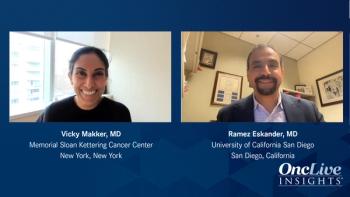
Experts highlight key ongoing trials and emerging therapies for patients with endometrial cancer.
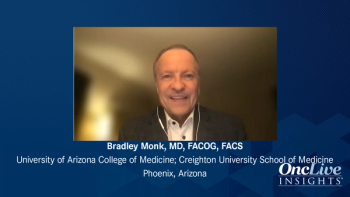
A discussion on the best way to sequence therapies for patients with MSI-high and MMR-proficient endometrial carcinoma.
Advertisement
Advertisement
Trending on OncLive
1
Single-Center, Retrospective Data Show Low Rate of Lifileucel Infusion Following Referral in Advanced Melanoma
2
Real-World Data Support Clinical Benefit With Lifileucel in Previously Treated Advanced Melanoma
3
Long-Term Cilta-Cel Data Show Low Rates of PFS Events in Standard-Risk R/R Myeloma
4
Dr Riedell on the Long-Term Efficacy of Tisa-Cel in R/R Follicular Lymphoma
5