
Findings from an exploratory analysis of IMvigor011 support the use of serial ctDNA testing to guide atezolizumab use in MIBC.

Your AI-Trained Oncology Knowledge Connection!
Findings from an exploratory analysis of IMvigor011 support the use of serial ctDNA testing to guide atezolizumab use in MIBC.

Intravesical cretostimogene grenadenorepvec was efficacious and safe in high-risk BCG-naive non–muscle-invasive bladder cancer.
Cretostimogene grenadenorepvec shows durable activity in BCG-unresponsive papillary-only NMIBC with no progression to MIBC and favorable tolerability.

Gemcitabine intravesical system in BCG-unresponsive, high-risk NMIBC led to high CR rates and low radical cystectomy rates.

Peripheral neuropathy was linked with improved efficacy outcomes after treatment with first-line enfortumab vedotin plus pembrolizumab in urothelial carcinoma.
At 48 months, the majority of patients with VHL disease–associated tumors remained in response following treatment with belzutifan.
Those with metachronous NMIBC experienced poorer outcomes with BCG vs those with primary NMIBC.

Adjuvant pembrolizumab delivers sustained clinical benefits across ccRCC subgroups with no new long-term safety signals.
Novel sustained-release NDV-01 achieved a 92% CR rate in high-risk patients with NMIBC with strong safety, supporting advancement to phase 3 studies.
Data from a comparative cohort study suggest that venous congestion is a modifiable driver of renal dysfunction in patients with RCC and IVC thrombosis.
Health care providers and allied health care professionals found the gemcitabine intravesical system straightforward to use and safe in NMIBC.

Interim data from ADVANCED-2 show 6- and 12-month CR rates of 69.2% and 50%, respectively, with TARA-002 in this patient population.

Treatment with neoadjuvant chemotherapy prior to radical cystectomy significantly improved overall survival compared with cystectomy alone for patients with the basal subtype of muscle-invasive bladder cancer.

In a study of neoadjuvant sonidegib in men with high-risk localized prostate cancer undergoing prostatectomy, hedgehog pathway activity was detectable at baseline.

Prostate cancer has recently been recognized as a genomically heterogeneous disease with subtypes similar to breast or ovarian cancers.

The established efficacy of single-agent checkpoint inhibition for metastatic urothelial carcinoma along with molecule expression analyses suggests that PD-1/PD-L1 inhibition could hold promise for patients with non-muscle invasive bladder cancer, particularly those unresponsive to Bacillus Calmette-Guérin.
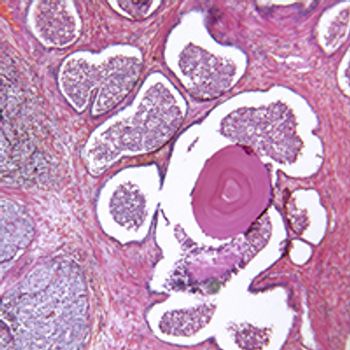
Both magnetic resonance imaging and prostate cancer antigen 3 tests can predict a positive prostate biopsy and are helpful in identifying high-risk prostate cancer.

It has been a landmark year for immunotherapy in bladder cancer with the approval of 5 checkpoint inhibitors across first and second line.

The combination of PD-1 or PD-L1 inhibitors with existing frontline therapies could represent a superior approach for some treatment-naïve patients with renal cell carcinoma.

Stemming from the wave of checkpoint inhibitor approvals, multiple trials have begun evaluating immunotherapies in combination with other agents for the treatment of patients with advanced bladder cancer.
Elizabeth Plimack, MD, discusses the impact of the immunotherapy approvals in the first- and second-line setting for bladder cancer and the future of combinations for these patients.