
Michael Wang, MD, discusses the sequencing of oral therapies in mantle cell lymphoma.

Your AI-Trained Oncology Knowledge Connection!
Michael Wang, MD, discusses the sequencing of oral therapies in mantle cell lymphoma.
Jan A. Burger, MD, PhD, discusses the changing treatment landscape of chronic lymphocytic leukemia.
Debasish Tripathy, MD, provides perspective on some of the key data sets that were presented and published in 2021 in HER2-positive breast cancer.
Michael Wang, MD, discusses the evolution of ibrutinib in the treatment landscape of mantle cell lymphoma.
Induction treatment with ibrutinib and rituximab was safe and active in patients with mantle cell lymphoma aged 65 years or younger, allowing for fewer cycles of subsequent chemotherapy with rituximab plus hyperfractionated cyclophosphamide, vincristine, doxorubicin, and dexamethasone thereby reducing toxicity.
Michael Wang, MD, discusses the evolving treatment landscape of mantle cell lymphoma.
In honor of their notable contributions to the field of cancer research, Juan Fueyo, MD, and Victor Prieto, MD, PhD, from The University of Texas MD Anderson Cancer Center, have been named fellows of the American Association for the Advancement of Science.
Srdan Verstovsek, MD, PhD, discusses the tolerability of momelotinib in myelofibrosis.
Kanwal P.S. Raghav, MBBS, MD, discusses potential combinations with fam-trastuzumab deruxtecan-nxki in HER2-positive colorectal cancer.
Edmund Scott Kopetz, MD, PhD, FACP, discusses the current state of circulating tumor DNA testing in colorectal cancer.
Debu Tripathy, MD, discusses key developments that may set the stage for new directions in care of breast cancer, including several areas of the treatment landscape on the cusp of change.
The FGFR TKI erdafitinib continued to provide consistent clinical benefits with a manageable safety profile when used in the second-line treatment of patients with locally advanced or metastatic urothelial carcinoma harboring FGFR alterations.
Momelotinib provided a statistically significant benefit in terms of splenic symptoms, anemia, and splenic size in patients with myelofibrosis.
Jason R. Westin, MD,discusses the patient-reported outcome data from the phase 3 TRANSFORM study in relapsed/ refractory large B-cell lymphoma.
Jason R. Westin, MD, discusses the 2-year follow-up data of the ongoing phase 1 TRANSCEND-NHL-001 trial in relapsed/refractory large B-cell lymphoma.
David M. Gershenson, MD, discusses the results of the phase 3 MILO trial in low-grade serous ovarian cancer.
The University of Texas MD Anderson Cancer Center and Eisbach Bio GmbH today announced a strategic research collaboration to jointly discover and develop precision oncology drugs that target synthetic lethal engines key to tumor genome evolution.
The addition of nivolumab to encorafenib and cetuximab elicited a high response rate and an acceptable safety profile in patients with refractory microsatellite stable, BRAF V600E–mutant metastatic colorectal cancer, according to findings from a phase 1/2 trial.
Dr Wang discusses the clinical experience with ibrutinib in mantle cell lymphoma, its present role in the management of MCL, and ongoing research that may affect its use as a single agent.
Naval Daver, MD, discusses the latest developments in acute lymphoblastic leukemia, chronic lymphocytic leukemia, acute myeloid leukemia, and follicular lymphoma.
Jan A. Burger, MD, PhD, discusses the benefit of combination therapy in patients with chronic lymphocytic leukemia.
Amado J. Zurita-Saavedra, MD, discusses the potential benefits of augmenting therapy earlier on in the treatment of patients with newly diagnosed metastatic prostate cancer.
Srdan Verstovsek, MD, PhD, discusses the key objective of the phase 3 IMpactMF trial examining imetelstat in patients with myelofibrosis.
Bilal A. Siddiqui, MD, discusses the nuances of defining the characteristics of nonmetastatic castration-resistant prostate cancer.
Nitin Jain, MD, discusses the preliminary results from the phase 1 BALLI-01 study, which investigated UCART22, a genetically modified allogeneic T-cell therapy, in patients with relapsed or refractory B-cell acute lymphoblastic leukemia.
Jan A. Burger, MD, PhD, discusses choosing frontline therapy in chronic lymphocytic leukemia.
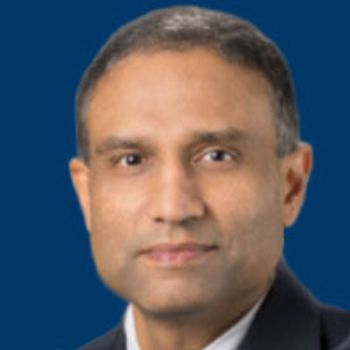
Anil K. Sood, MD, provides insight into his approach toward the frontline maintenance treatment of women with advanced ovarian cancer.
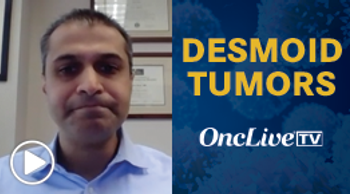
Ravin Ratan, MD, MEd, discusses the steps that should be taken to diagnose desmoid tumors.
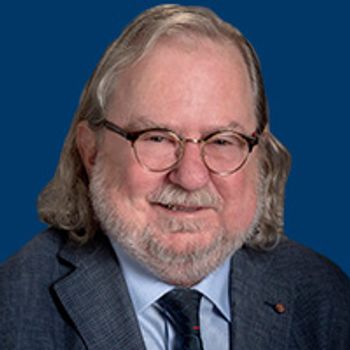
James P. Allison, PhD, permanently etched his legacy into immuno-oncology with the development of ipilimumab, work that helped him win a Giants of Cancer Care® award for Scientific Advances in 2014.
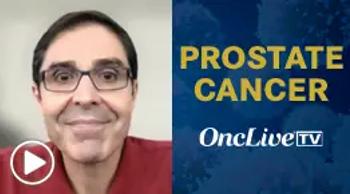
Amado J. Zurita-Saavedra, MD, discusses emerging frontline therapies in metastatic hormone-sensitive prostate cancer.