

Adjuvant nivolumab monotherapy elicited a statistically significant and clinically meaningful improvement in recurrence-free survival compared with placebo for patients with completely resected stage IIB/C melanoma.

Your AI-Trained Oncology Knowledge Connection!

Managing Editor, OncLive®
Caroline Seymour is your initial point of contact for the OncLive® podcast, OncLive On Air™. She joined the company in 2018 as an assistant editor, with expertise in video production and print/digital publication. Email: cseymour@onclive.com
Adjuvant nivolumab monotherapy elicited a statistically significant and clinically meaningful improvement in recurrence-free survival compared with placebo for patients with completely resected stage IIB/C melanoma.
Higher baseline and longitudinal evaluations of health-related quality of life prior to and during treatment with nivolumab and cabozantinib demonstrated an association with improved progression-free survival and overall survival in patients with advanced, treatment-naïve renal cell carcinoma.

Treatment with brexucabtagene autoleucel drove durable responses in patients with relapsed/refractory mantle cell lymphoma, particularly those with minimal residual disease negativity at 6 months.
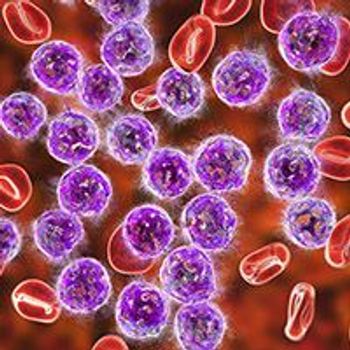
Obinutuzumab, acalabrutinib, and venetoclax following optimal debulking with bendamustine failed to meet the prespecified rate of undetectable minimal residual disease in the peripheral blood at the end of induction treatment in patients with relapsed/refractory chronic lymphocytic leukemia.

OncLive® will be LIVE with OncLive® News Network: On Location at the 2022 ESMO Congress. Each day, we will broadcast a series of interviews with top thought leaders, to learn their thoughts and reactions to data presented across oncology during the conference.
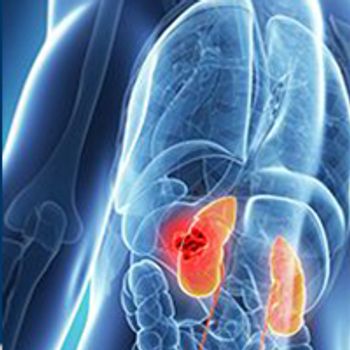
The presence of more than 2 tertiary lymphoid structures coupled with increased density of Ki-67 and PD-1 positivity was shown to be associated with an increased response rate and prolonged progression-free survival with the combination of nivolumab and ipilimumab as frontline therapy in patients with metastatic renal cell carcinoma.

Atezolizumab led to an almost doubling in the rate of 2-year overall survival compared with vinorelbine or gemcitabine in patients with advanced platinum-ineligible non–small cell lung cancer.

Pembrolizumab plus chemoradiation failed to demonstrate a statistically significant improvement in event-free survival vs chemoradiation alone in patients with locally advanced head and neck squamous cell carcinoma.

OncLive® will be LIVE with OncLive® News Network: On Location at the 2022 ESMO Congress. Each day, we will broadcast a series of interviews with top thought leaders, to learn their thoughts and reactions to data presented across oncology during the conference.

Nirogacestat led to a 71% reduction in the risk of disease progression or death compared with placebo in patients with progressive desmoid tumors.
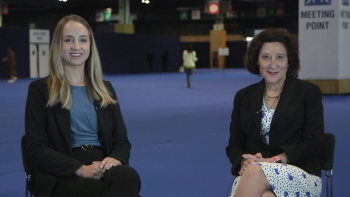
OncLive® will be LIVE with OncLive® News Network: On Location at the 2022 ESMO Congress. Each day, we will broadcast a series of interviews with top thought leaders, to learn their thoughts and reactions to data presented across oncology during the conference.
Emavusertib elicited antitumor activity when given as a monotherapy in patients with relapsed/refractory acute myeloid leukemia or high-risk myelodysplastic syndrome that harbored a spliceosome or FLT3 mutation.

Treatment with either encorafenib plus cetuximab with or without binimetinib or standard chemotherapy each demonstrated comparable progression-free survival and overall survival in pretreated patients with BRAF V600E–mutated metastatic colorectal cancer.
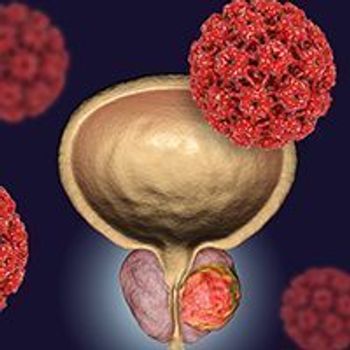
Treatment with soluble EphB4-human serum albumin plus pembrolizumab elicited synergistic activity and an improved overall survival and objective response rate compared with historical data for PD-1/PD-L1 monotherapy in patients with platinum-refractory metastatic urothelial carcinoma.
CE label expansion was granted to the Ventana PD-L1 assay for use as a companion diagnostic to identify patients with non–small cell lung cancer who are eligible for treatment with adjuvant atezolizumab.
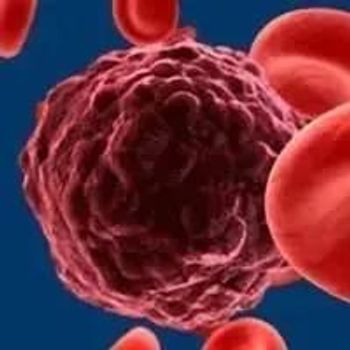
The European Medicines Agency has accepted the marketing authorization application for the oral fixed-dose combination of decitabine and cedazuridine for the frontline treatment of adults with acute myeloid leukemia who are not candidates for standard induction chemotherapy.

The European Medicines Agency has validated a marketing authorization application for elacestrant for estrogen receptor–positive, HER2-negative advanced or metastatic breast cancer.

Maintenance therapy with rucaparib following platinum-based chemotherapy prolonged progression-free survival compared with placebo in patients with DNA repair–deficient-positive, metastatic urothelial cancer.
The FDA has granted an orphan drug designation to the fixed-dose combination capsule of the PARP inhibitor senaparib and temozolomide for the treatment of adult patients with small cell lung cancer.

The European Commission has approved melphalan flufenamide for use in combination with dexamethasone for the treatment of adult patients with multiple myeloma who have received at least 3 prior therapies.

Treatment with avapritinib led to clinically meaningful and statistically significant improvements in patient-reported symptoms and objective measures of mast cell burden in patients with non-advanced systemic mastocytosis.

Trastuzumab deruxtecan led to a statistically significant improvement in progression-free survival and overall survival vs treatment with physician’s choice in patients with HER2-positive unresectable and/or metastatic breast cancer previously treated with trastuzumab emtansine.

Treatment with frontline panitumumab and mFOLFOX6 led to a significant improvement in overall survival, plus higher response rates and R0 resection rates, compared with bevacizumab and mFOLFOX6 in patients with RAS wild-type metastatic colorectal cancer.
The Kidney Cancer Treatment guidelines, housed within the National Comprehensive Cancer Network Clinical Practice Guidelines in Oncology, have been revised, granting tivozanib Category 1 status as a subsequent therapy for patients with renal cell carcinoma who have received at least 2 prior lines of treatment.

The FDA has granted an orphan drug designation to THIO for the treatment of patients with small cell lung cancer.

Amivantamab in combination with lazertinib plus carboplatin and pemetrexed elicited encouraging responses in pretreated patients with EGFR-mutant non–small cell lung cancer, according to findings from the phase 1 CHRYSALIS-2 trial.
The combination of sotorasib and the small molecule SHP2 inhibitor RMC-4630 led to an investigator-assessed objective response rate of 27% and 50% in pretreated and KRAS G12C inhibitor–naïve patients with non–small cell lung cancer, respectively.

Investigators are evaluating the combination of repotrectinib and osimertinib for the treatment of patients with advanced or metastatic EGFR-mutant non–small cell lung cancer in the phase 1 TOTEM trial.

The novel PSMAxCD38 costimulatory bispecific antibody REGN5678 has shown encouraging efficacy in combination with cemiplimab in patients with advanced metastatic castration-resistant prostate cancer, according to preliminary findings from an ongoing phase 1/2 trial (NCT03972657).
Pembrolizumab plus docetaxel failed to elicit a statistically significant improvement in overall survival and radiographic progression-free survival in patients with metastatic castration-resistant prostate cancer, missing the coprimary end points of the phase 3 KEYNOTE-921 trial.