





Breast Cancer
Latest News

Advertisement
Latest Videos





CME Content































Advertisement
More News


The FDA has granted a priority review to a supplemental biologics license application for pertuzumab (Perjeta) for use in combination with trastuzumab (Herceptin) and chemotherapy for the adjuvant treatment of patients with HER2-positive early breast cancer.

The FDA approved abemaciclib (Verzenio) for use in combination with fulvestrant in women with HR+/HER2- advanced breast cancer with disease progression following endocrine therapy. The CDK4/6 inhibitor has also been approved as a monotherapy for patients with HR+/HER2- breast cancer with metastatic disease who have previously received endocrine therapy and chemotherapy.

Although dual HER2 blockade strategies have become an important part of the treatment paradigm for patients with HER2-positive breast cancer, the complexities of administering these therapies continue to unfold.
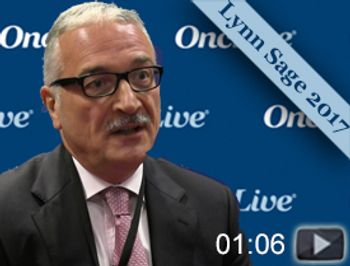
Massimo Cristofanilli, MD, professor of medicine, Feinberg School of Medicine, Robert H. Lurie Comprehensive Cancer Center, discusses endocrine therapy for patients with breast cancer.
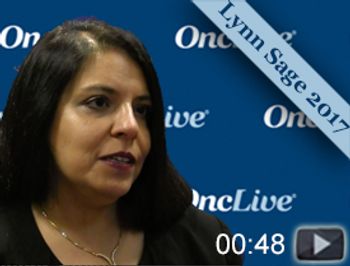
Arti Hurria, MD, director, Cancer and Aging Research Program, co-leader, Cancer Control and Population Sciences Program, professor, Department of Medical Oncology and Therapeutics Research and Department of Population Sciences, City of Hope, discusses challenges facing geriatric patients with breast cancer.

Ongoing studies are hoping to find a biomarker to guide which premenopausal women with ER-positive breast cancer need extended adjuvant therapy and which need ovarian function suppression.

Treating older patients with breast cancer must include more quality of life considerations and different types of survival calculations.

The sequencing of therapies for patients with HER2-positive breast cancer is largely driven by stage of disease and hormone receptor status.
Health investment is failing to match the challenge presented by a growing cancer burden in countries at all economic levels, enhancing the need for new approaches that help optimize the delivery of care.

There is a significant transformation underway in the treatment of breast cancer as research advances and new laboratory techniques continue to shrink the so-called "undruggable genome."
Advertisement
Advertisement
Trending on OncLive
1
Single-Center, Retrospective Data Show Low Rate of Lifileucel Infusion Following Referral in Advanced Melanoma
2
Long-Term Cilta-Cel Data Show Low Rates of PFS Events in Standard-Risk R/R Myeloma
3
Real-World Data Support Clinical Benefit With Lifileucel in Previously Treated Advanced Melanoma
4
Dr Riedell on the Long-Term Efficacy of Tisa-Cel in R/R Follicular Lymphoma
5