






Precision Medicine in Oncology®
Latest News
Advertisement
Latest Videos



CME Content































Advertisement
More News

Treatment of patients with non–small cell lung cancer should be based on the identification of rare molecular targets such as BRAF, RET, ROS1, and MET versus clinical characteristics.

Less than a decade after the FDA set the ground rules for developing assays that pair molecular targets with new drugs, experts say there have been strides in personalizing anticancer therapies but that many hurdles remain before next-generation sequencing and other precision medicine advances are incorporated into the diagnostic paradigm.

Pazopanib demonstrated significant clinical activity for patients with RAI-refractory differentiated thyroid cancer; however, a predictive biomarker for the therapy could not be uncovered.













The use of multigene assays to screen patients for hereditary breast and ovarian cancer risk yields clinically valuable information beyond single-gene BRCA testing, but confusion about accurately interpreting the results presents a challenge for clinicians even as panel testing becomes more widely adopted.

Our goal should be to use precision medicine as a way to deliver value-based care.

Patricia M. LoRusso, DO, Professor of Medicine and Associate Director of Innovative Medicine, Yale Cancer Center, discusses taking a personalized medicine approach to treat melanoma patients whose tumors do not have BRAF alterations.

Dr. Noah Kauff discusses how hysterectomy, in addition to standard risk-reducing salpingo-oophorectomy (RRSO) measures, should be considered in BRCA+women to reduce the risk of serous uterine cancers.

Sylvia Adams, MD, explains the potential of TILs, as well as other biomarkers, including PD-1/PD-L1, in TNBC and other breast cancer types.
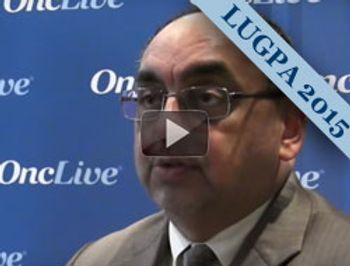
Nimmi S. Kapoor, MD, surgical oncologist, Breastlink Laguna Hills and Breastlink Orange, discusses the benefits and safety of multigene panel testing in patients who are at risk for hereditary breast cancer.
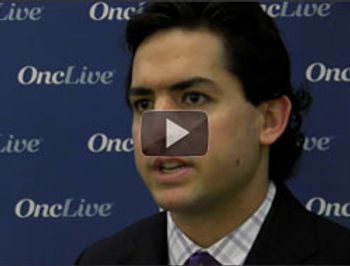
Santiago Sherwell-Cabello, MD, breast surgical oncology, Instituto de Enfermedades de la Mama, discusses the prognostic impact of tumor-infiltrating lymphocytes and stromal-infiltrating lymphocytes in patients with triple-negative breast cancer (TNBC).
Advertisement
Advertisement
Trending on OncLive
1
Single-Center, Retrospective Data Show Low Rate of Lifileucel Infusion Following Referral in Advanced Melanoma
2
Long-Term Cilta-Cel Data Show Low Rates of PFS Events in Standard-Risk R/R Myeloma
3
Real-World Data Support Clinical Benefit With Lifileucel in Previously Treated Advanced Melanoma
4
Dr Riedell on the Long-Term Efficacy of Tisa-Cel in R/R Follicular Lymphoma
5