






Colorectal Cancer
Latest News
Advertisement
Latest Videos








CME Content































Advertisement
More News
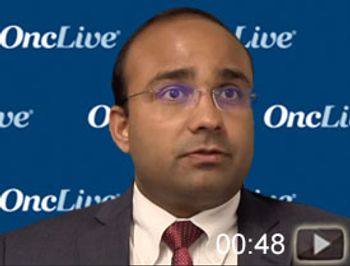
Kanwal Raghav, MBBS, MD, discusses the utility of circulating tumor DNA in colorectal cancer.

Douglas A. Nelson, MD, discusses why patients with metastatic colorectal cancer are often referred to surgeons before medical oncologists.

Van K. Morris, MD, discusses the role of immunotherapy in metastatic colorectal cancer.

Shai Friedland, MD, discusses the importance of screening for colorectal cancer, the advantages of the noninvasive FirstSightCRC blood test, and the results from the ZENITH trial.

Heinz-Josef Lenz, MD, FACP, discusses the next steps for the trial examining the onvansertib combination and sheds light on the possibility of this regimen eventually being used in the frontline setting.

Michael J. Overman, MD, professor in the Department of Gastrointestinal Medical Oncology of the Division of Cancer Medicine and committee vice chair at The University of Texas MD Anderson Cancer Center, discusses ongoing research with immunotherapy in microsatellite stable (MSS) colorectal cancer (CRC).
The combination of nivolumab and regorafenib demonstrated promising antitumor activity in patients with gastric and colorectal cancer.

Tanios S. Bekaii-Saab, MD, FACP, medical oncologist, medical director, Cancer Clinical Research Office, vice chair and section chief, Medical Oncology, Department of Internal Medicine, Mayo Clinic, discusses moving metastatic treatment strategies to the adjuvant setting in colorectal cancer (CRC).

A European panel has recommended approval of encorafenib in combination with cetuximab for the treatment of adult patients with BRAF V600E–mutant metastatic colorectal cancer.

The FDA has approved the combination of encorafenib and cetuximab for the treatment of adult patients with metastatic colorectal cancer with a BRAF V600E mutation, following prior therapy.

Frontline pembrolizumab significantly improved progression-free survival versus chemotherapy in patients with microsatellite instability–high or mismatch repair deficient unresectable or metastatic colorectal cancer.
Kanwal Raghav, MBBS, MD, associate professor, Department of Genitourinary Medical Oncology, Division of Cancer Medicine, The University of Texas MD Anderson Cancer Center, discusses ongoing research with immunotherapy and targeted therapy in colorectal cancer (CRC).

John L. Marshall, MD, reflects on recent advances in the field of metastatic colorectal cancer and discusses ongoing research efforts in the space.

The etiology and overall management of patients with early-onset colorectal cancer needs to be better understood and personalized, respectively, explained Andrea Cercek, MD, in a presentation during the 5th Annual School of Gastrointestinal Oncology™.

Michael J. Overman, MD, discusses factors to consider when choosing between regorafenib and TAS-102 in the third-line treatment of patients with colorectal cancer.
Douglas A. Nelson, MD, discusses results from the CheckMate-142 in metastatic colorectal cancer.
Jonathan Mizrahi, MD, discusses optimal sequencing in patients with BRAF V600E-mutant metastatic colorectal cancer.

Tannaz Armaghany, MD, discusses the importance of NCI-MATCH trial in colorectal cancer.

Douglas A. Nelson, MD, discusses the quality-of-life data from the phase III BEACON CRC trial in metastatic colorectal cancer.

Atif Hussein, MD, and A. Craig Lockhart, MD, MHS, discuss the role of targeted therapy in colorectal and pancreatic cancer, the utility of regorafenib (Stivarga) and TAS-102 (trifluridine/tipiracil; Lonsurf) alone and in combination, and the importance of conducting next-generation sequencing.

Phat Le, MD, discusses the need for aggressive therapeutic approaches in oligometastatic colorectal cancer.

Kanwal Raghav, MBBS, MD, discusses treatment options in newly diagnosed metastatic colorectal cancer.
Michael J. Overman, MD, discusses second-line therapy options for patients with colorectal cancer.

John L. Marshall, MD, discusses the challenges in the colorectal cancer field.
Jonathan Mizrahi, MD, discusses the goal of the phase III COMMIT trial in mismatch repair deficient colorectal cancer.
Advertisement
Advertisement
Trending on OncLive
1
Single-Center, Retrospective Data Show Low Rate of Lifileucel Infusion Following Referral in Advanced Melanoma
2
Long-Term Cilta-Cel Data Show Low Rates of PFS Events in Standard-Risk R/R Myeloma
3
Real-World Data Support Clinical Benefit With Lifileucel in Previously Treated Advanced Melanoma
4
Dr Riedell on the Long-Term Efficacy of Tisa-Cel in R/R Follicular Lymphoma
5