







Gastrointestinal Cancer
Latest News
Advertisement
Latest Videos








CME Content































Advertisement
More News





Guillem Argiles, MD, staff member, Gastrointestinal Malignancies Division, Vall d’Hebron University Hospital, discusses the role of immunotherapy in colorectal cancer.

Julien Taieb, MD, head of the gastroenterology and gastrointestinal oncology department of the Georges Pompidou European Hospital, Paris Descartes University, discusses primary tumor location in colorectal cancer.

After a decade of little movement in the treatment of advanced hepatocellular carcinoma (HCC), there are promising developments on the horizon, according to recent study findings.

The FDA has accepted a resubmitted new drug application for Lutathera (lutetium [177Lu] oxodotreotide) for the treatment of patients with gastroenteropancreatic neuroendocrine tumors.

Antonia R. Sepulveda, MD, PhD, discusses the importance and utility of genetic testing in GI cancers, as well as noteworthy developments in microsatellite instability, BRAF, and KRAS testing in colorectal cancer.

Researchers have concluded from an analysis of multiple studies that the fecal immunochemical test has high overall diagnostic accuracy for screening asymptomatic patients at an increased risk for colorectal cancer (CRC) and moderate accuracy for diagnosing advanced neoplasia (AN).

Manuel Hidalgo, MD, discusses his insight on the growth of genetic testing in CRC.

Dominik P. Modest, MD, University of Munich, discusses the German AIO KRK0110 study in metastatic colorectal cancer.

Bert O’Neil, MD, the Joseph W. and Jackie J. Cusick Professor of Oncology, professor of medicine, and director of the Phase I and Gastrointestinal Oncology Programs at Indiana University, discusses the development of biomarkers for colorectal cancer (CRC).
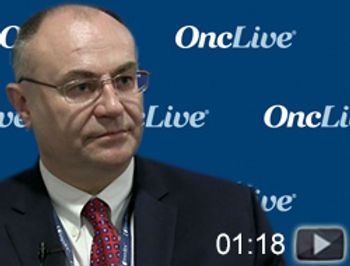
Heinz-Josef Lenz, MD, FACP, associate director for Adult Oncology and co-leader of the Gastrointestinal Cancers Program, USC Norris Comprehensive Cancer Center, discusses the need for new treatment strategies in colorectal cancer.

Hans-Joachim Schmoll, MD, head, Department of Oncology and Hematology, associate professor, Internal Medicine, Hematology/ Oncology, University Hospital Halle, discusses the objective of the CHARTA study for patients with colorectal cancer (CRC).

Luis A. Diaz, MD, head of the division of Solid Tumor Oncology at Memorial Sloan Kettering Cancer Center, discusses the response rates of pembrolizumab (Keytruda) for patients with colorectal cancer (CRC).
The recent approval of 2 immunotherapies for the treatment of certain patients with tumors that exhibit microsatellite instability has propelled the emerging biomarker into clinical practice, prompting calls for broader genetic testing.

The FDA has granted an accelerated approval to nivolumab for the treatment of adult and pediatric patients with microsatellite instability-high or mismatch repair deficient metastatic colorectal cancer that has progressed following treatment with a fluoropyrimidine, oxaliplatin, and irinotecan.

Despite the promise of immunotherapy for treating patients with advanced cancers, the success of using such therapies for progressive gastrointestinal malignancies such as colorectal liver metastases (CRLM) has been limited so far.

The European Medicines Agency's Committee for Medicinal Products for Human Use has recommended approval of Lutathera for the treatment of patients with unresectable or metastatic, progressive, well-differentiated, somatostatin receptor positive gastroenteropancreatic neuroendocrine tumors.

Patients with intermediate- or high-risk gastrointestinal stromal tumors were less likely to experience recurrence after 5 years of treatment with imatinib (Gleevec), as determined by results from the phase II PERSIST-5 trial.
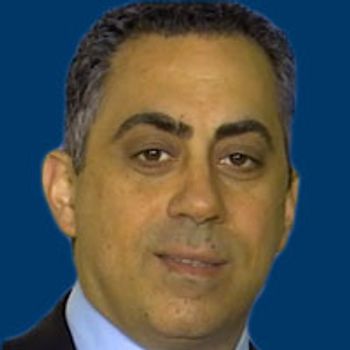
Tanios Bekaii-Saab, MD, discusses the promise of napabucasin in pancreatic cancer.

Pancreatic cancer is currently the fourth-leading cause of cancer death in the United States, with a 5-year survival rate of approximately 8%.

Andrew E. Hendifar, MD, medical oncology lead for the Gastrointestinal Disease Research Group, Cedars-Sinai Medical Center, discusses the current treatment landscape in pancreas cancer.
The FDA’s Oncologic Drugs Advisory Committee voted 16-0 to recommend approval to MYL-1401O, the trastuzumab (Herceptin) biosimilar manufactured by Mylan Pharmaceuticals.
Advertisement
Advertisement
Trending on OncLive
1
Single-Center, Retrospective Data Show Low Rate of Lifileucel Infusion Following Referral in Advanced Melanoma
2
Long-Term Cilta-Cel Data Show Low Rates of PFS Events in Standard-Risk R/R Myeloma
3
Real-World Data Support Clinical Benefit With Lifileucel in Previously Treated Advanced Melanoma
4
Dr Riedell on the Long-Term Efficacy of Tisa-Cel in R/R Follicular Lymphoma
5