



Gastrointestinal Cancer
Latest News

Advertisement
Latest Videos

CME Content

































Advertisement
More News
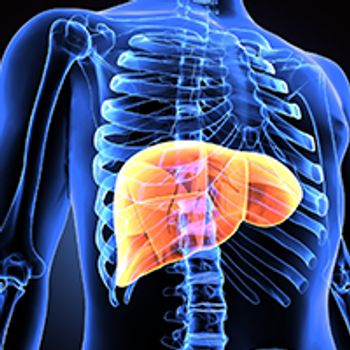
The use of an immuno-oncology regimen as systemic therapy was found to be an independent prognostic factor and was associated with improved long-term survival for patients with hepatocellular carcinoma, regardless of IO’s sequencing in the first and later lines of treatment.
Neoadjuvant treatment with the combination of nivolumab and ipilimumab led to responses and was well tolerated in patients with resectable hepatocellular carcinoma.

Real-world data from a systemic review of treatment patterns in the United States showed that the majority of patients with hepatocellular carcinoma administered atezolizumab and bevacizumab in the frontline setting discontinued treatment within 12 months, indicating the need for additional research on the effectiveness of this regimen for patients with high-risk disease.

Treatment with ramucirumab in the second line after first-line lenvatinib monotherapy or the combination of atezolizumab and bevacizumab, or as third-line treatment following both regimens, elicited efficacy comparable with second-line ramucirumab following treatment with sorafenib in patients with advanced hepatocellular carcinoma.
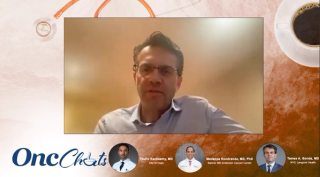
In this third episode of OncChats: Leveraging Endoscopic Ultrasound in Pancreatic Cancer, Toufic A. Kachaamy, MD, Madappa Kundranda, MD, PhD, and Tamas A. Gonda, MD, share how they would best utilize genetic testing results obtained from endoscopic ultrasound–guided biopsies in pancreatic ductal adenocarcinomas.
Daneng Li, MD, highlights the importance of biomarker testing in gastroesophageal and biliary tract cancers, the potential role for targeted therapy in first-line CRC treatment, and when to choose neoadjuvant therapy over upfront surgery and adjuvant therapy in pancreatic cancer.

Daneng Li, MD, discusses the investigation of triplet combination therapy for patients with hepatocellular carcinoma in the phase 1/2 Morpheus-Liver study.
Afsaneh Barzi, MD, PhD, discusses unmet needs associated with the adjuvant treatment of patients with gastroesophageal cancers and highlights the use of nivolumab in this setting.
Daneng Li, MD, discusses how immune-related adverse effects can affect the treatment of patients with gastrointestinal cancer, specifically those with unresectable hepatocellular carcinoma.

Howard S. Hochster, MD, discusses data from the phase 3 FRESCO-2 trial of fruquintinib plus best supportive care in metastatic colorectal cancer.
In this last episode of OncChats: Mapping Progress Made in Pancreatic Cancer Surgery, Horacio J. Asbun, MD, and Domenech Asbun, MD, explain how augmented reality or artificial intelligence may be utilized to improve outcomes for patients with pancreatic cancer who are undergoing surgical procedures.
The benzodiazepines lorazepam and alprazolam had differing effects on progression-free survival (PFS) outcomes among patients with pancreatic cancer, with lorazepam demonstrating an association with decreased PFS and alprazolam prolonging PFS.
In this second episode of OncChats: Leveraging Endoscopic Ultrasound in Pancreatic Cancer, Toufic A. Kachaamy, MD, Madappa Kundranda, MD, PhD, and Tamas A. Gonda, MD, discuss the techniques used such as endoscopic ultrasound–guided biopsies to collect adequate tissue to perform genomic analyses in pancreatic cancer, and the likelihood for finding actionable mutations in this population.
Martin Wermke, MD, discusses why the novel agent may serve as a promising treatment option targeting DLL3.
Mitesh J. Borad, MD, highlights key additional findings from ReFocus and how RLY-4008 differs from currently available FGFR2 inhibitors.
Afsaneh Barzi, MD, PhD, discusses challenges treating oncologists face when aiming to navigate the treatment landscape of patients with gastroesophageal cancers and highlights the evolution of treatments for patients with these diseases.
In this fourth episode of OncChats: Mapping Progress Made in Pancreatic Cancer Surgery, Horacio J. Asbun, MD, and Domenech Asbun, MD, project where the pancreatic cancer treatment paradigm is headed, from a surgical perspective and beyond.
Savolitinib Wins Breakthrough Therapy Designation in China for Gastric Cancer With MET Amplification
The Center for Drug Evaluation, of the National Medical Products Administration in China, has granted a breakthrough therapy designation to savolitinib for use in patients with locally advanced or metastatic gastric cancer or gastroesophageal junction with MET amplification in whom at least 2 lines of standard therapy have failed.
Novartis will discontinue the development of the anti-TGFß monoclonal antibody NIS793 for the treatment of patients with pancreatic cancer and other malignancies, according to a SEC filing from Xoma.
In this first episode of OncChats: Leveraging Endoscopic Ultrasound in Pancreatic Cancer, Toufic A. Kachaamy, MD, Madappa Kundranda, MD, PhD, and Tamas A. Gonda, MD, discuss how endoscopic ultrasound has changed the diagnosis of pancreatic cancer and how it may also be utilized to guide personalized treatment in nonmetastatic adenocarcinomas.

The European Commission has approved pembrolizumab for use in combination with trastuzumab, fluoropyrimidine- and platinum-containing chemotherapy for the first-line treatment of adult patients with locally advanced unresectable or metastatic, HER2-positive gastric or gastroesophageal junction adenocarcinoma whose tumors express PD-L1 with a combined positive score of at least 1.
The European Medicines Agency has granted orphan drug designation to mitazalimab for use in patients with pancreatic cancer.
Interim data from the phase 3 CABINET trial demonstrated significant improvement in progression-free survival with cabozantinib vs placebo in patients with advanced pancreatic or extra-pancreatic neuroendocrine tumors following progression on prior systemic therapy.
In this third episode of OncChats: Mapping Progress Made in Pancreatic Cancer Surgery, Horacio J. Asbun, MD, and Domenech Asbun, MD, underscore the need for utilizing a multidisciplinary approach to determine the optimal care plan for each patient with pancreatic cancer.

Second-line treatment with GNOS-PV02 plus plasmid-encoded interleukin-12 followed by electroporation elicited complete molecular response detected via circulating tumor DNA in 4 additional patients with advanced hepatocellular carcinoma enrolled in the phase 1b/2a GT-30 study.
Advertisement
Advertisement
Trending on OncLive
1
Single-Center, Retrospective Data Show Low Rate of Lifileucel Infusion Following Referral in Advanced Melanoma
2
Long-Term Cilta-Cel Data Show Low Rates of PFS Events in Standard-Risk R/R Myeloma
3
Real-World Data Support Clinical Benefit With Lifileucel in Previously Treated Advanced Melanoma
4
Dr Riedell on the Long-Term Efficacy of Tisa-Cel in R/R Follicular Lymphoma
5