



Gastrointestinal Cancer
Latest News

Advertisement
Latest Videos


CME Content

































Advertisement
More News

If there is one touchstone that emerges from Dr. Margaret A. Tempero's career of studying and treating pancreatic cancer, it is her persistence in simply trying to help her patients.
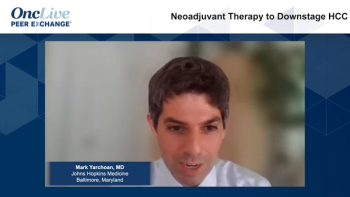
Neoadjuvant Therapy to Downstage HCC
ByTanios S. Bekaii-Saab, MD, FACP, Mayo Clinic,Edward Kim, MD, Mount Sinai Medical Center,Anjana Pillai, MD, University of Chicago Medicine Comprehensive Cancer Center,Amit Singal, MD, UT Southwestern Medical Center,Rachna Shroff, MD, University of Arizona,Arndt Vogel, MD, Hannover Medical School,Mark Yarchoan, MD
Reactions to treatment gaps in the neoadjuvant space for hepatocellular carcinoma and implications for incorporating data supporting newer, novel systemic therapies for appropriate patients.

Advances in Locoregional Therapy for Early Stage HCC
ByTanios S. Bekaii-Saab, MD, FACP, Mayo Clinic,Edward Kim, MD, Mount Sinai Medical Center,Anjana Pillai, MD, University of Chicago Medicine Comprehensive Cancer Center,Amit Singal, MD, UT Southwestern Medical Center,Rachna Shroff, MD, University of Arizona,Arndt Vogel, MD, Hannover Medical School,Mark Yarchoan, MD
University of Arizona’s Rachna Shroff, MD, describes the role of systemic therapy with locoregional treatment for early stage hepatocellular carcinoma and highlights treatment strategies of interest that remain under investigation.

The FDA has granted an orphan drug designation to LP-184 as a potential therapeutic option for patients with pancreatic cancer.

The European Medicines Agency has validated its Type II Variation Marketing Authorization Applications for nivolumab plus ipilimumab and nivolumab plus fluoropyrimidine- and platinum-containing chemotherapy as frontline options for adult patients with unresectable advanced, recurrent, or metastatic esophageal squamous cell carcinoma.
Implications for using the combination of pembrolizumab and lenvatinib to treat patients with metastatic colorectal cancer based on updated data from the LEAP-005 study.
Considerations for treating patients with metastatic colorectal cancer with the combination of nivolumab and regorafenib based on preliminary data.

Sintilimab plus oxaliplatin/capecitabine significantly improved overall survival over chemotherapy alone when used as a first-line treatment in patients with unresectable, locally advanced, recurrent or metastatic gastric or gastroesophageal junction adenocarcinoma.
Current Role of Locoregional Therapy for Early Stage HCC
ByTanios S. Bekaii-Saab, MD, FACP, Mayo Clinic,Edward Kim, MD, Mount Sinai Medical Center,Anjana Pillai, MD, University of Chicago Medicine Comprehensive Cancer Center,Amit Singal, MD, UT Southwestern Medical Center,Rachna Shroff, MD, University of Arizona,Arndt Vogel, MD, Hannover Medical School,Mark Yarchoan, MD
Edward Kim, MD, of Mount Sinai Health System describes where advances in locoregional therapy for early-stage hepatocellular carcinoma fit into the therapeutic landscape.
Diagnosing Early-Stage HCC via Biopsy
ByTanios S. Bekaii-Saab, MD, FACP, Mayo Clinic,Edward Kim, MD, Mount Sinai Medical Center,Anjana Pillai, MD, University of Chicago Medicine Comprehensive Cancer Center,Amit Singal, MD, UT Southwestern Medical Center,Rachna Shroff, MD, University of Arizona,Arndt Vogel, MD, Hannover Medical School,Mark Yarchoan, MD
A debate regarding the current role of biopsy to confirm a diagnosis of early-stage hepatocellular carcinoma.

William P. Harris, MD, discusses the adoption of immunotherapy in advanced hepatocellular carcinoma.
Drs. John L. Marshall, Marwan G. Fakih, and Joleen M. Hubbard, describe the current role of chemotherapy for frontline metastatic colorectal cancer based on novel treatment advances.
Considerations for frontline immunotherapy for patients with microsatellite instability high metastatic colorectal cancer based on data from the KEYNOTE-177 and CheckMate 142 studies.

Su H. Wang, MD, MPH, discusses the rationale for the integration of viral hepatitis screening and care in a hospital system as the first steps for preventing liver cancers like hepatocellular carcinoma.

TheraSphere Y-90 glass microspheres offer a precision medicine technique aimed at delivering high-dose radiation directly to tumors.
Diagnostic Testing for Early Stage HCC
ByTanios S. Bekaii-Saab, MD, FACP, Mayo Clinic,Edward Kim, MD, Mount Sinai Medical Center,Anjana Pillai, MD, University of Chicago Medicine Comprehensive Cancer Center,Amit Singal, MD, UT Southwestern Medical Center,Rachna Shroff, MD, University of Arizona,Arndt Vogel, MD, Hannover Medical School,Mark Yarchoan, MD
The rationale for diagnostic imaging to evaluate and diagnose early stage hepatocellular carcinoma.
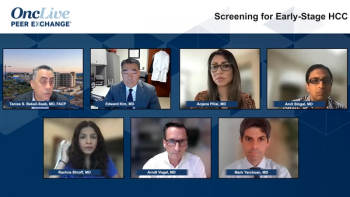
Screening for Early Stage HCC
ByTanios S. Bekaii-Saab, MD, FACP, Mayo Clinic,Edward Kim, MD, Mount Sinai Medical Center,Anjana Pillai, MD, University of Chicago Medicine Comprehensive Cancer Center,Amit Singal, MD, UT Southwestern Medical Center,Rachna Shroff, MD, University of Arizona,Arndt Vogel, MD, Hannover Medical School,Mark Yarchoan, MD
A brief overview of criteria and tools used to assess, and risk stratify patients with early stage hepatocellular carcinoma.
Mayo Clinic’s Joleen M. Hubbard, MD, interprets data recently presented on the use of EGFR inhibitors as frontline therapy for appropriate patients with metastatic colorectal cancer.
Tumor characteristics, patient factors, and supporting data that affect frontline treatment decisions for patients with microsatellite stable (MSS) metastatic colorectal cancer.
Daniel Catenacci, MD, and Sam Klempner, MD, conclude their discussion by examining emerging agents and biomarkers for the management of advanced gastric and esophagogastric junction cancers.
Experts in the management of gastric cancer discuss best practices for monitoring signs and symptoms of disease progression and explore factors to consider when switching therapies in later lines of treatment.
Gastric cancer specialists emphasize the importance of communication and education when selecting first-line treatment for patients with PD-L1-negative, HER2-positive disease.

The European Commission has approved nivolumab for use as an adjuvant treatment in adult patients with esophageal or gastroesophageal junction cancer who have residual pathologic disease after neoadjuvant chemoradiation.

Updated overall survival data from the APACT trial suggest improved outcomes for patients with resected pancreatic cancer who receive adjuvant nab-paclitaxel plus gemcitabine despite missing the primary end point in earlier analysis.

Milind Javle, MD, discusses the potential impact of infigratinib on the treatment landscape of FGFR2 fusion–positive cholangiocarcinoma.
Advertisement
Advertisement
Trending on OncLive
1
Single-Center, Retrospective Data Show Low Rate of Lifileucel Infusion Following Referral in Advanced Melanoma
2
Outcomes With Bridging Therapy Correlate With Cilta-Cel Efficacy, Safety in Multiple Myeloma
3
Real-World Data Support Clinical Benefit With Lifileucel in Previously Treated Advanced Melanoma
4
Long-Term Cilta-Cel Data Show Low Rates of PFS Events in Standard-Risk R/R Myeloma
5