





Gynecologic Oncology
Latest News

Camrelizumab Plus Famitinib Shows Promise in Recurrent or Metastatic Cervical Cancer
By Kristi Rosa

Nimotuzumab With Concurrent Chemoradiotherapy Shows Activity in Cervical Squamous Cell Carcinoma
By Kristi Rosa
Advertisement
Latest Videos








CME Content































Advertisement
More News

Explore the groundbreaking shift in frontline treatment for endometrial cancer, driven by recent data from trials like RUBY and GY018, highlighting the significant impact of checkpoint inhibitors in patients with mismatch repair deficiency.
Discover strategies for minimizing adverse events and overlapping toxicities in patients undergoing lenvatinib and pembrolizumab therapy for recurrent endometrial cancer.
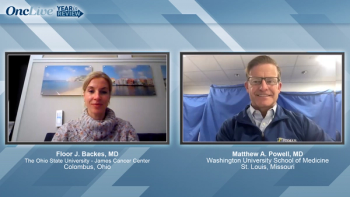
Drs Backes and Powell highlight key advances in endometrial cancer treatment from the 2023 SGO, ASCO, and ESMO conferences, including HER2-targeted therapies showing promising response rates.
Matthew Powell, MD, and Floor Backes, MD, discuss recent advances in the molecular profiling and staging of endometrial cancer.
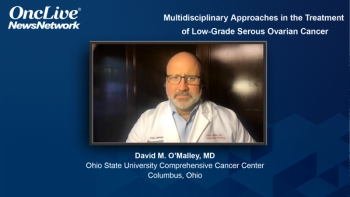
Dr O’Malley discusses strategies in collaborating with multidisciplinary teams for quality of life, fertility preservation, and management of treatment related side effects to optimize patient wellbeing.

Key opinion leaders review recent updates to the NCCN guidelines for treating recurrent and advanced endometrial cancer, including biomarker testing and targeted therapies like dostarlimab and trastuzumab.
Expert gynecologic oncologists discuss recent progress in treating advanced endometrial and cervical cancers, including epidemiology, risk factors, evaluation, staging, and molecular testing.
Learn about the factors that influence the choice between chemotherapy re-challenge and the combination of lenvatinib and pembrolizumab for endometrial cancer treatment in the context of clinical data.
The role of HER2 status and targeted therapy with trastuzumab in advanced endometrial cancer, emphasizing the need for effective management of cardiac toxicities and comorbidities.
Exploring treatment options for patients with recurrent mismatch repair deficient endometrial cancer, including the choice between single-agent checkpoint inhibitors and chemo-immunotherapy combinations, with insights from GARNET and KEYNOTE-158 studies.
Experts Ritu Salani, MD, MBA, and Bhavana Pothuri, MD, discuss the prevalence of patients with recurrent endometrial cancer, challenges in responding to chemotherapy, and the potential for improved treatment options in the second-line setting.

Despite advanced ovarian and endometrial cancer still being accompanied by a poor prognosis and remaining largely difficult-to-treat diseases, optimism among clinicians has steadily ramped up in recent years with the development of multiple new promising agents and treatment regimens.
Insight into the typical response to first-line chemotherapy in advanced endometrial cancer and the clinical factors that influence treatment outcomes, with a focus on improving therapies for this high-risk cohort.
Key factors influencing frontline treatment choices in endometrial cancer, including biomarker status, comorbidities, guidelines, and patient preferences, with a focus on the evolving landscape of therapies.

Atezolizumab Plus Bevacizumab and Chemo Improves Survival in Metastatic or Recurrent Cervical Cancer
The addition of atezolizumab to bevacizumab and chemotherapy resulted in a significant improvement in progression-free survival and overall survival vs standard treatment with bevacizumab and chemotherapy in patients with metastatic, persistent, or recurrent cervical cancer.
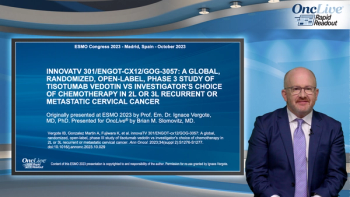
Brian Slomovitz, MD, provides a look at an upcoming Rapid Readout program looking at the results of a phase 3 study of tisotumab vedotin in patients with recurrent or metastatic cervical cancer.
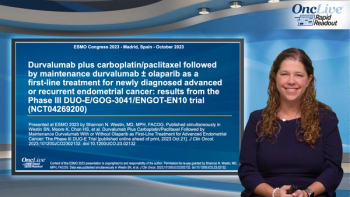
Shannon Westin, MD, reviews the results of the Phase III DUO-E/GOG-3041/ENGOT-EN10 trial in patients with newly diagnosed advanced or recurrent endometrial cancer.

The addition of dostarlimab to carboplatin plus paclitaxel followed by dostarlimab monotherapy significantly improved overall survival compared with placebo plus chemotherapy followed by placebo in adult patients with primary advanced or recurrent endometrial cancer.
Explore the case of a 67-year-old patient with recurrent endometrial cancer, highlighting the importance of MMR testing, NGS, and emerging treatment options in today's landscape.
Dive into the evolving landscape of endometrial cancer, including rising incidence, classification, racial disparities, and emerging modalities, as discussed by experts Ritu Salani, MD, MBA, and Bhavana Pothuri, MD.

Dr Naumann discusses the role of frontline maintenance therapy for patients with endometrial cancer; which patients are likely to benefit from the RUBY and NRG-GY018 trial regimens; and ongoing research that may elucidate optimal treatments for patients with recurrent, mismatch repair–deficient disease.

Meredith McKean, MD, MPH, discusses the efficacy and safety of treatment with the anti-TGIT agent etigilimab and the PD-1 inhibitor nivolumab in patients with solid tumors and PD-L1-low disease.

OncLive® will be LIVE with OncLive® News Network: On Location at the 2023 ESMO Congress. Each day, we will broadcast a series of interviews with top thought leaders, to learn their thoughts and reactions to data presented across oncology during the conference.
Continued treatment with lenvatinib monotherapy after the completeion of combination therapy with pembrolizumab and lenvatinib resulted in sustained clinical benefit vs chemotherapy alone in patients with previously treated advanced endometrial cancer.

Patients with primary advanced or recurrent endometrial cancer whose disease was deficient mismatch repair/microsatellite instability-high, TP53 mutated, or had no specific molecular profile, experienced a survival benefit when treated with dostarlimab-gxly plus chemotherapy vs placebo plus chemotherapy.
Advertisement
Advertisement
Trending on OncLive
1
Nonresponse to Bridging Therapy and Peak ALC After Cilta-Cel Are Associated With Neurotoxicity, NRM in Myeloma
2
Long-Term Cilta-Cel Data Show Low Rates of PFS Events in Standard-Risk R/R Myeloma
3
FDA Underscores Risks Associated With DPD Deficiency and Capecitabine/5-FU Use in Cancer Care
4
FDA Updates Axi-Cel Label to Remove Limitation of Use in R/R PCNSL
5