



Hematologic Oncology
Latest News
Advertisement
Latest Videos
CME Content
































Advertisement
More News
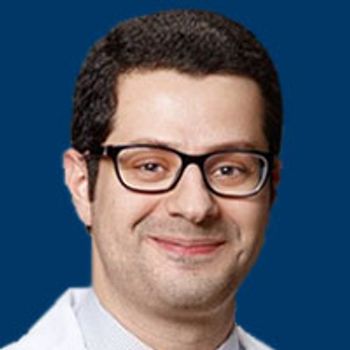
Mohammad Maher Abdul-Hay, MD, discusses current standards for the treatment of patients with acute lymphocytic leukemia.

Madan Jagasia, MBBS, MS, MMHC, discusses the current treatment landscape and next steps in graft-versus-host-disease.

The FDA has granted an orphan drug designation to umbralisib for the treatment of patients with follicular lymphoma.

Naval G. Daver, MD, discusses the results of a phase Ib/II study that evaluated the combination of azacitidine and nivolumab (Opdivo) in patients with relapsed/refractory acute myeloid leukemia.
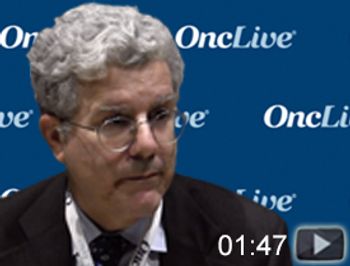
Michael L. Grossbard, MD, discusses the utility of PI3K inhibitors in follicular lymphoma.

Investigators propose that a PI3K-δ,γ inhibitor currently indicated for the treatment of 3 hematologic malignancies may be a key to boosting response rates in peripheral T-cell lymphoma, a disease setting defined by poor prognoses.
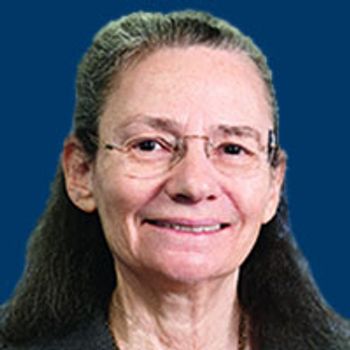
Clara D. Bloomfield, MD, the 2015 Giants of Cancer® award winner for Myeloid Neoplasms and a revolutionary physician-scientist, died March 1 at the age of 77.
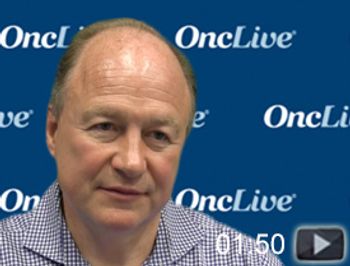
Paul G. Richardson, MD, clinical program leader and director of clinical research, Jerome Lipper Multiple Myeloma Center, and institute physician, Dana-Farber Cancer Institute, and RJ Corman Professor of Medicine at Harvard Medical School, discusses the FDA approval of isatuximab-irfc (Sarclisa) for use in combination with pomalidomide (Pomalyst) and dexamethasone in relapsed/refractory multiple myeloma.

Although the development of chemotherapy-free regimens is a major thrust of oncology research, improvements to traditional cytotoxic therapy are actively being explored, with a focus on new formulations and delivery methods for agents that have been used for decades.
The FDA has granted a priority review designation to a biologics license application for the combination of tafasitamab and lenalidomide for the treatment of patients with relapsed/refractory diffuse large B-cell lymphoma.
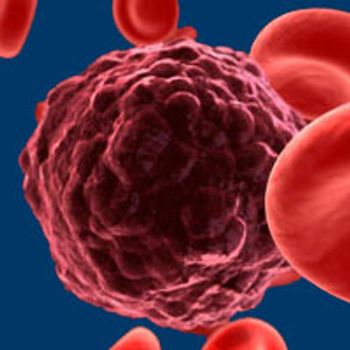
Combining venetoclax with low-dose cytarabine (LDAC) did not lead to a statistically significant improvement in overall survival compared with LDAC alone in newly-diagnosed patients with acute myeloid leukemia who are ineligible for intensive chemotherapy, according to findings from the phase III VIALE-C (M16-043) trial.
Pembrolizumab demonstrated a statistically significant and clinically meaningful improvement in progression-free survival compared with brentuximab vedotin in adult patients with relapsed/refractory classic Hodgkin lymphoma, meeting one of the dual primary endpoints of the phase III KEYNOTE-204 trial.
Noopur Raje, MD, discusses the investigational CAR T-cell therapies and strategies in the multiple myeloma pipeline.
Corey S. Cutler, MD, MPH, discusses how physicians can optimize treatment management in patients with both acute and chronic graft-versus-host-disease.

Jerald P. Radich, MD, discusses how the role of minimal residual disease (MRD) has evolved recently in clinical trials of hematologic malignancies.
At the 24th Annual International Congress on Hematologic Malignancies®, Sonali M. Smith, MD, detailed the critical clinical trial findings currently informing treatment selection in the frontline indolent non-Hodgkin lymphoma paradigm.
OncLive interviewed experts at the State of the Science Summits™ in February 2020 on common misconceptions in their respective fields.
Jorge E. Cortes, MD, shares his experience with tyrosine kinase inhibitors as treatment of patients with chronic myeloid leukemia.
Samer K. Khaled, MD, discusses current recognition and treatment strategies for transplant-associated thrombotic microangiopathy.

Praveen Ramakrishnan, MD, assistant professor, Department of Internal Medicine, UT Southwestern Medical Center, discusses updates in diffuse large B-cell lymphoma (DLBCL) that were presented at the 2019 ASH Annual Meeting.
Benjamin Heyman, MD, assistant clinical professor of medicine, University of California, San Diego, discusses the use of maintenance rituximab (Rituxan) in patients with follicular lymphoma.
Newly approved and investigational agents are joining ruxolitinib for the treatment of myelofibrosis and may provide options for patients who progress or become intolerant to frontline JAK inhibitors.

Jae H. Park, MD, discusses the challenges in using CAR T-cell therapy in adult patients with acute lymphoblastic leukemia, and also highlights the potential role for off-the-shelf CAR T cells.

Despite advances made in the treatment of patients with diffuse large B-cell lymphoma, investigators are on a quest to move more novel agents through the pipeline, says Craig Moskowitz, MD, in a presentation during the 24th Annual International Congress on Hematologic Malignancies®: Focus on Leukemias, Lymphomas, and Myeloma.
Gemtuzumab ozogamicin in combination with intensive induction therapy was associated with a higher early death rate compared with induction therapy alone in patients with NPM1-mutated acute myeloid leukemia.
Advertisement
Advertisement
Trending on OncLive
1
Single-Center, Retrospective Data Show Low Rate of Lifileucel Infusion Following Referral in Advanced Melanoma
2
Real-World Data Support Clinical Benefit With Lifileucel in Previously Treated Advanced Melanoma
3
Long-Term Cilta-Cel Data Show Low Rates of PFS Events in Standard-Risk R/R Myeloma
4
Dr Riedell on the Long-Term Efficacy of Tisa-Cel in R/R Follicular Lymphoma
5