






Hematologic Oncology
Latest News
Advertisement
Latest Videos





CME Content































Advertisement
More News

After answering her calling for hematology oncology, Margaret A. Shipp, MD, shook up lymphoma research by exploiting the PD-1 pathway to evade immune detection and testing checkpoint inhibitors across this malignancy, among several other achievements.

Here is your snapshot of all therapeutic options greenlit by the FDA in December 2024 spanning tumor types.
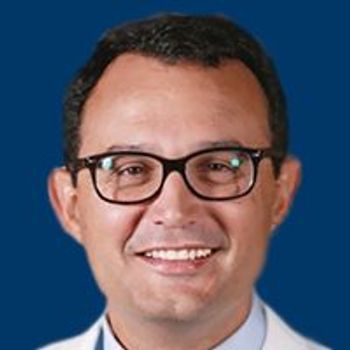
Beyond a lengthy list of accomplishments across the leukemia spectrum of treatment, Garcia-Manero holds the importance of mentorship as incredibly dear to his heart and a way to pass the torch forward in cancer care.

With a focus on closing gaps in cancer care for underserved populations, Joseph A. Sparano, MD, FACP, always strives to put patients first—a quality that has become a hallmark of his research and career in oncology.

The addition of pegcrisantaspase to venetoclax may overcome resistance to prior BCL-2 inhibitor–based regimens for patients with relapsed/refractory AML.

Uproleselan plus chemotherapy did not improved overall survival in relapsed/refractory acute myeloid leukemia.

Olverembatinib demonstrated preliminary efficacy and was well tolerated in patients with heavily pretreated chronic-phase myeloid leukemia.
The FDA granted fast track designation to NX-5948 for Waldenstrom macroglobulinemia that is relapsed/refractory to at least 2 lines of therapy.

The FDA has approved remestemcel-L-rknd for pediatric steroid-refractory acute graft-vs-host disease.

Javier Pinilla, MD, PhD, and Talha Badar, MBBS, MD, discuss factors that influence later-line treatment choices in chronic myeloid leukemia.
Javier Pinilla, MD, PhD, and Talha Badar, MBBS, MD, on the implications of the FDA approval of asciminib in newly diagnosed CP-CML.
Orca-Q led to low rates of graft-vs-host disease and non-relapse mortality in high-risk hematologic malignancies.

Treatment with a 100-mg dose of bezuclastinib had a favorable safety and tolerability profile in patients with non-advanced systemic mastocytosis.
Iopofosine I 131 demonstrated durable efficacy and tolerability in heavily pretreated relapsed/refractory Waldenström macroglobulinemia.

Select safety measures have improved the prevention and management of risks associated with ponatinib in ALL and CML over 10 years.

IO-202 plus azacitidine elicited an ORR of 66.7% in patients with HMA-naive chronic myelomonocytic leukemia.

NFKB1 rs230511 reduces inflammation and amplifies responses to ropeginterferon alfa-2b in polycythemia vera and essential thrombocythemia.

Tafasitamab plus lenalidomide and rituximab improved median PFS vs lenalidomide and rituximab in patients with relapsed/refractory follicular lymphoma.

Eunice S. Wang, MD, on ziftomenib plus intensive induction in newly diagnosed, NPM1-mutated or KMT2A-rearranged acute myeloid leukemia.
BGB-16673 monotherapy showed early activity and a tolerable safety profile in relapsed/refractory Waldenström macroglobulinemia, CLL, and SLL.
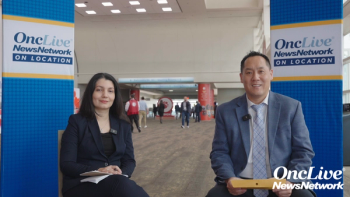
S. Vincent Rajkumar, MD, of Mayo Clinic; Nosha Farhadfar, MD, of Methodist Physician Practices; and Sonali Smith, MD, of University of Chicago Medicine, sit down with Chandler Park, MD, FACP, to discuss the latest in multiple myeloma, graft-vs-host disease, and non-Hodgkin lymphoma, respectively, from the 2024 ASH Annual Meeting.

Frontline treatment with zanubrutinib continued to improve PFS vs bendamustine plus rituximab at 5 years in patients with treatment-naive CLL/SLL.
Second-generation BTK inhibitors were associated with a significantly lower incidence of cardiac adverse effects in B-cell malignancies.
The addition of uproleselan to chemotherapy did not meet the primary OS end point of a phase 3 trial evaluating patients with relapsed/refractory AML.

Outpatient lymphodepletion prior to brexu-cel was safe and generated comparable 60-day non-relapse mortality vs inpatient administration in B-ALL and MCL.
Advertisement
Advertisement
Trending on OncLive
1
Long-Term Cilta-Cel Data Show Low Rates of PFS Events in Standard-Risk R/R Myeloma
2
Real-World Data Support Clinical Benefit With Lifileucel in Previously Treated Advanced Melanoma
3
FDA Updates Axi-Cel Label to Remove Limitation of Use in R/R PCNSL
4
Dr Riedell on the Long-Term Efficacy of Tisa-Cel in R/R Follicular Lymphoma
5