


Hematologic Oncology
Latest News
Advertisement
Latest Videos
CME Content




























Advertisement
More News
Lauren Pinter-Brown, MD, from the University of California, Los Angeles, gives an overview of treatment with chemotherapy for patients with cutaneous T-cell lymphoma.
Ranjana Advani, MD, Professor of Medicine and Oncology, Stanford University, discusses targeting CD30 as a target and the use of brentuximab vedotin in anaplastic large-cell lymphoma.

Jennifer Brown, MD, PhD, Director, Chronic Lymphocytic Leukemia Center, Dana-Farber Cancer Institute, Assistant Professor of Medicine, Harvard Medical School, discusses the treatment of chronic lymphocytic leukemia with ibrutinib, idelalisib, and other agents.
Ruben A. Mesa, MD, Professor of Medicine, Division of Hematology & Medical Oncology, Mayo Clinic, describes three phase II and phase III trials in myelofibrosis.

Ari M. Melnick, MD, Professor of Medicine, Weill Cornell Medical College, comments on biomarkers in lymphoma.
Ola Landgren, MD, PhD, Head, Multiple Myeloma Section, National Cancer Institute, comments on the use of carfilzomib and pomalidomide for the treatment of myeloma.
Harry Erba, MD, PhD, Professor of Medicine, Director, Hematologic Malignancy Program, University of Alabama at Birmingham, comments on the diagnosis and testing of a patient with chronic myeloid leukemia (CML).

Follicular lymphoma is characterized by repeated treatment responses and then relapses, and until more effective frontline therapies become available, researchers will need to generate a growing list of drug choices to keep pace with patients' needs.

After receiving breakthrough therapy designation from the FDA for the treatment of two B-cell malignancies earlier this year, ibrutinib has received an additional breakthrough designation.

Bruce D. Cheson, MD, Professor of Medicine, Head of Hematology, Director of Hematology Research, Georgetown Lombardi Comprehensive Cancer Center, discusses the diagnosis of patients with follicular lymphoma.
James R. Berenson, MD, Medical and Scientific Director, Institute for Myeloma & Bone Cancer Research, Chief Executive Officer, Oncotherapeutics, comments on new potential targets in myeloma.
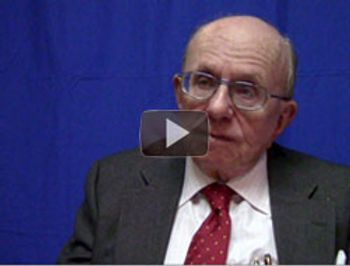
Richard T. Silver, MD, Professor of Medicine, Director, Leukemia and Myleoproliferative Center, New York Presbyterian-Weill Cornell Medical Center, discusses the use hydroxyurea and interferons in myeloproliferative neoplasms.
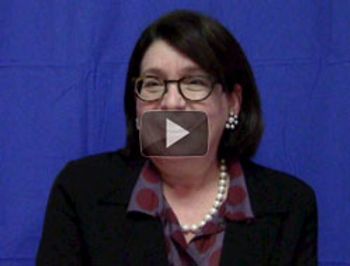
Lauren Pinter-Brown, MD, Clinical Professor, Department of Medicine, Hematology-Oncology, University of California, Los Angeles, discusses physician and patient expectations when treating cutaneous T-cell lymphoma.
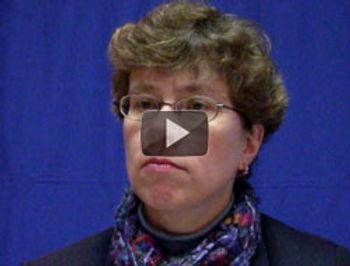
Jennifer Brown, MD, PhD, Director, Chronic Lymphocytic Leukemia Center, Dana-Farber Cancer Institute, Assistant Professor of Medicine, Harvard Medical School, discusses targeted therapies and mutations in chronic lymphocytic leukemia.
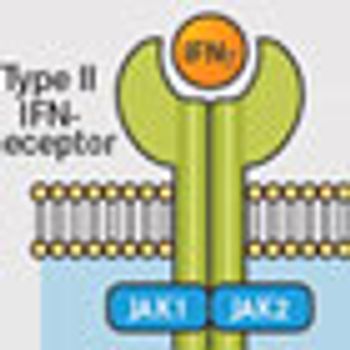
Interferons have evolved from a "cure-all" for cancer, as they were initially touted, to a more tempered yet equally vital role in treating a number of different disease states, including many different types of cancer.
Ola Landgren, MD, PhD, Head, Multiple Myeloma Section, National Cancer Institute, discusses the relationship between risk and treatment in patients with multiple myeloma.
While there is no standard treatment for most patients with chronic lymphocytic leukemia who are age 65 years and older, several regimens are being tested in clinical trials.
Although it is now standard practice to utilize the second-generation TKIs dasatinib or nilotinib in patients whose CML has recurred while taking imatinib treatment, published support for the economic value of this approach is lacking.
Ranjana Advani, MD, Professor of Medicine and Oncology, Stanford University, details the difference between EPOCH-R and R-CHOP chemotherapy.
Meir Wetzler, MD, Chief, Leukemia Section, Department of Medicine, Roswell Park Cancer Institute, discusses a study presented at the 2012 American Society of Hematology Meeting analyzing arsenic trioxide in acute promyelocytic leukemia.
Ruben A. Mesa, MD, Professor of Medicine, Division of Hematology & Medical Oncology, Mayo Clinic, discusses the long-term experience from the COMFORT-I and COMFORT-II trials in myelofibrosis.
Ari M. Melnick, MD, Professor of Medicine, Weill Cornell Medical College, discusses the future of chemotherapy in patients with lymphomas.
Bruce D. Cheson, MD, from Georgetown Lombardi Comprehensive Cancer Center, discusses the prospect of using antibody drug conjugates in non-Hodgkin lymphomas, including follicular lymphoma.
Harry Erba, MD, PhD, from the University of Alabama at Birmingham, discusses the use of second-generation tyrosine kinase inhibitors for the treatment of chronic phase chronic myeloid leukemia.
James R. Berenson, MD, Medical and Scientific Director, Institute for Myeloma & Bone Cancer Research, Chief Executive Officer, Oncotherapeutics, discusses the a study of carfilzomib as a replacement for bortezomib for multiple myeloma patients refractory to a bortezomib-containing combination regimen.
Advertisement
Advertisement
Trending on OncLive
1
Long-Term Cilta-Cel Data Show Low Rates of PFS Events in Standard-Risk R/R Myeloma
2
Real-World Data Support Clinical Benefit With Lifileucel in Previously Treated Advanced Melanoma
3
FDA Updates Axi-Cel Label to Remove Limitation of Use in R/R PCNSL
4
Single-Center, Retrospective Data Show Low Rate of Lifileucel Infusion Following Referral in Advanced Melanoma
5