


Immuno-Oncology
Latest News
Advertisement
Latest Videos

CME Content































Advertisement
More News

Scott Tykodi, MD, PhD, discusses the FRACTION-RCC study and other novel combinations under exploration for heavily pretreated patients with advanced renal cell carcinoma.

Tanios S. Bekaii-Saab, MD, FACP, shares key topics covered in the 17th Annual ISGIO meeting and its significance in the ever-evolving GI cancer space.

David Gerber, MD, discusses the rationale to combine immunotherapy with radiation therapy in lung cancer.
The FDA has approved nivolumab (Opdivo) at 360 mg every 3 weeks plus ipilimumab (Yervoy) at 1 mg/kg every 6 weeks for the frontline treatment of adult patients with unresectable malignant pleural mesothelioma.
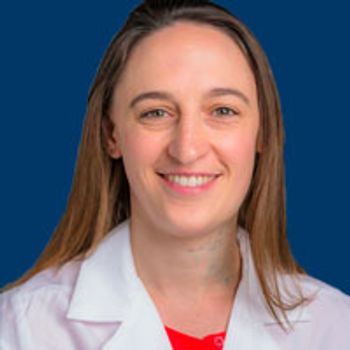
Natalie I. U. Vokes, MD, discusses the rise of predictive genomic biomarkers in oncology.

Adjuvant nivolumab was found to result in a significant improvement in disease-free survival compared with placebo in patients with high-risk muscle-invasive urothelial carcinoma, including those whose tumors expressed PD-L1 of 1% or higher, meeting the primary end points of the phase 3 CheckMate-274 trial.

Zarnie Lwin, MBBS, FRACP, discusses the results of the LEAP-005 trial in advanced solid tumors.

Safety and preliminary antitumor activity with the bispecific antibody RO7122290 alone or in combination with atezolizumab demonstrated preliminary antitumor activity and was safe for the treatment of patients with advanced solid tumors.

Although atezolizumab did not improve pathological complete response when added to carboplatin and nab-paclitaxel, the immunotherapy increased the pCR by 10% or more in “immune-rich” groups with high-risk and locally advanced triple-negative breast cancer, and also turned PD-L1 negative tumors positive in most immunotherapy-treated patients.
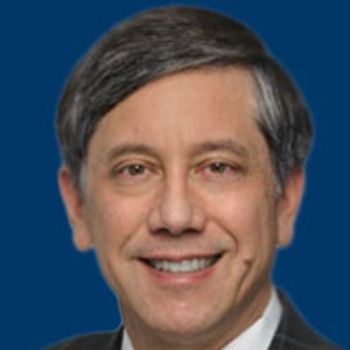
Timothy Cragin Wang, MD, discusses the advent of immunotherapy and how it has revolutionized multiple areas of cancer treatment; however, the transformative potential of the modality has been mild in the field of colorectal cancer.
The bispecific antibody CDX-527 is now under investigation in patients with advanced or metastatic solid tumors who have progressed during or following standard-of-care treatment with the recent initiation of a open-label phase 1 trial.
Investigators are evaluating the clinical and immunological impact of the experimental, engineered fusion protein ALKS 4230 on the tumor microenvironment of several advanced, malignant solid tumors in the recently initiated phase 2 ARTISTRY-3 trial.
Anne Chiang, MD, PhD, discusses the management of immune-related adverse effects in lung cancer.
David R. Spigel, MD, discusses the IMpower110, CYPRESS-1, and CANOPY-A trials, and spoke to the potential future outlook of drug development in NSCLC.
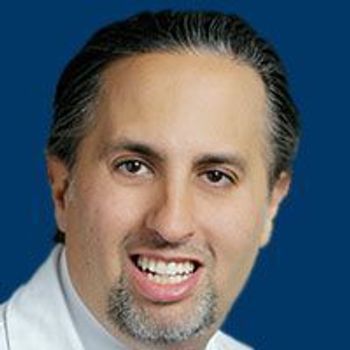
Omid Hamid, MD, discusses emerging biomarkers in melanoma, data supporting their efficacy and their potential for use in clinical practice, and future directions for research.
The FDA has issued an alert that the phase 3 IMpassion131 trial failed to show the effectiveness of atezolizumab plus paclitaxel in treatment-naïve patients with inoperable locally advanced or metastatic triple-negative breast cancer.

Investigators at UPMC Hillman Cancer Center in Pittsburgh, Pennsylvania, have launched a clinical trial to determine the impact on patient outcomes of stopping therapy after 1 year.

Jacob S. Thomas, MD, discusses the pharmacodynamic profile of INT230-6 as well as preliminary safety and efficacy data with the agent in advanced solid tumors.

Juanita Lopez, PhD, discusses early findings with RO7198457 in combination with atezolizumab in patients with locally advanced or metastatic malignancies.
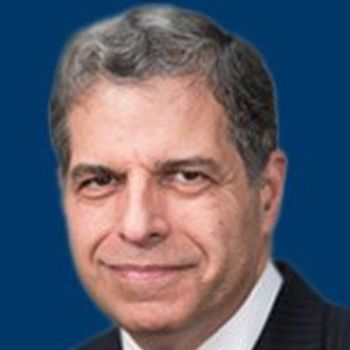
Gary K. Schwartz, MD, highlights research that is being done with regard to genomic signatures in sarcoma, challenges faced with immunotherapy, and where the field is headed.

The investigational immunotherapeutic ERC1671 in combination with granulocyte-macrophage colony-stimulating factor, cyclophosphamide, and bevacizumab showed promising activity in patients with recurrent glioblastoma.
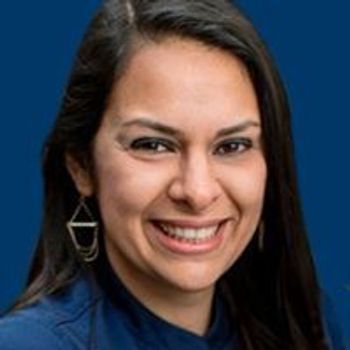
Clinical cancer trials that fail to successfully enroll a racially and ethnically diverse patient population run the risk of leaving critical gaps in understanding regarding the effectiveness of new approaches.

The Japan Pharmaceuticals and Medical Devices Agency has approved pembrolizumab for the treatment of patients with radically unresectable, advanced, or recurrent esophageal squamous cell carcinoma whose tumors are PD-L1–positive, and at an additional recommended dosage of 400 mg every 6 weeks as an intravenous infusion across all adult indications.
Spartalizumab in combination with dabrafenib and trametinib failed to meet the primary end point of investigator-assessed progression-free survival in treatment-naïve patients with unresectable or metastatic BRAF V600 mutation–positive cutaneous melanoma.
Despite encouraging data shown in some subtypes, there is still a lot of work that still needs to be done with determining the optimal use for immunotherapy in patients with sarcoma, a population that has historically been difficult to treat.
Advertisement
Advertisement
Trending on OncLive
1
Long-Term Cilta-Cel Data Show Low Rates of PFS Events in Standard-Risk R/R Myeloma
2
FDA Updates Axi-Cel Label to Remove Limitation of Use in R/R PCNSL
3
Nonresponse to Bridging Therapy and Peak ALC After Cilta-Cel Are Associated With Neurotoxicity, NRM in Myeloma
4
Real-World Data Support Clinical Benefit With Lifileucel in Previously Treated Advanced Melanoma
5