





Lung Cancer
Latest News
Advertisement
Latest Videos





CME Content

































Advertisement
More News
Adding ramucirumab to erlotinib reduced the risk of disease progression or death by over 40% versus erlotinib alone as a frontline treatment for patients with EGFR-positive NSCLC.
Neoadjuvant immunotherapy demonstrated substantial activity with a favorable toxicity profile in findings from 2 studies of patients with operable early-stage non–small cell lung cancer reported at the 2019 ASCO Annual Meeting.
A broader set of clinical trial eligibility criteria proposed by the American Society of Clinical Oncology and Friends of Cancer Research would nearly double the number of patients with advanced non-small cell lung cancer available for enrollment.

Lurbinectedin monotherapy achieved an overall response rate of 35.2% as a second-line treatment for patients with small cell lung cancer, according to findings from a phase II basket trial presented at the 2019 ASCO Annual Meeting.

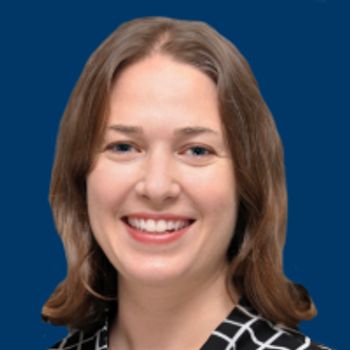
The development of tyrosine kinase inhibitors has revolutionized the treatment of EGFR-mutant non–small cell lung cancer in recent years, but new strategies are needed to overcome resistance mechanisms that promote disease recurrence.

After 5 years, newly diagnosed patients with advanced non–small cell lung cancer demonstrated an overall survival (OS) rate of 23.2% from treatment with pembrolizumab monotherapy and previously treated patients had an OS rate of 15.5%.
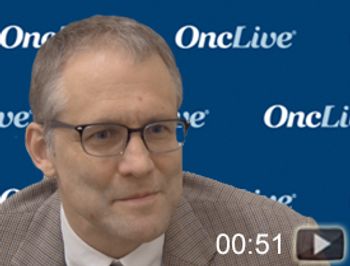
Thomas E. Stinchcombe, MD, professor of medicine, Duke Cancer Institute, discusses the benefit of alectinib in the treatment of patients with ALK-positive non–small cell lung cancer.
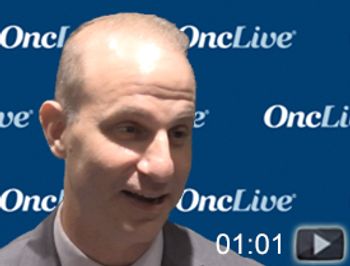
Benjamin P. Levy, MD, assistant professor of oncology, clinical director of Medical Oncology, Sidney Kimmel Cancer Center and Johns Hopkins Medicine, discusses the outlook for patients with oncogene-driven non–small cell lung cancer.

Corey J. Langer, MD, highlights how precision medicine has emerged in the treatment of patients with non–small cell lung cancer via targeted therapies and checkpoint inhibitors.
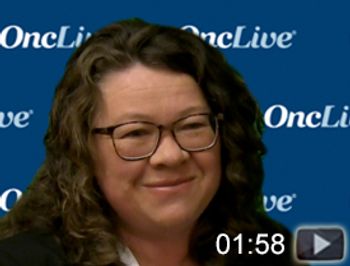
Lyudmila A. Bazhenova, MD, medical oncologist, professor of clinical medicine, University of California, San Diego, discusses sequencing beyond progression on osimertinib (Tagrisso) in EGFR-mutant non–small cell lung cancer (NSCLC).
Corey J. Langer, MD, director, Thoracic Oncology, Abramson Cancer Center, professor of medicine, Perelman School of Medicine, University of Pennsylvania, discusses the impact of durvalumab in stage III non–small cell lung cancer.
Jeffrey M. Clarke, MD, assistant professor of medicine, Duke Cancer Institute, compares EGFR TKIs in EGFR-positive non–small cell lung cancer.

Scott J. Antonia, MD, PhD, instructor, Duke University School of Medicine, member, Duke Cancer Institute, discusses the promise of immunotherapy in patients with non–small cell lung cancer.
Advertisement
Advertisement
Trending on OncLive
1
Single-Center, Retrospective Data Show Low Rate of Lifileucel Infusion Following Referral in Advanced Melanoma
2
Real-World Data Support Clinical Benefit With Lifileucel in Previously Treated Advanced Melanoma
3
Long-Term Cilta-Cel Data Show Low Rates of PFS Events in Standard-Risk R/R Myeloma
4
Dr Riedell on the Long-Term Efficacy of Tisa-Cel in R/R Follicular Lymphoma
5