


Lung Cancer
Latest News
Advertisement
Latest Videos



CME Content































Advertisement
More News
Sangeetha Palakurthi, PhD, head of the Cancer Biology and Pharmacology Group at the Belfer Center for Applied Cancer Science, Dana-Farber Cancer Institute, discusses the FDA approval of atezolizumab (Tecentriq) for the treatment of patients with non–small cell lung cancer (NSCLC).
Puneeth Iyengar, MD, radiation oncologist, University of Texas Southwestern Medical Center, discusses the rationale behind the use of hypofractionated radiation as a treatment for patients with non–small cell lung cancer.
The combination of custirsen with docetaxel failed to significantly extend overall survival compared with docetaxel alone as a second-line treatment for patients with non–small cell lung cancer.
Joshua Sabari, MD, medical oncology fellow, Memorial Sloan Kettering Cancer Center, discusses recent findings in immunotherapy as potential treatment for patients with small cell lung cancer.

Roy S. Herbst, MD, PhD, Ensign Professor of Medicine (Medical Oncology), professor of Pharmacology, chief of Medical Oncology, Yale Cancer Center and Smilow Cancer Hospital, associate director for Translational Research, Disease Alligned Research Team Leader, Thoracic Oncology Program, Yale Cancer Center, discusses the current and future impact of immunotherapy in lung cancer.
Ranee Mehra, MD, provides an overview of ALK inhibition in non–small cell lung cancer, an observation of the most common treatment-related adverse events, and what impact in-development agents will likely have on the expanding field.
Joel Neal, MD, PhD, assistant professor of Medicine (Oncology), Stanford University Medical Center, discusses how PD-L1 testing may have played a role in the survival differences between frontline pembrolizumab and nivolumab in non–small-cell lung cancer (NSCLC).

Giorgio Scagliotti, MD, PhD, professor of Medical Oncology, University of Torino, discusses the design and the results of the phase III ASCEND-5 study during an interview at the 2016 ESMO Congress.

The addition of pembrolizumab (Keytruda) to frontline platinum-based chemotherapy for advanced non–small cell lung cancer almost doubled the response rate compared with chemotherapy alone.
Ignacio I. Wistuba, MD, chair, Department of Translational Molecular Pathology, Division of Pathology/Lab Medicine, Anderson Clinical Faculty Chair for Cancer Treatment and Research, The University of Texas MD Anderson Cancer Center, discusses how pathologists maximize outcomes with limited tissue in patients with lung cancer.
First-line therapy with nivolumab failed to improve progression-free survival in PD-L1 positive non-small cell lung cancer compared with standard chemotherapy.

Atezolizumab (Tecentriq) reduced the risk of death by 27% compared with docetaxel in patients with advanced non–small cell lung cancer following the failure of platinum-based chemotherapy.

Progression-free survival was more than 3 times longer with ceritinib (Zykadia) than with chemotherapy, the current second-line standard, in patients with advanced ALK-positive non–small cell lung cancer who progressed after first-line crizotinib.

Single-agent pembrolizumab improved overall and progression-free survival compared with doublet chemotherapy for untreated patients with advanced non–small cell lung cancer who expressed PD-L1 on ≥50% of cells.

Lars Bastholt, MD, clinical oncologist, Odense University Hospital, discusses the use of lenvatinib to treat patients with non-small cell lung cancer at the 2016 ESMO Congress.
Almost 40% of patients with resected early-stage non–small cell lung cancer had evidence of tumor regression following neoadjuvant treatment with nivolumab (Opdivo) in a preliminary clinical trial.

Tracey L. Evans, MD, shares her perspective on the role of PD-L1 testing in lung cancer. She also discusses the role of liquid biopsies and other assays that could possibly be on the horizon.
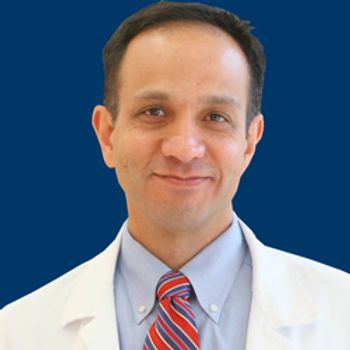
Hossein Borghaei, DO, provides additional insight on checkpoint inhibitors, determining patient selection, and how these therapies will continue to significantly impact the treatment landscape in non–small cell lung cancer for years to come.
Kevin Stephans, MD, associate staff, Radiation Oncology at Cleveland Clinic, discusses advancements in the treatment of patients with oligometastatic lung cancer.

The FDA has granted a breakthrough therapy designation to alectinib (Alecensa) as a frontline treatment for patients with ALK-positive non–small cell lung cancer.
Todd Bauer, MD, associate director, Drug Development, Sarah Cannon Research Institute, discusses the emergence of the novel agent rovalpituzumab tesirine in the treatment of patients with small cell lung cancer in an interview during the IASLC Chicago Multidisciplinary Symposium in Thoracic Oncology.
From optimal therapies for patients with non-driver adenocarcinoma, to studying the biology of squamous cell non–small cell lung cancer, to exploring novel combination regimens, to predicting the risk of mortality, the field of lung cancer is undergoing tremendous changes, explained Corey J. Langer, MD.

Nathan Pennell, MD, PhD, medical oncologist, Department of Hematology and Oncology, Cleveland Clinic, discusses some of the rare toxicities seen in patients with lung cancer.
Robert Pirker, MD, Department of Medicine I, Medical University of Vienna, discusses novel clinical trial designs that researchers should use going forward in lung cancer.
Joshua Bauml, MD, discusses the evolution of EGFR-targeted therapies, resistance mutations in patients with non–small cell lung cancer, the evolution of next-generation sequencing, and ongoing trials that could have an impact in this space.
Advertisement
Advertisement
Trending on OncLive
1
Single-Center, Retrospective Data Show Low Rate of Lifileucel Infusion Following Referral in Advanced Melanoma
2
Long-Term Cilta-Cel Data Show Low Rates of PFS Events in Standard-Risk R/R Myeloma
3
Real-World Data Support Clinical Benefit With Lifileucel in Previously Treated Advanced Melanoma
4
Dr Riedell on the Long-Term Efficacy of Tisa-Cel in R/R Follicular Lymphoma
5