




Lung Cancer
Latest News
Advertisement
Latest Videos

CME Content

































Advertisement
More News

Treatment with everolimus was associated with a 52% improvement in median progression-free survival compared with placebo in patients with advanced lung and gastrointestinal neuroendocrine tumors.
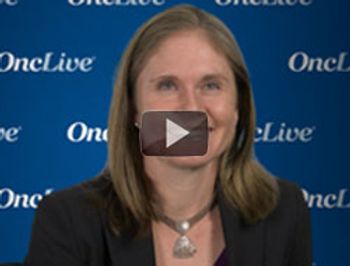
Megan E. Daly, MD, assistant professor of radiation oncology, UC Davis Cancer Center, discusses upcoming clinical trials involving radiation therapy for the treatment of lung cancer.
Jack A. Roth, MD, professor, Department of Thoracic and Cardiovascular Surgery, chief, Section of Thoracic Molecular Oncology, Division of Surgery, University of Texas MD Anderson Cancer Center, compares surgery with stereotactic body radiation therapy (SBRT) in patients with early-stage lung cancer.

As new targeted and immunologic agents are introduced for patients with lung cancer, clinicians have more factors to consider than ever before when developing treatment plans for their patients.

The third-generation TKI osimertinib (AZD9291) showed a 71% objective response rate in patients with EGFR T790M-mutant non–small cell lung cancer following resistance to frontline anti-EGFR therapy.

Coexisting driver mutations in EGFR-mutant non–small cell lung cancer could potentially contribute to primary resistance to EGFR-targeted therapy.

The addition of cetuximab (Erbitux) to chemotherapy reduced the risk of death by 44% for patients with advanced squamous non–small cell lung cancer whose tumors test positive for EGFR gene amplification.

The addition of bevacizumab (Avastin) to adjuvant chemotherapy did not improve overall survival in patients with surgically resected early-stage non–small cell lung cancer.

Alectinib received an FDA priority review designation for patients with ALK-positive, locally advanced or metastatic non–small cell lung cancer (NSCLC) who have progressed or are intolerant to crizotinib (Xalkori).

Survival for patients with metastatic squamous non–small cell lung cancer whose tumors were positive for EGFR copy number as determined by FISH analysis tended to be better when the EGFR antibody necitumumab was added to their conventional chemotherapy.

Continued treatment with gefitinib beyond progression exhibited a trend toward better outcomes in patients with T790M-negative non–small cell lung cancer.
Joshua M. Bauml, MD, assistant professor, University of Pennsylvania, discusses a novel IT platform designed to enhance lung cancer clinical trial enrollment.
Lorraine Pelosof, MD, PhD, from The University of Texas Southwestern Medical Center, discusses a study looking at the incidence of never smokers diagnosed with non-small cell lung cancer (NSCLC).
Pasi A. Jänne, MD, PhD, director, Lowe Center for Thoracic Oncology, Dana-Farber Cancer Institute, discusses biomarker results from the AURA study of AZD9291.
Barbara J. Gitlitz, MD, from the University of Southern California, discusses results and key takeaways from The Genomics of Young Lung Cancer Study.

A chemotherapy-free regimen of nivolumab and ipilimumab demonstrated activity as a first-line therapy for patients with advanced non–small cell lung cancer.

Treatment with the PD-1 inhibitor nivolumab demonstrated a 32% reduction in the risk of death compared with docetaxel for patients with previously treated squamous non–small cell lung cancer.

Most patients younger than age 40 with lung cancer had tumors with mutations that can be targeted with existing therapies.

Adding bevacizumab (Avastin) to a standard chemotherapy doublet reduced the risk of death by 24% and disease progression by 39% in patients with malignant pleural mesothelioma.

Ramaswamy Govindan, MD, medical oncologist, Washington University School of Medicine in St. Louis, discusses a talk given at the 16th World Conference on Lung Cancer.

Patients with newly diagnosed metastatic non-small lung cancer had double the expected response when the PD-L1 inhibitor atezolizumab was added to chemotherapy.
Everett E. Vokes, MD, chair, Department of Medicine, investigator of head and neck and lung cancer, University of Chicago, discusses a plenary session that covered prevention and screening at the 16th World Conference on Lung Cancer.
Advertisement
Advertisement
Trending on OncLive
1
Single-Center, Retrospective Data Show Low Rate of Lifileucel Infusion Following Referral in Advanced Melanoma
2
Real-World Data Support Clinical Benefit With Lifileucel in Previously Treated Advanced Melanoma
3
Long-Term Cilta-Cel Data Show Low Rates of PFS Events in Standard-Risk R/R Myeloma
4
Dr Riedell on the Long-Term Efficacy of Tisa-Cel in R/R Follicular Lymphoma
5