




Lung Cancer
Latest News
Advertisement
Latest Videos



CME Content































Advertisement
More News
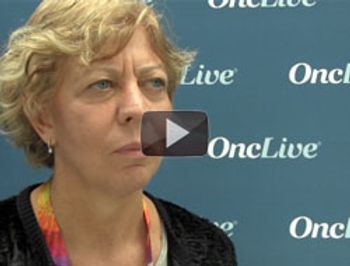
Enriqueta Felip, MD, PhD, medical oncologist, Vall d'Hebron University Hospital, Barcelona, Spain, discusses the efficacy and safety of ceritinib in patients with ALK-positive non-small cell lung cancer (NSCLC).
Quincy Chu, MD, University of Alberta, Cross Cancer Institute, Edmonton, Alberta, discusses the ability of ceritinib to penetrate the CNS.

Roy S. Herbst, MD, PhD, led some of the first trials of gefitinib, the EGFR inhibitor that helped introduce targeted therapies of this important mutation into the treatment landscape of non–small cell lung cancer.

How should oncologists respond when initial treatment of EGFR-mutant or ALK-positive lung cancer with a tyrosine kinase inhibitor (TKI) no longer prevents all disease progression?

Although testing for EGFR mutations and ALK rearrangements in patients with NSCLC has become widespread, the time has come to translate into clinical practice next-generation sequencing assays that provide exponentially more information about tumor biology.
Benjamin P. Levy, MD, director, Thoracic Medical Oncology, Mount Sinai Beth Israel, associate director, Cancer Clinical Trials Office, Mount Sinai Hospital, Mt. Sinai School of Medicine, discusses new data on immunotherapy for lung cancer.
Maria E. Arcila, MD, acting director, Diagnostic Molecular Pathology Laboratory, Memorial Sloan Kettering Cancer Center, discusses the benefits of new molecular diagnostic platforms for the treatment of lung cancer.
Thomas J. Lynch, MD, from the Yale Cancer Center, explains how resistance occurs when treating lung cancer patients with EGFR TKIs.

Lung cancer experts provided insights into recent developments in the treatment of the disease, covering topics ranging from resistance to targeted therapies to immunotherapy agents under study, during the 9th Annual New York Lung Cancer Symposium in New York City.
Vassiliki Papadimitrakopoulou, MD, provides an update on research into pembrolizumab (Keytruda) for the treatment of lung cancer.

A novel first-in-class covalent KRAS inhibitor SML-8-73-1 has demonstrated promise in preclinical studies, prompting a 3-year research collaboration between the Dana-Farber Cancer Institute and Astellas Pharma Inc.

Roy S. Herbst, MD, PhD, presented a top 10 list on immunotherapy in non-small cell lung cancer at the 2014 Multidisciplinary Symposium in Thoracic Oncology.
Jyoti D. Patel, MD, thoracic oncologist, Northwestern University Feinberg School of Medicine, discusses the benefits of multidisciplinary approach for the treatment of patients with stage III disease.
David Spigel, MD, director of Lung Cancer Research at the Sarah Cannon Research Institute, discusses results from a phase III study exploring eribulin for the treatment of patients with non-small cell lung cancer.

Nivolumab combined with platinum-based doublet chemotherapy achieved a manageable safety profile with clinical efficacy that was similar to single-agent nivolumab in patients with advanced NSCLC.

Jyoti D. Patel, MD, provides insight into managing the toxicities associated with molecular therapies used to treat patients with lung cancers.

The PD-1 immune checkpoint inhibitor nivolumab achieved an ORR of 15% with a median duration of response that was not yet reached at a median 11-month follow-up for patients with advanced, refractory NSCLC.

First-line afatinib (Gilotrif) improved overall survival (OS) by about 1 year in patients with advanced non–small cell lung cancer (NSCLC) whose tumors harbor EGFR exon 19 deletions according to results from the LUX-Lung 3 and the LUX-Lung 6 phase III randomized trials.

Ramaswamy Govindan, MD, Director, Thoracic Oncology, Co-Director, Section of Medical Oncology, Washington University School of Medicine, Siteman Cancer Center, discusses the potential for the ALK inhibitor alectinib.

Patients with NSCLC who received postoperative radiation therapy lived 4 months longer on average than patients who did not receive radiation but who had the same disease site, tumor histology, and treatment criteria, according to a large retrospective study.
D. Ross Camidge, MD, PhD, discusses CO-1686 (rociletinib) and AZD9291, two agents that inhibit initial activating EGFR mutations and the T790M resistance mutation.
Advertisement
Advertisement
Trending on OncLive
1
Long-Term Cilta-Cel Data Show Low Rates of PFS Events in Standard-Risk R/R Myeloma
2
Real-World Data Support Clinical Benefit With Lifileucel in Previously Treated Advanced Melanoma
3
Dr Riedell on the Long-Term Efficacy of Tisa-Cel in R/R Follicular Lymphoma
4
Single-Center, Retrospective Data Show Low Rate of Lifileucel Infusion Following Referral in Advanced Melanoma
5