






Lung Cancer
Latest News
Advertisement
Latest Videos


CME Content































Advertisement
More News

Targeted therapies, personalized medicine, and best management approaches will be the central topics of discussion at the 7th New York Lung Cancer Symposium.

The expansion of testing for genetic abnormalities in patients with advanced lung cancer is generating questions about which patients' tumors should be tested, how they should be tested, and whether they should be retested.
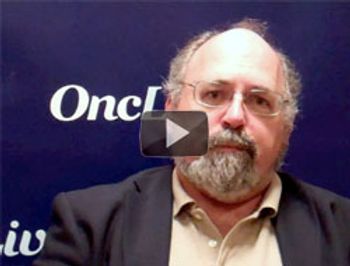
Corey J. Langer, MD, from the Abramson Cancer Center, discusses the investigation of targeted therapies for patients with locally advanced non-small cell lung cancer.

The heterogeneity of lung tumors generates challenges in terms of the costs and logistics of developing targeted therapies, given that relatively few patients may harbor a particular mutation.

The FDA has approved nab-paclitaxel plus carboplatin for patients with untreated locally advanced or metastatic NSCLC who are not candidates for surgery or radiation.
Nearly 2 years after a landmark study supported CT for people at high risk of developing lung cancer, questions persist about the complexities of implementing an early detection program.
The addition of sorafenib to first-line gemcitabine/cisplatin does not appear to lengthen survival in patients with advanced, nonsquamous, non–small cell lung cancer.

As Bonnie Addario has gone from patient to survivor, she has learned much about what patients are looking for in terms of information and care.

An interview with Giorgio V. Scagliotti, MD, who has played a prominent role in researching and developing therapies to attack molecular targets.
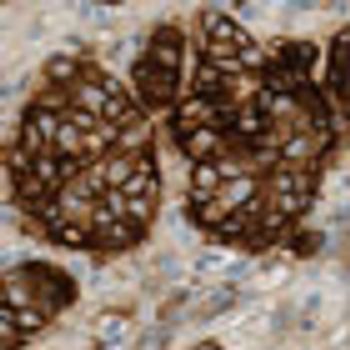
The phase III MARQUEE trial examining tivantinib has been halted following a planned interim analysis because it was not expected to meet its primary endpoint.

Crizotinib extended PFS and improved response rates compared with single-agent chemotherapy with pemetrexed or docetaxel in patients with advanced, previously treated, ALK-positive, NSCLC.
Lung cancer survivor, Bonnie Addario, the founder of the Bonnie J. Addario Lung Cancer Foundation, discusses the prevalent stigma that lung cancer is a self-inflicted disease caused solely by smoking.

Dr. David Spigel, from the Sarah Cannon Research Institute, discusses the rapidly evolving non-small cell lung cancer treatment landscape.

Dr. Karen Reckamp, from City of Hope, evaluates the predictive efficacy of the pretreatment serum test VeriStrat for non-small cell lung cancer.
Patients with refractory non-small cell lung cancer had a statistically significant improvement in PFS when treated with targeted therapy duo versus a single agent.
A common mutation in NSCLC confers resistance to tyrosine kinase inhibitors and worsens survival, creating a need for an alternative approach to treating the subgroup of patients with the mutation.
Patients with advanced non-small cell lung cancer lived twice as long when they received an indirect angiogenesis inhibitor plus docetaxel instead of docetaxel alone.

Dr. David Gandara from the UC Davis Comprehensive Cancer Center on Patient Selection for Molecular Testing in Lung Cancer
Eli Lilly announced that a combination regimen of their chemotherapy drug Alimta and Avastin failed to improve survival in late stage non-squamous non-small cell lung cancer.
Cutaneous rash is a common adverse event among patients with non-small cell lung cancer who receive erlotinib and may indicate that the patient will experience a significantly greater survival benefit.

Dr. Giorgio Scagliotti, from the University of Turin, San Luigi Hospital, on Combining Targeted Therapies With Chemotherapy for Lung Cancer Patients.
Dr. Corey Langer, from the University of Pennsylvania, Abramson Cancer Center, Discusses Treating Locally Advanced Non-small Cell Lung Cancer.
Two leading researchers discuss the role of the ALK signaling pathway and development into new ALK-targeted anticancer therapies.

There has been stunning progress as preclinical findings of the ALK gene in patients with lung cancer were rapidly translated into the availability of an FDA-approved therapeutic ALK inhibitor, crizotinib.
Dr. Ross Camidge, from the University of Colorado Cancer Center, Discusses Resequencing Lung Cancer
Advertisement
Advertisement
Trending on OncLive
1
Long-Term Cilta-Cel Data Show Low Rates of PFS Events in Standard-Risk R/R Myeloma
2
FDA Updates Axi-Cel Label to Remove Limitation of Use in R/R PCNSL
3
Real-World Data Support Clinical Benefit With Lifileucel in Previously Treated Advanced Melanoma
4
Nonresponse to Bridging Therapy and Peak ALC After Cilta-Cel Are Associated With Neurotoxicity, NRM in Myeloma
5