





Multiple Myeloma
Latest News

October 2nd 2023
Richardson Reviews Findings and Future Directions With Mezigdomide Plus Dexamethasone in R/R Myeloma
Dr Richardson discusses the background of mezigdomide, key efficacy and safety findings with the agent plus dexamethasone in patients with relapsed/refractory multiple myeloma, and the implications of this combination for heavily pretreated patients in this population.
Advertisement
Latest Videos






CME Content































Advertisement
More News

The EZH2 inhibitor tazemetostat may mimic the role of the KDM6A gene in upregulating CD38 and CD48 expression, suggesting that this agent could restore responses to daratumamab in patients with multiple myeloma, according to a presentation at the 20th International Myeloma Society Annual Meeting.

The combination of iberdomide plus bortezomib and dexamethasone produced deep responses with a manageable toxicity profile in patients with transplant-ineligible, newly diagnosed multiple myeloma, according to data from the phase 1/2 CC-220-MM-001 trial presented at the 2023 International Myeloma Society Annual Meeting.
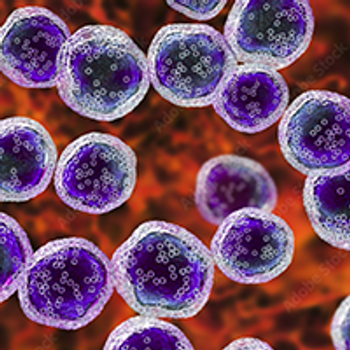
Treatment with teclistamab led to responses in patients with relapsed/refractory multiple myeloma, including those previously exposed to anti-BCMA therapies.

Forimtamig monotherapy generated high overall response rates and durable responses in all subgroups of patients with relapsed/refractory multiple myeloma enrolled in a phase 1a dose-escalation trial.

Although quadruplet combination regimens featuring daratumumab demonstrated consistent efficacy in the treatment of patients with newly diagnosed multiple myeloma, certain prognostic factors were associated with early relapse, according to data from a retrospective analysis presented at the 2023 International Myeloma Society Annual Meeting.

Treatment with teclistamab-cqyv in real-world patients with relapsed/refractory multiple myeloma elicited similar efficacy results and a comparable safety profile to findings from the phase 1/2 Majes-TEC-1 trial.

Induction daratumumab, carfilzomib, lenalidomide, and dexamethasone followed by consolidation double transplant sustained efficacy and safety in patients with high-risk, newly diagnosed multiple myeloma.

Joshua Richter, MD, discusses findings from the phase 1/2 LINKER-MM1 trial (NCT03761108) in multiple myeloma.

Shonali Midha, MD, discusses real-world data with teclistamab in patients with relapsed/refractory multiple myeloma.

Whole-genome sequencing of patients with multiple myeloma revealed that sequential immunotherapy was linked with antigen loss associated with treatment resistance and disease relapse.

Treatment with the combination of pomalidomide, bortezomib, and dexamethasone conferred a small, statistically nonsignificant overall survival benefit compared with bortezomib plus dexamethasone in patients with relapsed/refractory multiple myeloma.

Mezigdomide in combination with either bortezomib and dexamethasone or carfilzomib and dexamethasone showed encouraging responses across multiple dose levels in patients with relapsed/refractory multiple myeloma.

Use of the novel T-charge rapid manufacturing platform for the production of durcabtagene autoleucel CAR T cells within 2 days was successful in producing rapid and robust in vivo expansion, as well as long-term T-cell persistence in patients with relapsed/refractory multiple myeloma, according to a correlative analysis of data from an ongoing phase 1 trial presented at the 2023 IMS Annual Meeting.

Overall response rates with bispecific antibody monotherapy in patients with extramedullary relapsed/refractory multiple myeloma were lower than ORRs observed across all patients with relapsed/refractory multiple myeloma included in a systematic review evaluating the efficacy of this class of agents in this difficult-to-treat population.

Exercises such as resistance training and walking were safe and effective interventions that were associated with improved frailty scores in patients with multiple myeloma receiving systemic treatment.

Meral Beksac, MD, discusses overall survival data from the phase 3 OPTIMISMM trial in relapsed/refractory multiple myeloma.

Lisa Leypoldt, MD, discusses findings from the phase 2 GMMG-CONCEPT trial in patients with multiple myeloma.

Saad Z. Usmani, MD, MBA, FACP, discusses key points from his presentation at the 2023 SOHO Annual Meeting on frontline treatment of patients with high-risk myeloma, including the characteristics of patients with disease at high risk of recurrence, current treatment approaches, and ongoing research aiming to address unmet needs for this subset of patients.

Treatment with the combination of isatuximab, carfilzomib, lenalidomide, and dexamethasone generated high rates of minimal residual disease negativity in patients with newly diagnosed, high-risk multiple myeloma, irrespective of transplant status.

Ajai Chari, MD, director, discusses the safety profile of talquetamab following the drug’s FDA approval for patients with relapsed/refractory multiple myeloma.

The smoldering multiple myeloma treatment paradigm harbors fractures in the consensus regarding the optimal management of this disease, with some experts favoring a watch-and-wait approach and others advocating for early treatment.
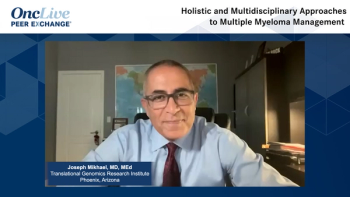
Closing out their program on multiple myeloma, expert panelists consider the role of holistic and multidisciplinary care when managing patients within the current paradigm.
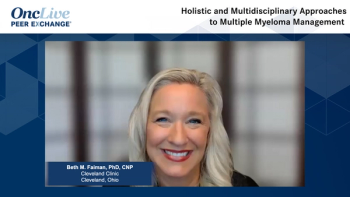
Continuing its discussion on clinical trials in multiple myeloma, the panel emphasizes the impact that data may have on the real-world treatment landscape.
Saad Z. Usmani, MD, MBA, FACP, discusses unmet needs in patients with high-risk multiple myeloma being treated in the frontline setting, highlighting areas of potential further exploration within this landscape.

Dr Nooka discusses the FDA approval of elranatamab in relapsed/refractory multiple myeloma, key data from MagnetisMM-3, and the evolving role of bispecific antibodies in the multiple myeloma treatment paradigm.
Advertisement
Advertisement
Trending on OncLive
1
Long-Term Cilta-Cel Data Show Low Rates of PFS Events in Standard-Risk R/R Myeloma
2
FDA Updates Axi-Cel Label to Remove Limitation of Use in R/R PCNSL
3
Nonresponse to Bridging Therapy and Peak ALC After Cilta-Cel Are Associated With Neurotoxicity, NRM in Myeloma
4
Real-World Data Support Clinical Benefit With Lifileucel in Previously Treated Advanced Melanoma
5