




Multiple Myeloma
Latest News
Advertisement
Latest Videos





CME Content































Advertisement
More News
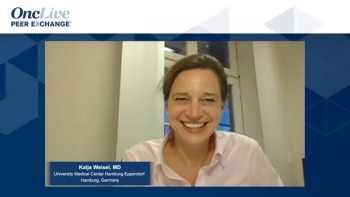
Katja Weisel, MD, and Joshua Richter, MD, define biochemical vs clinical relapses in multiple myeloma and share recommendations for initiating treatment at either stage.
The Japanese Ministry of Health, Labour, and Welfare has approved idecabtagene vicleucel for the treatment of adult patients with relapsed or refractory multiple myeloma, who have previously received at least 3 therapies, including an immunomodulatory agent, a proteasome inhibitor, and an anti-CD38 antibody, and have progressed on their last therapy or relapsed following their last therapy.

Laura Finn, MD, discusses the utility of belantamab mafodotin-blmf in late relapsed multiple myeloma.

Certain patient and disease characteristics must be considered to select the optimal treatment approach for difficult-to-treat patients with relapsed or refractory multiple myeloma.

Tomer Mark, MD, discusses the emerging role of minimal residual disease as a surrogate end point in multiple myeloma, treatment selection for patients with newly diagnosed, early relapsed, and late relapsed disease, and the importance of daratumumab being introduced to the treatment paradigm of amyloidosis.

When treating cancers that are considered generally incurable, such as multiple myeloma, one of the paradigms in oncology is to deliver the most effective therapies upfront to maximize the chances of prolonging remission.
Dan Vogl, MD, MSCE, discusses the utilization of modakafusp alfa in relapsed/refractory multiple myeloma.

Tomer Mark, MD, discusses making sequencing decisions amid the array of available treatment options in multiple myeloma.

Daniel Sherbenou, MD, PhD, discusses selecting between available treatment options for patients with late relapsed multiple myeloma.

Alessandra Larocca, MD, PhD, discusses the various factors to consider when selecting treatment for difficult-to-treat patients with relapsed/refractory multiple myeloma.

Naresh Bumma, MD, discusses the focus of each presentation on frontline therapy, early and late relapse, and CAR T-cell therapy in multiple myeloma.

The armamentarium of multiple myeloma has expanded with the introduction of combination regimens in the up-front setting and novel targeted agents, including CAR T-cell therapy, in the relapsed/refractory setting.

A biologics license application seeking the approval of teclistamab for use in patients with relapsed or refractory multiple myeloma has been submitted to the FDA.

Data from key clinical trials evaluating expanded combination strategies and novel therapies have transformed the treatment paradigms of newly diagnosed, relapsed/refractory, and heavily pretreated multiple myeloma, but it remains important to contextualize the data appropriately without cross-trial comparisons.

Dr Gasparetto discusses the management of ocular toxicities associated with belantamab mafodotin, the nuances of dose modification, and the potential for retreatment following toxicity resolution.
Daniel Sherbenou, MD, PhD, discusses future directions with maintenance therapy in patients with relapsed/refractory multiple myeloma who received CAR T-cell therapy.
The China National Medical Products Administration has granted a conditional marketing approval to selinexor for use in combination with dexamethasone in patients with relapsed or refractory multiple myeloma who have previously received treatment and whose disease is refractory to at least a proteasome inhibitor, an immunomodulatory agent, and an anti-CD38 monoclonal antibody.
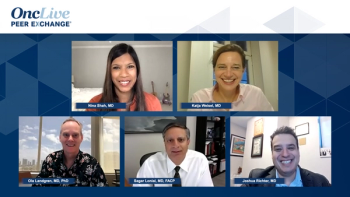
Expert hematologist/oncologists review the case of a 69-year-old man with multiple myeloma who had a biochemical relapse and share their approaches to treatment.

The triplet regimen of belantamab mafodotin plus pomalidomide and dexamethasone was revealed to have a manageable safety profile, which is consistent with the known individual safety profiles of belantamab mafodotin or pomalidomide and dexamethasone, in patients with relapsed/refractory multiple myeloma.

Tarek H. Mouhieddine, discusses a study that evaluated outcomes in patients with relapsed/refractory multiple myeloma who progressed on bispecific antibodies.

Tomer Mark, MD, discusses establishing minimal residual disease (MRD) as a surrogate marker for survival in multiple myeloma.
The addition of daratumumab to lenalidomide, bortezomib, and dexamethasone continued to elicit improved outcomes vs RVd alone in patients with newly diagnosed, transplant-eligible multiple myeloma, according to findings from the extended 2-year follow-up analysis of the phase 2 GRIFFIN trial.

Cristina Gasparetto, MD, discusses how to manage keratopathy associated with treatment with belantamab mafodotin-blmf in patients with multiple myeloma.
A single infusion of ciltacabtagene autoleucel produced an overall response rate of 95% in patients with multiple myeloma who had received a median of 2 prior lines of treatment and who were refractory to lenalidomide.
Data from a longer follow-up analysis of the phase 1/2 CARTITUDE-1 trial demonstrated that all evaluated subgroups of patients with relapsed/refractory multiple myeloma maintained durable responses with ciltacabtagene autoleucel.
Advertisement
Advertisement
Trending on OncLive
1
Long-Term Cilta-Cel Data Show Low Rates of PFS Events in Standard-Risk R/R Myeloma
2
Single-Center, Retrospective Data Show Low Rate of Lifileucel Infusion Following Referral in Advanced Melanoma
3
Real-World Data Support Clinical Benefit With Lifileucel in Previously Treated Advanced Melanoma
4
Dr Riedell on the Long-Term Efficacy of Tisa-Cel in R/R Follicular Lymphoma
5