







Multiple Myeloma
Latest News
Advertisement
Latest Videos

CME Content































Advertisement
More News

Edward A. Stadtmauer, MD, discusses the evolving treatment landscape in multiple myeloma.

December 9, 2020 — The BCMA-targeted antibody-drug conjugate MEDI2228 showed promising clinical efficacy in patients with relapsed/refractory multiple myeloma, with triple-refractory disease experiencing maintained responses.

Yi Lin, MD, PhD, discussess updated results of the phase 1 CRB-401 study in relapsed/refractory multiple myeloma.

Results reported from a group of patients with heavily pretreated multiple myeloma who were administered the combination of selinexor plus pomalidomide and low-dose dexamethasone produced positive responses and provided rationale for further investigation into the regimen.
Peter Voorhees, MD, a multiple myeloma specialist at Levine Cancer Institute, of Atrium Health, discusses updated results of the GRIFFIN trial in multiple myeloma.

Panobinostat, given at a 20-mg 3-times-weekly or twice-weekly dosing schedule, in combination with subcutaneous bortezomib and dexamethasone showed durable responses and an acceptable safety profile in patients with relapsed or relapsed/refractory myeloma.

December 7, 2020 - The addition of ixazomib to lenalidomide and dexamethasone resulted in a clinically meaningful 13.5-month improvement in the median progression-free survival of elderly patients with transplant-ineligible newly diagnosed multiple myeloma, although it did not reach statistical significance.

Daratumumab plus lenalidomide, bortezomib, and dexamethasone followed by daratumumab and lenalidomide maintenance showed a statistically significant improvement in response rates and depth of responses when compared to RVd followed by lenalidomide maintenance for patients with transplant-eligible newly diagnosed multiple myeloma.

December 7, 2020 - The addition of subcutaneous daratumumab to pomalidomide and dexamethasone significantly reduced the risk of progression or death by 37%, compared with pomalidomide and dexamethasone, in patients with relapsed/refractory multiple myeloma who had received ≥1 prior line of therapy.

Treatment with the BCMA-targeted CAR T-cell therapy idecabtagene vicleucel was found to yield clinically meaningful improvements in the quality-of-life of triple-class exposed patients with relapsed/refractory multiple myeloma.
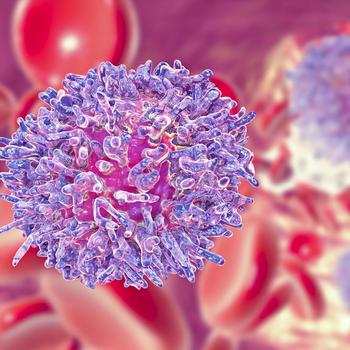
CC-92480, a novel oral cereblon E3 ligase modulator agent, plus dexamethasone demonstrated immunomodulatory activity across all dose levels examined in patients with relapsed/refractory multiple myeloma, according to data from the first portion of the ongoing phase 1 CC-92480-MM-001 trial presented during the 2020 ASH Annual Meeting & Exposition.

Ciltacabtagene autoleucel was found to elicit clinically meaningful improvements in health-related quality of life in patients with relapsed/refractory multiple myeloma, and this benefit may become even more pronounced as responses to treatment deepen over time, according to data from the CARTITUDE-1 study presented during the 2020 ASH Annual Meeting & Exposition.

December 6, 2020 - The first-of-its-kind FcRH5xCD3 bispecific antibody cevostamab demonstrated a manageable safety profile with an overall response rate of 53% in heavily pretreated patients with relapsed/refractory multiple myeloma who received active doses.

December 6, 2020 — The off-the-shelf DuoBody® IgG4 PAA binding antibody talquetamab has elicited a high response rate with a tolerable safety profile in heavily pretreated patients with relapsed/refractory multiple myeloma.

December 6, 2020 — REGN5458, a BCMA- and CD3-targeted bispecific monoclonal antibody, demonstrated early, deep, and durable responses with acceptable safety and tolerability in patients with relapsed/refractory multiple myeloma.

December 6, 2020 — The antibody-drug conjugate belantamab mafodotin continued to showcase efficacy and tolerability in heavily pretreated patients with relapsed/refractory multiple myeloma, inducing durable responses even in those who had previously received 7 or more lines of therapy.

December 6, 2020 — The BCMA and CD3 bispecific T-cell redirecting antibody TNB-383B elicited significant responses when administered at a higher dose level and was well tolerated at all doses examined in heavily pretreated patients with relapsed/refractory multiple myeloma.

December 5, 2020 - The addition of belantamab mafodotin to bortezomib and dexamethasone elicited high response rates and a suitable safety profile in patients with relapsed or refractory multiple myeloma.

December 5, 2020 - Treatment with the CAR T-cell therapy ciltacabtagene autoleucel led to a high response rate and an acceptable safety profile at the recommended phase 2 dose in patients with relapsed or refractory multiple myeloma.

ALLO-715, an off-the-shelf chimeric antigen receptor T-cell therapy that targets B-cell maturation antigen, elicited responses in heavily pretreated patients with relapsed/refractory multiple myeloma in early findings from a first-in-human study presented at the 2020 ASH Meeting.
December 5, 2020 - The enriched chimeric antigen receptor T-cell therapy bb21217 improved responses and also prolonged duration of response compared with non-enriched CAR T cells in patients with relapsed/refractory multiple myeloma.

December 5, 2020 - Patients with heavily pretreated multiple myeloma maintained durable responses with the chimeric antigen receptor T-cell therapy idecabtagene vicleucel in updated findings presented from the phase 1 CRB-401 trial.

December 5, 2020 - A subgroup analysis from the phase 3 BOSTON study demonstrated that once weekly selinexor, bortezomib, and dexamethasone was superior to bortezomib and dexamethasone alone in patients with relapsed/refractory multiple myeloma who had received 1 to 3 prior therapies.
Joseph Mikhael, MD, discusses novel agents used to treat patients with multiple myeloma.

Caitlin Costello, MD, discusses considerations for induction therapy selection in multiple myeloma.
Advertisement
Advertisement
Trending on OncLive
1
Long-Term Cilta-Cel Data Show Low Rates of PFS Events in Standard-Risk R/R Myeloma
2
Nonresponse to Bridging Therapy and Peak ALC After Cilta-Cel Are Associated With Neurotoxicity, NRM in Myeloma
3
FDA Updates Axi-Cel Label to Remove Limitation of Use in R/R PCNSL
4
Real-World Data Support Clinical Benefit With Lifileucel in Previously Treated Advanced Melanoma
5