





Prostate Cancer
Latest News

Advertisement
Latest Videos








CME Content































Advertisement
More News











This year's approval of radium-223 chloride (Xofigo) continues the 4-year run of important new prostate cancer drugs, and Matthew Cooperberg thinks the run will continue over the next few years.

Two years after the FDA denied a request to expand the indication of finasteride and other 5α-reductase inhibitors to prevent prostate cancer, a major study has cast doubt on the concerns that prompted the denial: that the drug raised the risk of more lethal cancers.

A new study has shown a possible correlation between men with short-ended chromosomes in the immune cells of their blood and an increased risk of developing aggressive prostate cancer, potentially pointing the way toward an accessible biomarker that could help inform treatment and surveillance decisions.

William Kevin Kelly, DO, professor of medical oncology and urology, Thomas Jefferson University, discusses the possibility of preselecting which castration-resistant prostate cancer (CRPC) patients will be sensitive to chemotherapy or hormone therapy.

Charles L. Sawyers, MD, Chair, Human Oncology and Pathogenesis Program; Marie-Josee and Henry R. Kravis Chair, Memorial Sloan-Kettering Cancer Center, accepts the Giants of Cancer Care Award for his work in prostate cancer.

Urologists who treat men with prostate cancer are 2.5 times more likely to refer patients to intensity-modulated radiation therapy centers, especially if they have a financial stake in the IMRT center.
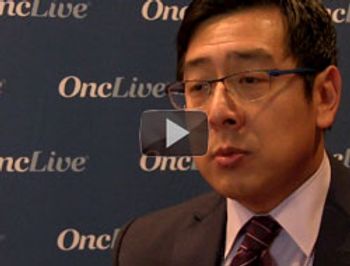
Evan Y. Yu, MD, associate professor, Department of Medicine, Division of Oncology, Seattle Cancer Care Alliance, discusses the role of PET imaging in prostate cancer.

Prostate cancer is one of the most common forms of cancer in older men, with more than 200,000 new diagnoses per year.

Men with advanced prostate cancer who took the GnRH antagonist degarelix experienced improved disease control, fewer instances of urinary infections, and a lower risk of cardiovascular events than did those patients who took LHRH agonists.

The phase III PREVAIL trial of enzalutamide in chemotherapy-naïve patients with advanced prostate cancer has been stopped early after meeting its co-primary endpoints of overall survival and radiographic progression-free survival

Prostate cancer is the most common cancer and second leading cause of cancer mortality in American men. Nevertheless, it is estimated that only 3% of the patients will die because of their cancer, while the majority will die of competing causes.

Abiraterone acetate significantly delayed the progression of pain and quality of life deterioration in chemotherapy-naive men with metastatic castration-resistant prostate cancer when taken in combination with prednisone.
With the recent approval of a first-in-class radioactive isotope as a treatment for prostate cancer, urologists have a new weapon in their rapidly growing arsenal of therapies designed to fight this disease.

A new biomarker panel taken 12 weeks after initiating treatment with abiraterone acetate plus prednisone can predict prognosis at 2 years in men with metastatic castration-resistant prostate cancer

Co-targeting metastatic castrate resistant prostate cancer with the combination of enzalutamide plus abiraterone acetate may circumvent the compensatory mechanisms observed with either agent alone and lead to more profound suppression of androgen signaling.
Advertisement
Advertisement
Trending on OncLive
1
Long-Term Cilta-Cel Data Show Low Rates of PFS Events in Standard-Risk R/R Myeloma
2
Single-Center, Retrospective Data Show Low Rate of Lifileucel Infusion Following Referral in Advanced Melanoma
3
Real-World Data Support Clinical Benefit With Lifileucel in Previously Treated Advanced Melanoma
4
Dr Riedell on the Long-Term Efficacy of Tisa-Cel in R/R Follicular Lymphoma
5