


Prostate Cancer
Latest News
Advertisement
Latest Videos




CME Content































Advertisement
More News
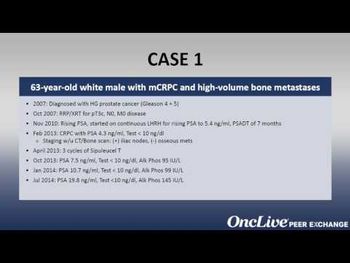
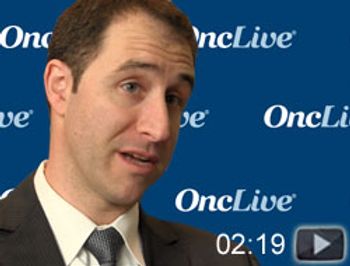
Christopher E. Barbieri, MD, PhD, surgeon, researcher in prostate cancer genomics, Sandra and Edward Meyer Cancer Center at Weill Cornell Medicine and New-York Presbyterian, discusses the implications of SPOP mutations in patients with prostate cancer.

The radioactive imaging agent, fluciclovine F18 (Axumin), was approved by the FDA for use in positron emission tomography scans in men with suspected recurrence of prostate cancer whose prostate-specific antigen levels rise following prior treatment.

Using the Decipher Prostate Cancer Classifier assay to predict which patients might respond to hormonal therapy has resulted in the discovery and validation of an adjuvant androgen-deprivation therapy resistance signature.

Luke Nordquist, MD, discusses a study investigating a higher dose of radium-223 dichloride (Xofigo) in patients with metastatic castration-resistant prostate cancer and the ongoing potential of the agent in treating the disease.
Jim Hu, MD, MPH, director of the LeFrak Center for Robotic Surgery at NewYork-Presbyterian/Weill Cornell Medical Center and the Ronald Lynch Chair of Urologic Oncology at Weill Cornell Medical College, discusses critical flaws in the landmark PLCO trial in prostate cancer.

Oliver Sartor, MD, discusses current research with biomarkers in prostate cancer, as well as how some treatments may be utilized as both single agents and in combination.

Herbert Lepor, MD, discusses the advent of the MRI-US fusion targeted biopsy and what impact it could have on the field of assessing prostate cancer risk.

Results of a multi-institutional prospective study showed that treatment with unilateral high-intensity focused ultrasound led to eradication of all clinically significant cancer in the treated lobe for 94% of patients with early prostate cancer.
Jake Micallef, PhD, chief scientific officer, VolitionRX, discusses a study that examined the efficacy of the NuQ biomarker assay as a detection tool for early-stage prostate cancer.
The combination of radium-223 dichloride (Xofigo) and abiraterone acetate (Zytiga) was associated with significant reductions in bone pain, as well as improvements in quality of life, in patients with metastatic castration-resistant prostate cancer.

Major health policy implications follow findings from the landmark Prostate, Lung, Colorectal, and Ovary screening trial, after it was found that 80% of the control group reported at least one PSA test during the trial.

Abiraterone acetate, alone or in combination with low-dose steroids, has been intensely investigated in recent years for the treatment of progressive CRPC in patients who have received prior chemotherapy or who were treatment-naïve.

Fred Schumacher, PhD, MPH, associate professor, Case Western Reserve University, discusses a study that led to the identification of genetic risk factors of prostate cancer.

Enzalutamide (Xtandi) pricing heightens the likelihood of pre-authorization requirements and cost-sharing arrangements that may be financially burdensome, ruinous, or simply impossible to meet.
Advertisement
Advertisement
Trending on OncLive
1
Long-Term Cilta-Cel Data Show Low Rates of PFS Events in Standard-Risk R/R Myeloma
2
Real-World Data Support Clinical Benefit With Lifileucel in Previously Treated Advanced Melanoma
3
Dr Riedell on the Long-Term Efficacy of Tisa-Cel in R/R Follicular Lymphoma
4
Single-Center, Retrospective Data Show Low Rate of Lifileucel Infusion Following Referral in Advanced Melanoma
5