
Mark E. Robson, MD, chief, Breast Medicine Service, Memorial Sloan Kettering Cancer Center, discusses an exploratory analysis of the OlympiAD trial for patients with HER2-negative breast cancer with a germline BRCA1/2 mutation.

Your AI-Trained Oncology Knowledge Connection!
Mark E. Robson, MD, chief, Breast Medicine Service, Memorial Sloan Kettering Cancer Center, discusses an exploratory analysis of the OlympiAD trial for patients with HER2-negative breast cancer with a germline BRCA1/2 mutation.
Palbociclib (Ibrance) demonstrated significant efficacy in combination with letrozole (Femara) in the frontline setting of estrogen receptor-positive, HER2-negative, postmenopausal metastatic breast cancer.

Fabrice André, MD, professor, Department of Medical Oncology, Institut Gustave Roussy, discusses the remaining questions with immunotherapy agents as potential therapy for patients with triple-negative breast cancer. Andre expanded on this in an interview with OncLive during the 35th Annual Miami Breast Cancer Conference.

William J. Gradishar, MD, interim chief of hematology and oncology, Department of Medicine, Betsy Bramsen Professorship of Breast Oncology, professor of medicine (hematology and oncology), Northwestern University's Feinberg School of Medicine, discusses the utilization of genetic testing in breast cancer to identify actionable results for patients.

The progression-free survival benefit for ribociclib in pre- or perimenopausal women with hormone receptor–positive, HER2-negative advanced or metastatic breast cancer was sustained across patient subgroups, according to findings from the phase III MONALEESA-7 trial.

Improvements in progression-free survival with olaparib (Lynparza) remained consistent regardless of baseline tumor burden for patients with HER2-negative breast cancer with a germline BRCA1/2 mutation.
Debu Tripathy, MD, professor and chairman, Department of Breast Medical Oncology, Division of Cancer Medicine, The University of Texas MD Anderson Cancer Center, discusses the FDA approval of olaparib (Lynparza) for patients with BRCA-positive breast cancers and the impact it has had on clinical practice. Tripathy shared this insight in an interview during the 35th Annual Miami Breast Cancer Conference.
Gilberto Lopes, MD, discusses the global disparities occurring in lung cancer care and some of the steps that are being taken to better serve patients with the available and emerging therapeutic approaches.

Julie R. Brahmer, MD, discusses first-line immunotherapy, targeted therapies for molecularly driven tumors, and recently released guidelines for the treatment of patients with lung cancer.
Sarah B. Goldberg, MD, MPH, an assistant professor of medicine at the Yale School of Medicine and Yale Cancer Center, discusses testing for and treating resistance to EGFR tyrosine kinase inhibitor (TKI) therapy in non–small cell lung cancer.
Sarah B. Goldberg, MD, discusses testing for and treating resistance to EGFR TKI therapy in non-small cell lung cancer.

Several phase III studies are exploring immunotherapy combinations with the potential to disrupt the systemic treatment paradigm for patients with ovarian cancer.
PARP inhibitor combination regimens have the potential to enhance the relatively modest benefit offered by several monotherapy approaches used for the treatment of patients with ovarian cancer.

Erdafitinib showed responses in more than one-third of patients with pretreated metastatic or unresectable FGFR alteration-positive urothelial carcinoma.

Susan F. Slovin, MD, PhD, a medical oncologist at Memorial Sloan Kettering Cancer Center, discusses a multicenter, randomized, controlled trial comparing the occurrence of major adverse cardiovascular events in patients with prostate cancer and cardiovascular disease receiving degarelix, a GnRH receptor antagonist, or leuprolide, a GnRH receptor agonist.

Floor J. Backes, MD, associate professor at The Ohio State University Comprehensive Cancer Center, discusses pelvic exenteration surgery for patients with gynecologic cancer.

Rebecca C. Arend, MD, assistant professor, UAB School of Medicine, UAB Department of Obstetrics and Gynecology, UAB Comprehensive Cancer Center, discusses the rationale behind novel combination strategies for patients with gynecologic cancer.
Rebecca C. Arend, MD, discussed novel combinations being investigated for the treatment of patients with ovarian cancer.
David O'Malley, MD, discusses the excitement surrounding PARP inhibitors for patients with ovarian cancer.

Two-year follow-up data showed sustained improvements in overall survival with pembrolizumab over chemotherapy in pretreated patients with locally advanced or recurrent urothelial cancer.

James Gulley, MD, PhD, chief, Genitourinary Malignancies Branch, and director, Medical Oncology Service, at the National Cancer Institute, discusses a phase II study of olaparib (Lynparza) and durvalumab (Imfinzi) in metastatic castration-resistant prostate cancer (mCRPC) in an unselected patient population, presented at the 2018 Genitourinary Cancers Symposium.
Joaquim Bellmunt, MD, PhD, associate professor of medicine, Harvard Medical School, director, Bladder Cancer Center, Dana-Farber Cancer Institute, discusses 2-year follow-up results from the phase III KEYNOTE-045 trial of pembrolizumab (Keytruda) versus chemotherapy in recurrent, advanced urothelial carcinoma during the 2018 Genitourinary Cancers Symposium.
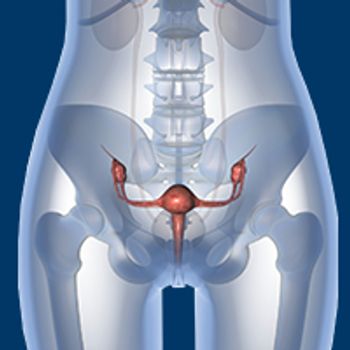
Many endometrioid cancers express high RNA levels for multiple immune checkpoints, and this may allow physicians to treat these patients with combination immune therapies.

Kathleen N. Moore, MD, assistant professor, The Stephenson Cancer Center, The University of Oklahoma, discusses combinations of immunotherapy with PARP inhibitors for patients with BRCA-mutated ovarian cancer.

Lindsay West, MD, gynecologic oncologist, UNC Department of Obstetrics and Gynecology, UNC School of Medicine, discusses the challenges with quality of life for patients with gynecologic cancer.
Guru Sonpavde, MD, director of Bladder Cancer at Dana-Farber Cancer Institute, discusses a phase IIIb safety study of fixed-dose durvalumab (Imfinzi) and tremelimumab in patients with advanced urothelial carcinoma.
Adjuvant therapy, regardless of the treatment modality, did not improve overall survival compared with observation for women with early stage, uterine-confined leiomyosarcoma.
The administration of stereotactic body radiation therapy through the use of CyberKnife therapy appears to be a safe and effective salvage treatment for women with previously irradiated, locally recurrent gynecologic cancer.
Kathleen Moore, MD, discusses combination strategies with immunotherapy for patients with ovarian cancer.
Data from the first 13 evaluable patients enrolled in a phase II study of SM-88 showed a reduction in circulating tumor cells, a slowing of prostate-specific antigen increase, and delayed radiographic progression of disease in nonmetastatic prostate cancer.