
How should oncologists respond when initial treatment of EGFR-mutant or ALK-positive lung cancer with a tyrosine kinase inhibitor (TKI) no longer prevents all disease progression?

Your AI-Trained Oncology Knowledge Connection!
How should oncologists respond when initial treatment of EGFR-mutant or ALK-positive lung cancer with a tyrosine kinase inhibitor (TKI) no longer prevents all disease progression?
Although testing for EGFR mutations and ALK rearrangements in patients with NSCLC has become widespread, the time has come to translate into clinical practice next-generation sequencing assays that provide exponentially more information about tumor biology.
Benjamin P. Levy, MD, director, Thoracic Medical Oncology, Mount Sinai Beth Israel, associate director, Cancer Clinical Trials Office, Mount Sinai Hospital, Mt. Sinai School of Medicine, discusses new data on immunotherapy for lung cancer.
Maria E. Arcila, MD, acting director, Diagnostic Molecular Pathology Laboratory, Memorial Sloan Kettering Cancer Center, discusses the benefits of new molecular diagnostic platforms for the treatment of lung cancer.
Thomas J. Lynch, MD, from the Yale Cancer Center, explains how resistance occurs when treating lung cancer patients with EGFR TKIs.
Lung cancer experts provided insights into recent developments in the treatment of the disease, covering topics ranging from resistance to targeted therapies to immunotherapy agents under study, during the 9th Annual New York Lung Cancer Symposium in New York City.
Alan P. Venook, MD, professor, Department of Medicine (Hematology/Oncology), University of California, San Francisco, discusses the approval of ramucirumab plus paclitaxel for gastric cancer
Both HPV-positive and -negative head and neck cancers are "outstanding candidates for immunotherapeutic strategies," said Andrew G. Sikora, MD, PhD, Baylor College of Medicine, at the 2014 Chemotherapy Foundation Symposium.

Translating current and emerging knowledge of the molecular drivers of ovarian cancer is yielding promising new insights into potential clinical targets, moving treatment away from historical paradigms in favor of more personalized therapeutic approaches.
PARP inhibitors represent an important class of emerging therapies for the treatment of patients with ovarian cancer and possibly other malignancies, but many scientific questions about the underlying molecular mechanisms that these agents target must be answered before they can be fully employed in clinical practice.
In May 2014, ASCO issued guidelines recommending the administration of adjuvant tamoxifen for 10 years in women with stage I-III hormone receptor (HR)-positive breast cancer, based on data from the collection of 5 clinical trials.
Nitin Jain, MD, assistant professor, Department of Leukemia, The University of Texas MD Anderson Cancer Center, discusses lymphocytosis following treatment with a B-cell receptor inhibitor.
When Gail J. Roboz, MD, took the stage Wednesday to give her talk on what's ahead in the treatment of acute myeloid leukemia (AML), she admitted feeling a little jealousy toward her colleagues in the lymphoid diseases.
The landscape in lymphoma management continues to evolve, with new therapies and approaches improving established treatment paradigms

As the targeted therapy era in chronic lymphocytic leukemia (CLL) continues to unfold, two next-generation agents are generating responses with improved safety profiles as single agents and in combination regimens
The combination of a FLT3L-primed in situ vaccine, low-dose radiotherapy, and a toll-like receptor 3 (TLR) 3 agonist has been shown to be feasible, safe, and immunologically and clinically effective in a phase I/II study for patients with low-grade lymphoma
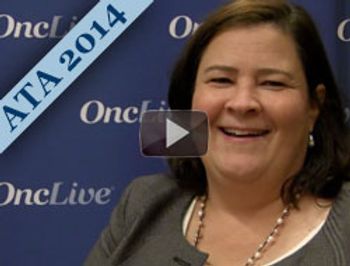
Marcia S. Brose, MD, PhD, assistant professor, Abramson Cancer Center at the University of Pennsylvania, discusses the rapidly changing treatment landscape for patients with differentiated thyroid cancer.
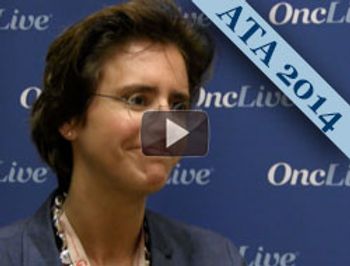
Julie A. Sosa, MD, MS, professor of surgery and medicine, chief of endocrine surgery, Duke University, discusses molecular testing for thyroid cancer.

A next-generation sequencing assay has shown promise as a new tool to aid in the diagnosis and treatment of indeterminate thyroid nodules.
The ThyroSeq v2 next-generation sequencing assay was highly accurate at diagnosing cancer in thyroid nodules with follicular neoplasm or those suspected of follicular neoplasm cytology.

Preoperative vitamin D deficiency is associated with postoperative symptomatic hypocalcemia in patients with thyroid cancer undergoing total thyroidectomy plus central compartment neck dissection.
Roy S. Herbst, MD, PhD, presented a top 10 list on immunotherapy in non-small cell lung cancer at the 2014 Multidisciplinary Symposium in Thoracic Oncology.
In vivo models for two aggressive thyroid cancers have shown that downregulation of miR-30a-5p leads to overexpression of LOX, a target which appears amenable to treatment with β-aminopropionitrile fumarate.

The detection of BRAFV600E in patients with papillary thyroid cancer using a blood-based assay was shown to be feasible in a cohort of patients undergoing thyroidectomy.
Ian Ganly, MD, PhD, from Memorial Sloan Kettering Cancer Center, discusses the development of a postoperative nomogram for predicting cancer-specific mortality in MTC.
Jyoti D. Patel, MD, thoracic oncologist, Northwestern University Feinberg School of Medicine, discusses the benefits of multidisciplinary approach for the treatment of patients with stage III disease.
David Spigel, MD, director of Lung Cancer Research at the Sarah Cannon Research Institute, discusses results from a phase III study exploring eribulin for the treatment of patients with non-small cell lung cancer.
Nivolumab combined with platinum-based doublet chemotherapy achieved a manageable safety profile with clinical efficacy that was similar to single-agent nivolumab in patients with advanced NSCLC.

Jyoti D. Patel, MD, provides insight into managing the toxicities associated with molecular therapies used to treat patients with lung cancers.
Keith C. Bible, MD, PhD, professor of oncology, Mayo Clinic, discusses the promise of pemetrexed and carboplatin as a potential treatment option for patients with follicular cell-derived thyroid cancers.