
Mark J. Levis, MD, PhD, discusses data from the phase 3 BMT CTN 1506/MORPHO trial of gilteritinib as maintenance therapy following allogeneic stem cell transplant in patients With FLT3-ITD–positive acute myeloid leukemia.

Your AI-Trained Oncology Knowledge Connection!
Mark J. Levis, MD, PhD, discusses data from the phase 3 BMT CTN 1506/MORPHO trial of gilteritinib as maintenance therapy following allogeneic stem cell transplant in patients With FLT3-ITD–positive acute myeloid leukemia.
Nikhil C. Munshi, MD, discusses the efficacy data from the final analysis of the phase 1b/2 CARTITUDE-1 trial of ciltacabtagene autoleucel in patients with relapsed/refractory multiple myeloma.
Ruxolitinib was found to improve spleen volume and tumor symptom score in patients with myelofibrosis, irrespective of their anemia and transfusion status, according to data from a post-hoc analysis of the phase 3 COMFORT-I and -II trials.

Although the event rate did reach the expected level and longer follow-up is needed to adequately assess long-term toxicities, data from the phase 3 IELSG37 trial support the omission of radiotherapy in patients with primary mediastinal large B-cell lymphoma who achieve a complete metabolic response following chemoimmunotherapy.
Mohamad Mohty, MD, PhD, discusses extended follow-up from cohort A of the phase 2 MagnetisMM-3 trial of elranatamab in patients with relapsed/refractory multiple myeloma.

Patients with intermediate-2 or high-risk myelofibrosis who received the novel JAK/ACVR1 inhibitor jaktinib experienced a statistically significant improvement in the proportion of patients with a spleen-volume reduction of at least 35% from baseline at week 24 vs those who were treated with hydroxyurea.
Haifa Kathrin Al-Ali, MD, discusses the safety and efficacy findings from the dose-escalation portion of the phase 1/2 CA011-023 trial of BMS-986158 in combination with ruxolitinib or fedratinib in patients with intermediate- or high-risk myelofibrosis.

Patients with primary or secondary TP53 wild-type myelofibrosis who experienced suboptimal response to ruxolitinib had clinically meaningful improvements in spleen volume reduction with the addition of navtemadlin to ruxolitinib,
The combination of the BCMA- and GPRC5D-targeted bispecific antibodies, teclistamab and talquetamab, respectively, demonstrated encouraging overall response rates and was well tolerated in patients with relapsed or refractory multiple myeloma.

The combination of daratumumab plus bortezomib, cyclophosphamide, and dexamethasone, elicited a complete response (CR) rate of 40% and a CR or better rate of 43% in patients with multiple myeloma presenting with extramedullary disease.
Daratumumab maintenance therapy with or without pomalidomide provided a tolerable and feasible treatment option after salvage hematopoietic stem cell transplantation in patients with relapsed multiple myeloma.
Teclistamab continued to elicit deep and durable responses in patients with relapsed/refractory multiple myeloma, irrespective of being triple-class refractory, daratumumab-refractory, or refractory to last line of therapy.
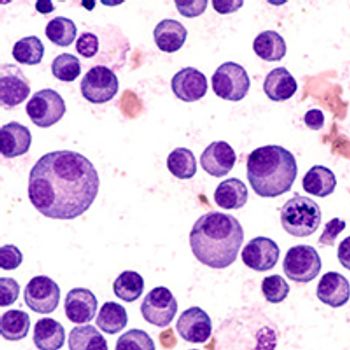
The addition of daratumumab to frontline induction therapy prior to peripheral blood stem cell collection reduced the number of patients with newly diagnosed multiple myeloma who were able to meet their stem cell collection goals on first attempt.
Treatment with ponatinib plus reduced-intensity chemotherapy led to an improvement in minimal residual disease-negative complete remission rate compared with imatinib plus reduced-intensity chemotherapy in newly diagnosed patients with Philadelphia chromosome-positive acute lymphoblastic leukemia.

Treatment with pelabresib monotherapy led to a 60% confirmed complete or partial hematologic response at any time without incurring grade 4 or 5 treatment-related adverse effects in patients with high-risk essential thrombocythemia refractory or intolerant to hydroxyurea.
Harry Gill, MD, FRCP, FRCPath, discusses the investigation of an all-oral combination of arsenic trioxide, all trans retinoic acid, and ascorbic acid in patients with newly diagnosed acute promyelocytic leukemia.
Elias Jabbour, MD, discusses efficacy data from the phase 3 PhALLCON trial of ponatinib plus reduced-intensity chemotherapy vs imatinib plus reduced-intensity chemotherapy in newly diagnosed patients with Philadelphia chromosome–positive acute lymphoblastic leukemia.
The addition of acalabrutinib to bendamustine and rituximab demonstrated potent and durable responses despite a high incidence of grade 3/4 adverse effects in patients with previously untreated and relapsed/refractory mantle cell lymphoma.
The combination of daratumumab, ixazomib, and dexamethasone produced rapid and encouraging responses rates following lenalidomide–based therapy in patients with relapsed/refractory multiple myeloma, according to findings from the final analysis of the phase 2 DARIA trial.
Acalabrutinib is safe in patients with chronic lymphocytic leukemia who are at least 80 years of age and/or frail.

Erika P. Hamilton, MD, discusses the efficacy and safety of adjuvant abemaciclib plus endocrine therapy in patients with hormone receptor–positive, HER2-negative, high-risk early breast cancer according to age.

Brian I. Rini, MD, FASCO, discusses long-term survival outcomes in patients with advanced clear cell renal cell carcinoma who received frontline pembrolizumab and axitinib in the phase 3 KEYNOTE-426 trial.

Sara M. Tolaney, MD, MPH, discusses key data from a final overall survival analysis of the phase 3 TROPiCS-02 trial in hormone receptor–positive, HER2-negative breast cancer.
The first-in-class EGFR x HER3 bispecific antibody-drug conjugate BL-B01D1 generated antitumor activity and safety in patients with advanced solid tumors, particularly EGFR-mutated and wild-type non–small cell lung cancer and nasopharyngeal carcinoma.
Sotorasib provided consistent benefit over docetaxel in the majority of key prespecified molecularly defined subsets of patients with pretreated KRAS G12C–mutated non–small cell lung cancer enrolled to the phase 3 CodeBreaK 200 trial.

The combination of dabrafenib and trametinib plus navitoclax generated responses and met the co-primary end point for complete response rate vs historical controls in patients with BRAF V600–mutant metastatic melanoma.
Treatment with the combination of epcoritamab, rituximab, and lenalidomide led to responses and durable remissions in patients with relapsed/refractory follicular lymphoma.
The addition of tumor treating fields to standard-of-care immunotherapy or chemotherapy regimens elicited an improvement in overall survival vs SOC therapies alone in patients with metastatic non-small cell lung cancer following progression on or after platinum-based chemotherapy, according to data from the phase 3 LUNAR trial.

Treatment with lisocabtagene maraleucel elicited encouraging responses regardless of prior progression on BTK inhibition or absence of clinical benefit with venetoclax in patients with relapsed/refractory chronic lymphocytic leukemia/small lymphocytic lymphoma, meeting the primary end point of the phase 1/2 TRANSCEND CLL 004 trial.

Combination treatment consisting of datopotamab deruxtecan and pembrolizumab with or without platinum-based chemotherapy generated responses as first- or second-line treatment for patients with advanced or metastatic non–small cell lung cancer.