

Outpatient lymphodepletion prior to brexu-cel was safe and generated comparable 60-day non-relapse mortality vs inpatient administration in B-ALL and MCL.

Your AI-Trained Oncology Knowledge Connection!
Outpatient lymphodepletion prior to brexu-cel was safe and generated comparable 60-day non-relapse mortality vs inpatient administration in B-ALL and MCL.

Pembrolizumab plus chemotherapy, followed by olaparib with or without bevacizumab, improved PFS in advanced ovarian cancer.
The FDA granted breakthrough therapy designation to Dato-DXd for previously treated EGFR-mutated advanced non–small cell lung cancer.

Maintenance therapy with teclistamab with or without lenalidomide was safe and efficacious in newly diagnosed multiple myeloma.

Patients with treatment naive DLBCL experienced high response rates when treated with zilovertamab vedotin plus R-CHP and a RP2D dose of the agent was selected.

Treatment with navtemadlin lowered the levels of biomarkers of disease burden in patients with relapsed/refractory myelofibrosis.
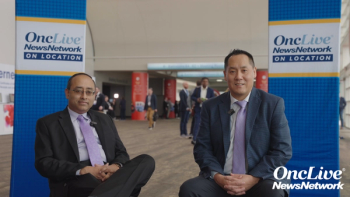
Prithviraj Bose, MD, of The University of Texas MD Anderson Cancer Center, and Javier Pinilla Ibarz, MD, PhD, of Moffitt Cancer Center, sit down with Chandler Park, MD, FACP, to discuss the latest in myeloproliferative neoplasms and chronic lymphocytic leukemia, respectively, from the 2024 ASH Annual Meeting.
Acalabrutinib plus venetoclax, with or without obinutuzumab, improved PFS over SOC chemoimmunotherapy in patients with treatment-naive CLL.

Liso-cel demonstrated safety and efficacy outcomes that were comparable to those in the pivotal TRANSFORM and PILOT trials in patients with relapsed/refractory large B-cell lymphoma.

Subcutaneous daratumumab reduced the risk for disease progression or death vs active monitoring in intermediate- or high-risk smoldering multiple myeloma.

Social determinants of health have a more pronounced effect on mortality among patients with AML who did not receive transplant vs those who did.

Brexucabtagene autoleucel demonstrated similar efficacy across age groups of patients with relapsed/refractory B-cell acute lymphoblastic leukemia
Treatment with asciminib results in superior efficacy and safety vs investigator-selected TKIs in CML according to updated 96-week data from ASC4FIRST.
Single-agent, subcutaneous epcoritamab generated deep responses in patients with relapsed/refractory chronic lymphocytic leukemia.

Olverembatinib showed potential in patients with chronic-phase chronic myeloid leukemia with prior exposure to first-line second-generation TKIs.
Data from a retrospective analysis showcase the real-world effectiveness of tafasitamab for relapsed/refractory DLBCL in the United States.
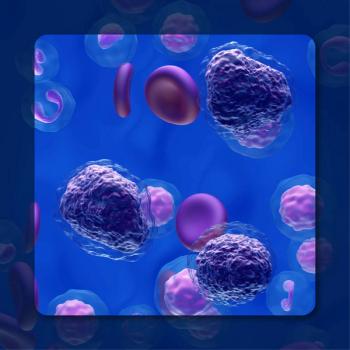
FS118, an investigational LAG-3/PD-L1 bispecific antibody, demonstrated an encouraging objective response rate in the relapsed/refractory DLBCL setting.
Revumenib plus decitabine/cedazuridine and venetoclax produced responses in relapsed/refractory acute myeloid leukemia.
Daratumumab plus VRd improved MRD responses and progression-free survival in transplant-ineligible or -deferred newly diagnosed multiple myeloma.

Revumenib demonstrated meaningful responses in patients with relapsed or refractory KMT2Ar acute leukemia.
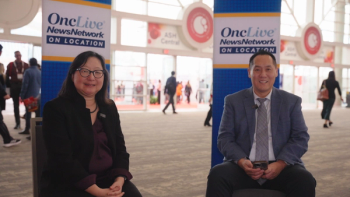
Eunice Wang, MD, of Roswell Park Comprehensive Cancer Center, sits down with Chandler Park, MD, FACP, to discuss the latest in acute myeloid leukemia from the 2024 ASH Annual Meeting.

Findings showed the potential impact of smoking on disease progression and survival in patients with myelodysplastic syndrome.
Blinatumomab plus chemotherapy significantly improved 3-year DFS rates vs chemotherapy alone in pediatric patients with standard-risk pediatric B-ALL.
Treatment with bicistronic CD19/CD22 CAR T-cell therapy led to high 1-year EFS and OS rates among children with relapsed/refractory B-ALL.
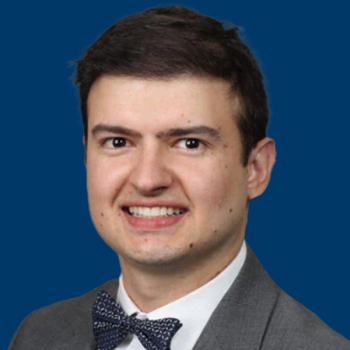
Felipe Batalini, MD, details how targeting PIK3CA is evolving in breast cancer as new allosteric inhibitors have emerged and showed promising safety/efficacy.
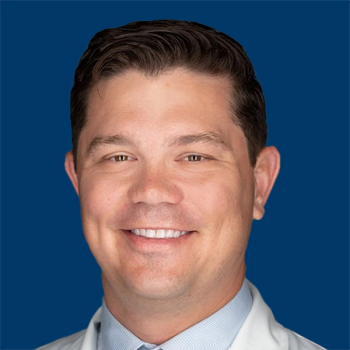
Andrew Kuykendall, MD, discusses the current role of JAK inhibitors in myelofibrosis and how the use of this class of agents may evolve.
Cathy Eng, MD, FACP, FASCO, shares insights on biomarker testing and sequencing strategies for patients with colorectal cancer.
Eytan M. Stein, MD, discusses the significance of the FDA approval of revumenib for relapsed/refractory acute leukemia with KMT2A rearrangements.
AdAPT-001 plus nivolumab or atezolizumab has received fast track designation from the FDA in recurrent/refractory soft tissue sarcoma.
Bently P. Doonan, MD, discusses the utility of oncolytic viruses and the need for novel treatments after checkpoint inhibitors in advanced melanoma.