

Consistent survival benefit was seen with consolidation durvalumab across subgroups in the ADRIATIC trial affirms its use as a standard of care in LS-SCLC.

Your AI-Trained Oncology Knowledge Connection!
Consistent survival benefit was seen with consolidation durvalumab across subgroups in the ADRIATIC trial affirms its use as a standard of care in LS-SCLC.

Adjuvant durvalumab did not provide a disease-free survival advantage over placebo in patients with NSCLC across different PD-L1 subgroups.

Joshua Linscott, MD, PhD, discusses the use of urinary cell-free tumor DNA for MRD detection prior to repeat resection in high-risk NMIBC.
Scientists at Huntsman Cancer Institute at the University of Utah, have made a significant breakthrough in predicting the prognosis of triple-negative breast cancer.
Adam E. Singer, MD, PhD, highlights how cabozantinib and nivolumab treatment compares with other therapies in terms of efficacy and safety in RCC.
The FDA has approved subcutaneous atezolizumab for use in all indications as the intravenous formulation.

Sagar Lonial, MD, FACP, discusses how genetic data from the CoMMpass trial continue to affect the understanding of multiple myeloma.

The DUBLIN-3 trial showed plinabulin plus docetaxel improved survival in EGFR wild-type non–small cell lung cancer.

Ibrilatazar plus paclitaxel/carboplatin led to a 100% disease-control rate in patients with advanced/recurrent endometrial cancer and was well tolerated.
Alexandra Drakaki, MD, expands on the need to improve specific classifications in non–clear cell renal cell carcinoma.
First-line bel-sar displayed tumor control and preserved visual acuity in early-stage choroidal melanoma.
The FDA has granted orphan drug designation to tebapivat for the treatment of myelodysplastic syndromes.

Laurie H. Glimcher, MD, announced today that she will step down as Dana-Farber Cancer Institute President and CEO on October 1, 2024, and will assume the title of President Emerita.
Adam E. Singer, MD, PhD, details how he selects between the available TKI/IO combinations and the only dual immunotherapy regimen for patients with RCC.

Komal Jhaveri, MD, FACP, discusses the emergence of oral SERDs and PROTACs in the treatment of estrogen receptor–positive advanced breast cancer.

As more therapies emerge for HER2-positive, -low, or -negative breast cancer, pathologists highlight the need for more precise methods of evaluating HER2 expression.

The phase 2 trial of the gamma-delta T-cell therapy INB-400 plus temozolomide in patients with newly diagnosed GBM has suspended enrollment.

Updated data from a phase 1/2 study showed positive overall survival outcomes with Bria-IMT plus a checkpoint inhibitor in metastatic breast cancer.
T. Jeroen N. Hiltermann, MD, discusses findings from phase 1/2 ARTEMIDE-01 trial.

Patients with EGFR-mutated NSCLC demonstrated reduced symptom progression when treated with amivantamab plus lazertinib vs osimertinib.

T-DXd showed clinical activity regarding responses and survival outcomes in patients with pretreated HER2-overexpressed metastatic non–small cell lung cancer.
Benjamin Besse, MD, PhD, discusses findings from the phase 3 CARMEN-LC03 trial.
The FDA has granted orphan drug designation to the novel GSK-3β inhibitor elraglusib for the treatment of patients with soft tissue sarcoma.

Changes that occur with age in male skin fibroblasts resulted in an increase in the spread of melanoma cells, according to new research from Fox Chase.
For more first-hand insights, head over to our YouTube channel to watch Dr Markman discuss the effects of information overload in oncology: https://rb.gy/bvumdn.
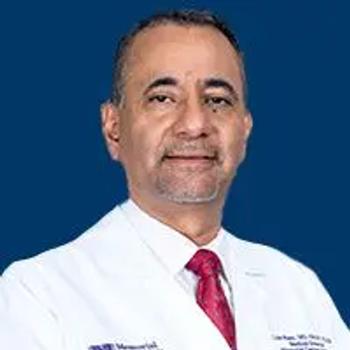
Luis Raez, MD, highlights considerations with phases of treatment in lung cancer, detailing factors affecting use of adjuvant therapy when a patient has a complete response.

Targeting IRAK4 with emavusertib could be a viable treatment option that offers needed blood-brain barrier penetration in PCNSL.
Tusamitamab ravtansine vs docetaxel was not significantly different regarding survival in patients with advanced nonsquamous non–small cell lung cancer.
Taletrectinib was safe and generated durable responses in both TKI-naive and -pretreated patients with ROS1-positive non–small cell lung cancer.
Neoadjuvant durvalumab plus chemotherapy and adjuvant durvalumab improves event-free survival in stage IIA-IIIB resectable non–small cell lung cancer vs. placebo.