
The FDA has announced that it had accepted the new drug application for SH-105 for the treatment of patients with breast and ovarian cancer.

Your AI-Trained Oncology Knowledge Connection!
The FDA has announced that it had accepted the new drug application for SH-105 for the treatment of patients with breast and ovarian cancer.

Cobolimab plus dostarlimab-gxly showed activity and acceptable safety across all dose levels assessed in patients with non–small cell lung cancer.
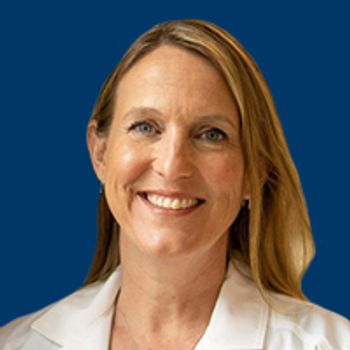
Alana Welm, PhD, received the 2023 American Association for Cancer Research Outstanding Investigator Award for Breast Cancer Research.
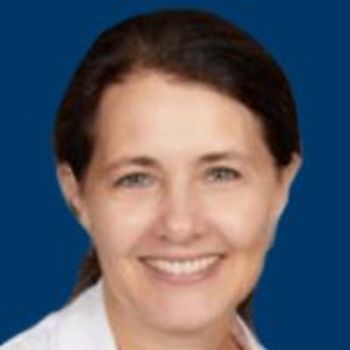
Heather Wakelee, MD, discusses the importance of balancing toxicities with efficacy as the non–small cell lung cancer treatment paradigm shifts.

Eirwen M. Miller, MD, spotlights updated data within the endometrial, cervical, and ovarian cancer spaces following the 2023 ESMO Congress.
The NCCN has updated its guidelines for soft tissue sarcoma to include nirogacestat as a systemic therapy option for patients with desmoid tumors.
Camidanlumab tesirine was well tolerated as a monotherapy and elicited responses when given with pembrolizumab in patients with advanced solid tumors.

BRL-201 had a manageable safety profile and elicited early indications of efficacy in patients with relapsed/refractory non-Hodgkin lymphoma.

Thomas G. Martin, MD, has received a grant from the California Institute of Regenerative Medicine to produce a CAR T cell therapy for multiple myeloma.
The FDA has granted priority review to a sBLA seeking to convert the accelerated approval of tisotumab vedotin to full approval in select patients with cervical cancer.
The FDA has issued a CRL to the zolbetuximab BLA for patients with HER2- gastric or GEJ junction adenocarcinoma whose tumors are Claudin18.2 positive.

Expert oncologists who treat patients with advanced renal cell carcinoma discuss updates from clinical trials presented during the 2023 ESMO Congress.
Eirwen M. Miller, MD, highlights data that have impacted the treatment armamentarium for patients with endometrial cancer and mismatch repair–deficient or mismatch repair–proficient disease throughout the course of 2023.

China’s NMPA has accepted the sNDA seeking the approval of cadonilimab plus chemotherapy for use in select patients with gastric or GEJ adenocarcinomas.
Sikander Ailawadhi, MD, spotlights the characteristics of multiple myeloma that drive the decision to use teclistamab-cqyv, elranatamab-bcmm, or talquetamab-tgvs.
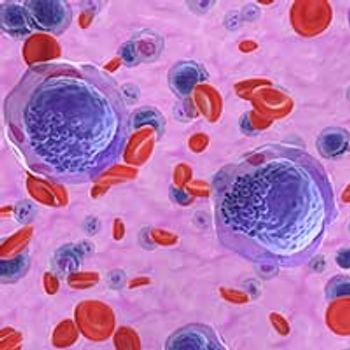
Asciminib demonstrated a favorable safety profile and induced statistically significant and clinically meaningful major molecular response benefits vs standard-of-care TKIs in patients with newly diagnosed, Philadelphia chromosome-positive chronic myeloid leukemia in chronic phase.
The FDA has granted fast track designation to rinatabart sesutecan for the treatment of patients with FRα-expressing high-grade serous or endometrioid platinum-resistant ovarian cancer.
Florida Cancer Specialists & Research Institute, LLC announced the promotion of two members of its executive and physician leadership team.
Iopofosine I 131 monotherapy elicited durable responses and was associated with a tolerable safety profile in patients with heavily pretreated, multi-class refractory Waldenström macroglobulinemia.
Although the severity of the shortage of chemotherapy agents, particularly with the platinum-based therapies cisplatin and carboplatin, has receded from the heights seen earlier in 2023, clinicians are still dealing with its ramifications and having to strategically manage how they employ certain chemotherapies.
Vivek Subbiah, MD, emphasizes the need for improved guidance on practical toxicity management for various FGFR-altered malignancies, highlights best practices for monitoring and managing the most common on-target toxicities associated with FGFR inhibitors, and discusses the key implications of this review for those utilizing FGFR inhibitors.

Zoe Landau, MPH, Project Manager in the lab of Linda Fleisher, PhD, MPH, was recently recognized with the Best Professional Poster Award at the 2023 International Cancer Education Conference for her work detailing the mychoice digital health tool.

Pooja Advani, MBBS, MD, details the encouraging activity of antibody-drug conjugates in triple-negative breast cancer, the importance of utilizing next-generation sequencing to inform treatment selection after progression on CDK4/6 inhibitors in this disease setting, and more.
Shanta Dhar, PhD, assistant director of Technology and Innovation at Sylvester Comprehensive Cancer Center, has been named a fellow of the National Academy of Inventors.
A planned 5-year trip in the United States coupled with a thirst for knowledge turned into a lifetime of surgical oncology accomplishments for Eleftherios “Terry” Mamounas, MD, MPH.
Significant tumor necrosis greater than 70% occurred in 3 patients with resectable hepatocellular carcinoma following neoadjuvant treatment with low-dose stereotactic body radiation therapy and cemiplimab-rwlc and adjuvant cemiplimab.

Lenvatinib plus pembrolizumab, pemetrexed, and carboplatin or cisplatin did not improve treatment outcomes compared with placebo plus pembrolizumab, pemetrexed, and carboplatin or cisplatin when given as first-line therapy in patients with stage IV nonsquamous non–small cell lung cancer.

Lifileucel demonstrated clinically meaningful antitumor activity alongside early, durable responses in patients with advanced melanoma following progression on checkpoint inhibitors.
Sikander Ailawadhi, MD, discusses characteristics of myelofibrosis that influence decisions between JAK inhibitors, highlights differences between bispecific antibodies to consider when managing diffuse large B-cell lymphoma, and more.
The FDA has granted breakthrough therapy designation to TAR-200 for use in the treatment of patients with Bacillus Calmette-Guérin–unresponsive, high-risk non–muscle invasive bladder cancer who are not candidates for or opted not to receive radical cystectomy.