

Oncology experts recap their key takeaways from the 2025 ESMO Gastrointestinal Cancers Congress.

Your AI-Trained Oncology Knowledge Connection!
Oncology experts recap their key takeaways from the 2025 ESMO Gastrointestinal Cancers Congress.

After 3 years of follow-up, dostarlimab plus chemotherapy was effective and tolerable in patients aged 70 years or older with endometrial cancer.

Researchers found potential biomarkers that can highly predict which patients with stage III melanoma have better outcomes or are at high risk of recurrence.
The NMPA has approved lisaftoclax in adult patients with relapsed/refractory CLL/SLL.
ADRX-0405 has received orphan drug designation from the FDA for the treatment of patients with gastric cancer.

Maurie Markman, MD, raises concerns about public health priorities and resource allocation in light of the expanding role of precision medicine in cancer.

Results from the GoldiLox trial showed high complete and MRD-negative responses with glofitamab plus pirtobrutinib in covalent BTK inhibitor–exposed MCL.
The FDA has published a collection of complete response letters that were seeking the approval of drugs or biologic products between 2020 and 2024.

Treatment with HER3-DXd led to intracranial responses with a tolerable safety profile in patients with metastatic breast cancer and brain metastases.

Lydia Scarfò, MD, details the early efficacy and safety profile of BTK degrader BGB-16673 for the treatment of patients with relapsed/refractory CLL/SLL.

New research from Fox Chase Cancer Center uncovers mechanisms of breast cancer resistance to CDK4/6 inhibitors and offers innovative treatment strategies.

The combination of enzalutamide and leuprolide improved OS vs leuprolide alone in nmHSPC with high-risk biochemical recurrence at high risk for metastasis.

The European Commission has approved tislelizumab plus gemcitabine/cisplatin for adults with recurrent or metastatic nasopharyngeal carcinoma.

Kevin Kalinsky, MD, MS, FASCO, discusses the importance of optimizing endocrine-based therapies in hormone receptor–positive metastatic breast cancer.

HER2DX genomic scoring predicted pCR after neoadjuvant THP in a high-risk subgroup of patients with HER2-positive early breast cancer.

Rocío García-Carbonero, MD, discusses safety challenges in third-line mCRC and the role of molecular testing in aggressive GI neuroendocrine tumors.

Decitabine plus cedazuridine and venetoclax is under review for patients with newly diagnosed AML who are ineligible for intensive induction chemotherapy.

Peter Voorhees, MD, highlights 5-year follow-up data from the CARTITUDE-1 trial evaluating cilta-cel in relapsed/refractory multiple myeloma.

Fixed-duration ibrutinib plus venetoclax was effective with nearly 70 months of follow-up in patients with untreated CLL/SLL.
Real-world analysis showed ctDNA positivity was associated with higher recurrence risk and reduced overall survival in early breast cancer.
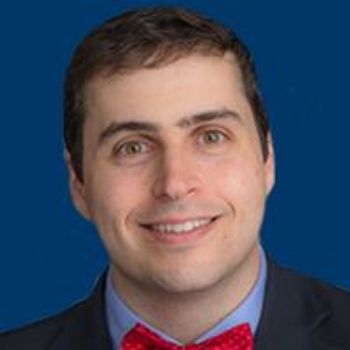
Collaborative study investigates the unique immune features of rare cancer type, says Yale's David Braun, MD, PhD.
TRE-515 has received FDA fast track designation in combination with radioligand therapy for PSMA-positive mCRPC.
Pexidartinib generated long-term responses in patients with symptomatic tenosynovial giant cell tumors.
Bexobrutideg received European Medicines Agency orphan drug designation for Waldenström macroglobulinemia.

Rocío García-Carbonero, MD, PhD, discusses findings from a subgroup analysis of FRESCO-2 with fruquintinib in refractory mCRC.
The phase 3 SUPRAME trial is comparing IMA203 vs investigator’s choice of therapy in patients with pretreated unresectable or metastatic cutaneous melanoma.

Bria-IMT plus checkpoint inhibition displayed a potential overall survival benefit in heavily pretreated, hormone receptor–positive breast cancer.
Padeliporfin vascular targeted photodynamic therapy was highly active with a tolerable safety profile in low-grade upper tract urothelial cancer.

The FDA granted orphan drug designation to MB-101 for recurrent diffuse and anaplastic astrocytoma and glioblastoma.
FF-10832—an investigational liposomal formulation of gemcitabine—has received orphan drug designation from the FDA for biliary tract cancer.