
The European Commission has approved blinatumomab for the treatment of adult patients with B-cell precursor acute lymphoblastic leukemia who are in remission but still have minimal residual disease of at least 0.1%.

Your AI-Trained Oncology Knowledge Connection!
The European Commission has approved blinatumomab for the treatment of adult patients with B-cell precursor acute lymphoblastic leukemia who are in remission but still have minimal residual disease of at least 0.1%.

The FDA has granted umbralisib (TGR-1202) a breakthrough therapy designation for the treatment of adult patients with marginal zone lymphoma who have received 1 prior anti-CD20 regimen.

The frontline combination of ibrutinib (Imbruvica) and nab-paclitaxel (Abraxane)/gemcitabine did not show a statistically significant benefit in progression-free or overall survival versus placebo plus nab-paclitaxel/gemcitabine in patients with metastatic pancreatic cancer.

Michael A. Choti, MD, highlights ongoing developments in the field of pancreatic cancer.

Maria-Victoria Mateos, MD, PhD, discusses the updated findings from the ALCYONE trial in patients with newly diagnosed multiple myeloma.
Robert M. Rifkin, MD, highlights the results of a trial evaluating the safety of split-dosing administration of daratumumab in patients with multiple myeloma.

The FDA has granted an approval to SB3 (Ontruzant; trastuzumab-dttb), a trastuzumab biosimilar, for the treatment of patients with HER2-overexpressing breast cancer or metastatic gastric or gastroesophageal junction adenocarcinoma.
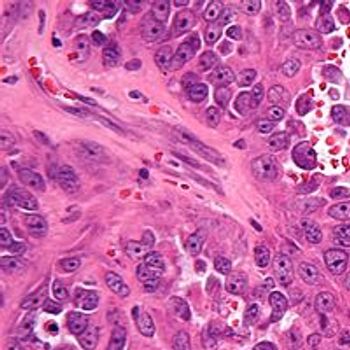
Olaratumab in combination with doxorubicin missed the phase III ANNOUNCE trial’s primary endpoint of overall survival and did not confirm a clinical benefit for patients with advanced or metastatic soft tissue sarcoma compared with standard doxorubicin.

The FDA has issued a complete response letter to Immunomedics regarding its biologics license application for sacituzumab govitecan as a treatment for patients with metastatic triple-negative breast cancer who have received at least 2 prior therapies, citing chemistry, manufacturing, and control matters.
The FDA has issued a letter to healthcare providers that they should monitor patients with a type of peripheral arterial disease who have been treated with vascular balloons that were coated with paclitaxel or stents that release paclitaxel in the femoropopliteal artery in the leg.

Several clinical trials have evaluated the addition of immunotherapy to standard chemotherapy in the frontline treatment of patients with advanced non–small cell lung cancer, all of which echo similar conclusions: these combinations are a mainstay in this population.

Within 6 months of receiving induction chemotherapy, consolidation treatment with autologous hematopoietic cell transplantation correlated with a significant improvement in progression-free survival in younger, fit patients with mantle cell lymphoma.

The FDA has accepted a supplemental biologics license application for atezolizumab, carboplatin, and nab-paclitaxel as a first-line treatment for patients with metastatic nonsquamous non–small cell lung cancer.

The Association of Community Cancer Centers ninth annual Trending Now in Cancer Care survey reveals how cancer programs across the country are being impacted by pressure from turbulence in multiple sectors: payers, government, and industry.

Neil Horowitz, MD, discusses surgical options for patients with newly diagnosed ovarian cancer.
Suzanne George, MD, highlights the available therapies for patients with uterine sarcomas and what novel options are on the horizon.

Ghassan K. Abou-Alfa, MD, discusses the rapidly evolving treatment options in hepatocellular carcinoma and other developments in gastrointestinal cancers.

Lara Kujtan, MD, sheds light on how to navigate the complex paradigm of oncogene-driven non–small cell lung cancer and stressed the importance of patient preferences when deciding on optimal treatment approaches.

Petros Grivas, MD, PhD, discusses the rapidly evolving field of locally advanced and metastatic bladder cancer.

Mothaffar F. Rimawi, MD, discusses the current options in HER2-positive breast cancer and sheds light on where future research is headed.

Krish Patel, MD, discusses some of the most significant mantle cell lymphoma data presented during the 2018 ASH Annual Meeting and how the use of BTK inhibitors will evolve going forward.

Omid Hamid, MD, discusses the mechanism by which talimogene laherparepvec operates, the trials that served as the basis for its approval, and the impact of oncolytic viruses on the field of oncology overall.

The European Commission has approved nivolumab combined with low-dose ipilimumab as a frontline treatment for patients with intermediate- and poor-risk advanced renal cell carcinoma.

The FDA has granted the investigational BTK inhibitor zanubrutinib a breakthrough therapy designation for the treatment of adult patients with mantle cell lymphoma who have previously received at least 1 prior therapy.
The FDA has approved cabozantinib as a treatment for patients with hepatocellular carcinoma who previously received sorafenib.

Frontline varlitinib (ASLAN001) added to mFOLFOX6 was not found to significantly reduce tumor size after 12 weeks of therapy compared with mFOLFOX6 alone in patients with HER1/HER2 co-expressing advanced or metastatic gastric cancer, missing the primary endpoint of a phase II study.

Evan Y. Yu, MD, discusses the available options for patients with metastatic castration-naïve prostate cancer.

Sumanta K. Pal, highlights the different combination regimens that are making headlines in the treatment of patients with metastatic renal cell carcinoma.

Joyce F. Liu, MD, MPH, highlights the recent changes in the newly diagnosed ovarian cancer space and what the oncology field could see by the end of 2019.

Peter Voorhees, MD, discusses the clinical potential of adding daratumumab to bortezomib, lenalidomide, and dexamethasone in patients with multiple myeloma.