
Renier Brentjens, MD, PhD, associate professor, chief, Cellular Therapeutics Center, Memorial Sloan Kettering Cancer Center, discusses the goal of armored chimeric antigen receptor (CAR) T cells.

Your AI-Trained Oncology Knowledge Connection!
Renier Brentjens, MD, PhD, associate professor, chief, Cellular Therapeutics Center, Memorial Sloan Kettering Cancer Center, discusses the goal of armored chimeric antigen receptor (CAR) T cells.
Michael A. Postow, MD, medical oncologist, Memorial Sloan Kettering Cancer Center, discusses side effects with combination therapy in melanoma.
Alterations in DNA damage response and repair genes were associated with an increased response to anti-PD-1/PD-L1 antibodies in patients with metastatic urothelial carcinoma.
Susan F. Slovin, MD, PhD, discusses the multinational PRONOUNCE study and how the results may affect the treatment of patients with prostate cancer.
Anas Younes, MD, Chief of Lymphoma Service, Memorial Sloan Kettering Cancer Center, discusses the combination of ibrutinib (Imbruvica) plus nivolumab (Opdivo) in non-Hodgkin lymphoma.
Susan F. Slovin, MD, PhD, a medical oncologist at Memorial Sloan Kettering Cancer Center, discusses the difference between GnRH antagonists and GnRH agonists.
Larotrectinib (LOXO-101) induced durable responses in patients with TRK fusion–positive solid tumors, according to updated results for the novel pan-TRK inhibitor.
Tiffany A. Traina, MD, medical oncologist, Memorial Sloan Kettering Cancer Center, discusses neratinib (Nerlynx) in HER2-positive breast cancer.
Diane Reidy Lagunes, MD, medical oncologist, Memorial Sloan Kettering Cancer Center, discusses the necessity of tailored approaches in the treatment of patients with neuroendocrine tumors (NETs).

Advanced interventional pulmonology techniques are revolutionizing the diagnosis and treatment of lung cancer.
Tiffany A. Traina, MD, discusses her experiences with using neratinib and pertuzumab, and shares her excitement on the direction in which the HER2-positive breast cancer field is moving.
William R. Jarnagin, MD, FACS, chief, Hepatopancreatobiliary Service, Benno C. Schmidt Chair, Surgical Oncology, Memorial Sloan Kettering Cancer Center, discusses the progression of surgery in treating patients with metastatic colorectal cancer.
With the advent of the combination of dabrafenib (Tafinlar) plus trametinib (Mekinist) in melanoma physicians are no longer using BRAF inhibitors alone, but rather in combination with MEK inhibitors due to the improved efficacy.
Christopher Crane, MD, vice chair, Department of Radiation Oncology, Memorial Sloan Kettering Cancer Center, discusses the emergence and success of new technologies in the treatment of patients with gastrointestinal (GI) malignancies.
Martin H. Voss, MD, medical oncologist, Memorial Sloan Kettering Cancer Center, explains the case for neoadjuvant therapy in the treatment of kidney cancer.
Treatment with encorafenib and binimetinib improved survival versus single-agent vemurafenib (Zelboraf) in patients with BRAF-mutant advanced, unresectable or metastatic melanoma.
Renier Brentjens, MD, PhD, associate professor, chief, Cellular Therapeutics Center, Memorial Sloan Kettering Cancer Center, discusses the toxicities associated with chimeric antigen receptor (CAR) T-cell therapy.
Diane Reidy Lagunes, MD, medical oncologist, Memorial Sloan Kettering Cancer Center, discusses ongoing clinical trials and recent approvals that will shape the standard of care in the treatment of patients with neuroendocrine tumors (NETs).
Ghassan K. Abou-Alfa, MD, medical oncologist, Memorial Sloan Kettering Cancer Center, discusses how the potential approval of cabozantinib (Cabometyx) in hepatocellular carcinoma (HCC) could affect the treatment landscape in liver cancer.
Tiffany A. Traina, MD, medical oncologist, Memorial Sloan Kettering Cancer Center, on considerations for the treatment of patients with HER2-positive breast cancer.
William R. Jarnagin, MD, FACS, chief, Hepatopancreatobiliary Service, Benno C. Schmidt Chair, Surgical Oncology, Memorial Sloan Kettering Cancer Center, discusses the surgical barriers in treating patients with colorectal cancer that has metastasized outside of the liver.
Daniel Coit, MD, discusses clinical findings with complete lymph node dissection and the evolution of surgery in the melanoma landscape.
Daniel G. Coit, MD, FACS, surgical oncologist, Memorial Sloan Kettering Cancer Center, discusses the role of surgery in treating patients with melanoma.
Renier Brentjens, MD, PhD, associate professor, chief, Cellular Therapeutics Center, Memorial Sloan Kettering Cancer Center, discusses the potential for chimeric antigen receptor therapy (CAR) T-cell therapy in solid tumors.
David H. Ilson, MD, PhD, medical oncologist, Memorial Sloan Kettering Cancer Center, discusses a trial from Germany comparing standard perioperative ECF/ECX chemotherapy with a regimen combining 5-FU (5-fluorouracil) with oxaliplatin and docetaxel.
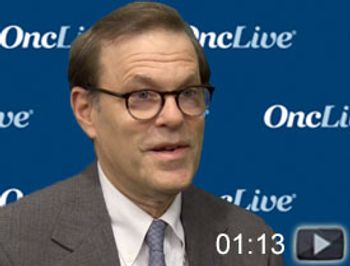
Paul B. Chapman, MD, medical oncologist at Memorial Sloan Kettering Cancer Center, professor of medicine at the Weill Cornell Medical College, discusses targeted treatments for non-traditional mutations in melanoma.
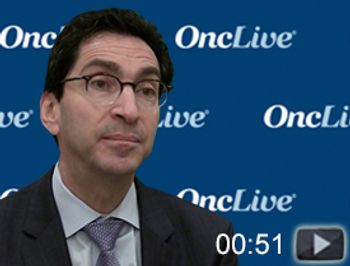
Leonard Saltz, MD, executive director for Clinical Value & Sustainability, head, Colorectal Oncology Section, Memorial Sloan Kettering Cancer Center, discusses the option of FOLFIRINOX for the treatment of patients with metastatic colorectal cancer.
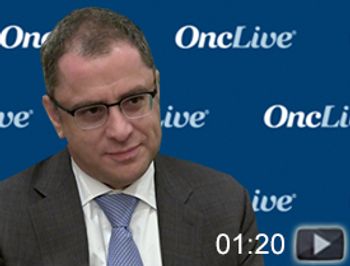
Ghassan K. Abou-Alfa, MD, medical oncologist, Memorial Sloan Kettering Cancer Center, discusses treatment options in liver cancer.
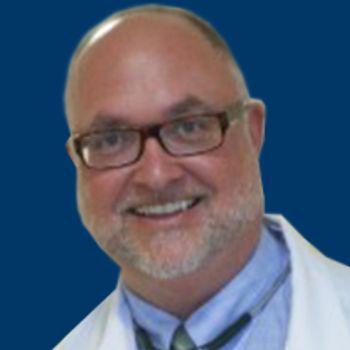
David H. Ilson, MD, PhD, discusses practice-changing trials, the optimal available therapies, and how immunotherapy fits into the future treatment paradigm for gastric cancer.
Christopher Crane, MD, discusses modern innovative techniques in GI cancers.