
Treatment with the long-acting interleukin-2 superkine led to durable tumor control and no dose-limiting toxicities in patients with advanced solid tumors, according to data from the dose-escalation portion of the phase 1/2 ABILITY-1 trial.

Your AI-Trained Oncology Knowledge Connection!

Chris Ryan joined OncLive in November 2021 as a senior editor and became the website's managing editor in October 2023. Before arriving at MJH Life Sciences, he spent nearly a decade covering professional and high school sports—including the New Jersey Devils and the NHL from 2016 to 2021—for The Star-Ledger and NJ.com. Email: chryan@onclive.com
Treatment with the long-acting interleukin-2 superkine led to durable tumor control and no dose-limiting toxicities in patients with advanced solid tumors, according to data from the dose-escalation portion of the phase 1/2 ABILITY-1 trial.

Balazs Halmos, MD, explains why a national effort is needed to mitigate current and future drug shortages in oncology and discusses strategies being used to navigate the current cisplatin and carboplatin shortages.
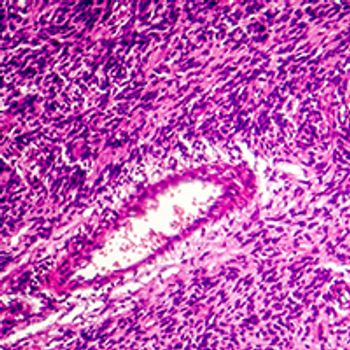
Treatment with camsirubicin led to a reduction in tumor size in patients with advanced soft tissue sarcoma.

The FDA has granted clearance for a global, registrational, phase 3 study examining lisaftoclax in combination with a BTK inhibitor in patients with relapsed/refractory chronic lymphocytic leukemia or small lymphocytic lymphoma who received prior treatment with a BTK inhibitor.
Jacob Sands, MD, discusses how the ongoing shortages of carboplatin and cisplatin have presented new challenges to patient care, how he and colleagues at Dana-Farber Cancer Institute are navigating these shortages, and how these limitations could ultimately have an impact on patients.
Neoadjuvant pembrolizumab plus chemotherapy led to an improvement in pathological complete response rate compared with chemotherapy plus placebo in patients with high-risk, early-stage, estrogen receptor–positive, HER2-negative breast cancer.

The European Commission has approved sacituzumab govitecan-hziy for the treatment of adult patients with unresectable or metastatic hormone receptor–positive, HER2-negative breast cancer who have received endocrine-based therapy and at least 2 additional systemic therapies in the advanced setting

Long-term data demonstrated that treatment with cosibelimab improved complete response rates over time in patients with locally advanced or metastatic cutaneous squamous cell carcinoma in a phase 1 trial.

The European Commission has approved piflufolastat (18F) for the detection of prostate-specific membrane antigen–positive lesions with positron emission tomography in adults with prostate cancer.

Treatment with UGN-102 with or without transurethral resection of bladder tumors led to an improvement in disease-free survival compared with TURBT alone in patients with low-grade, intermediate-risk non–muscle-invasive bladder cancer.

The phase 1/2 UPLIFT trial evaluating the antibody-drug conjugate upifitamab rilsodotin in patients with platinum-resistant ovarian cancer failed to meet its primary end point of investigator-assessed overall response rate in the NaPi2b-positive population.

The combination of mRNA-4157 and pembrolizumab will be further evaluated as an adjuvant treatment option for patients with resected, high-risk, stage IIB to IV melanoma in the phase 3 V940-001 trial.

The National Comprehensive Cancer Network has added flotufolastat F 18 injection to its Clinical Practice Guidelines in Oncology for positron emission tomography of prostate-specific membrane antigen–positive lesions in men with prostate cancer with suspected metastasis who are candidates for initial definitive therapy.
Selinexor maintenance generated an improvement in progression-free survival compared with placebo in patients with TP53 wild-type advanced or recurrent endometrial cancer who responded to first-line chemotherapy.

An independent data monitoring committee has recommended the continuation of the phase 3 PANOVA-3 trial evaluating tumor treating fields in combination with nab-paclitaxel and gemcitabine for the treatment of patients with unresectable, locally advanced pancreatic cancer.

Treatment with the combination of rivoceranib and camrelizumab led to a statistically significant and clinically meaningful benefit in progression-free survival and overall survival compared with sorafenib in previously untreated patients with unresectable hepatocellular carcinoma.

The phase 3 ENHANCE trial evaluating the first-line combination of magrolimab and azacitidine vs placebo plus azacitidine in patients with higher-risk myelodysplastic syndrome has been discontinued due to futility at a planned analysis.

The anti–CSF-R1 antibody axatilimab generated responses in adult and pediatric patients with chronic graft-vs-host disease who received 2 or more prior lines of therapy, meeting the primary end point in all cohorts of patients in the phase 2 AGAVE-201 trial.
The FDA has approved the LeukoStrat CDx FLT3 Mutation Assay for use as a companion diagnostic to select patients with FLT3-ITD–positive acute myeloid leukemia who may be eligible to receive treatment with quizartinib (Vanflyta).1

The European Medicines Agency’s Committee for Medicinal Products for Human Use has recommended approval of nivolumab monotherapy for the adjuvant treatment of patients at least 12 years of age with completely resected stage IIB or IIC melanoma.

The European Medicines Agency’s Committee for Medicinal Products for Human Use has issued a positive opinion recommending conditional marketing authorization to epcoritamab monotherapy for the treatment of adult patients with relapsed/refractory diffuse large B-cell lymphoma after 2 or more lines of systemic therapy.
The FDA has approved quizartinib in combination with standard cytarabine and anthracycline induction and cytarabine consolidation, and as maintenance monotherapy following consolidation chemotherapy, for the treatment of adult patients with newly diagnosed acute myeloid leukemia that is FLT3-ITD positive, as detected by an FDA-approved test.

Treatment with the CD3 x CD123 bispecific antibody APVO436 plus venetoclax and azacitidine led to durable remissions in patients with relapsed/refractory acute myeloid leukemia who had not received prior venetoclax.

Treatment with the combination of ENB-003 and pembrolizumab was well tolerated and produced preliminary signs of clinical activity in patients with platinum-refractory or -resistant, microsatellite stable ovarian cancer, and those with other advanced refractory solid tumors.

China’s National Medical Products Administration has accepted a supplemental new drug application seeking the approval of toripalimab in combination with platinum-based chemotherapy for the first-line treatment of patients with extensive-stage small cell lung cancer.

Treatment with the combination of the tissue-specific therapeutic IMX-110 and the anti–PD-1 antibody tislelizumab led to tumor shrinkage in heavily pretreated patients with metastatic colorectal cancer.

The combination of the NOX1/4 inhibitor setanaxib and pembrolizumab produced progression-free survival benefits compared with placebo plus pembrolizumab in patients with recurrent or metastatic head and neck squamous cell carcinoma.

The addition of the CXCL12 inhibitor NOX-A12 to standard-of-care radiotherapy and bevacizumab elicited responses when used as first-line treatment in patients with glioblastoma, according to updated data from the expansion arm of the phase 1/2 GLORIA trial.

The European Medicines Agency has accepted a marketing authorization application seeking the approval of zolbetuximab for first-line treatment of patients with Claudin18.2-positive, HER2-negative, unresectable, locally advanced or metastatic gastric or gastroesophageal junction adenocarcinoma.
The FDA has accepted for review a new drug application seeking the approval of rivoceranib in combination with camrelizumab as a first-line treatment option for patients with unresectable hepatocellular carcinoma.