
The investigation of treatment regimens featuring antibody-drug conjugates or radiotherapeutics are part of the ongoing wave of research in renal cell carcinoma.

Your AI-Trained Oncology Knowledge Connection!

Chris Ryan joined OncLive in November 2021 as a senior editor and became the website's managing editor in October 2023. Before arriving at MJH Life Sciences, he spent nearly a decade covering professional and high school sports—including the New Jersey Devils and the NHL from 2016 to 2021—for The Star-Ledger and NJ.com. Email: chryan@onclive.com
The investigation of treatment regimens featuring antibody-drug conjugates or radiotherapeutics are part of the ongoing wave of research in renal cell carcinoma.

Single-agent treatment with the novel CCR4 antagonist FLX475 led to changes in the tumor microenvironment to a phenotype more associated with responses to anti–PD-1/PD-L1 therapy in patients with natural killer/T-cell lymphoma.

China’s National Medical Products Administration has accepted a supplemental new drug application seeking the approval of toripalimab plus for the first-line treatment of patients with unresectable or metastatic renal cell carcinoma

The FDA has accepted a supplemental biologics license application seeking the approval of zanubrutinib in combination with obinutuzumab in the treatment of adult patients with relapsed/refractory follicular lymphoma who received at least 2 prior lines of therapy.

Treatment with ASP-1929 in combination with pembrolizumab led to responses and was well tolerated in patients with recurrent or metastatic head and neck squamous cell carcinoma.

ADC Therapeutics has voluntarily paused enrollment to the phase 2 LOTIS-9 trial investigating the combination of loncastuximab tesirine and rituximab for use in unfit or frail patients with previously untreated diffuse large B-cell lymphoma.

Frontline treatment with the combination of nivolumab and cisplatin-based chemotherapy, followed by nivolumab monotherapy, led to a statistically significant improvement in PFS and OS vs standard cisplatin-based chemotherapy regimens alone in previously untreated, cisplatin-eligible patients with unresectable or metastatic urothelial carcinoma.

Dose-dense and dose-intense doxorubicin, bleomycin, vinblastine, dacarbazine, and granulocyte colony–stimulating factor (ABVD) generated an improvement in progression-free survival and other efficacy end points compared with PET-adapted ABVD in previously untreated patients with advanced classical Hodgkin lymphoma.
The FDA has granted breakthrough therapy designation to zenocutuzumab for use as a potential therapeutic option in patients with advanced unresectable or metastatic, NRG1 fusion–positive non–small cell lung cancer following progression with prior systemic therapy.

The FDA has granted a fast track designation to paxalisib in combination with radiation therapy for the treatment of patients with solid tumor brain metastases harboring PI3K pathway mutations.
The FDA has lifted a partial clinical hold on the phase 1/2 TakeAim Leukemia trial evaluating emavusertib monotherapy and in combination with azacitidine and venetoclax in patients with relapsed/refractory acute myeloid leukemia or high-risk myelodysplastic syndrome.

Ixabepilone produced clinical benefit in patients with metastatic breast cancer selected for treatment with the DRP®-IXEMPRA® companion diagnostic candidate.
The FDA has granted a priority review to the biologics license application seeking the approval of zolbetuximab for the first-line treatment of patients with unresectable, locally advanced or metastatic, HER2-negative, gastric or gastroesophageal junction adenocarcinoma whose tumors are Claudin18.2 positive.
Treatment with the irreversible BTK inhibitor abivertinib led to responses and disease control in patients with relapsed/refractory marginal zone lymphoma.
The FDA has approved a new drug application for 200-mg/mL vials of cyclophosphamide injection for use in combination therapy in the treatment of patients with various types of cancers, including malignant lymphoma, multiple myeloma, and various types of leukemia.

Datopotamab deruxtecan provided a statistically significant improvement in progression-free survival compared with standard-of-care docetaxel in patients with locally advanced or metastatic non–small cell lung cancer who received at least 1 prior line of therapy.

The combination of the oncolytic reovirus pelareorep and paclitaxel generated responses in patients with metastatic hormone receptor–positive/HER2-negative breast cancer.
The US indication for pralsetinib in the treatment of adult and pediatric patients aged 12 years and older with advanced or metastatic RET-mutant medullary thyroid cancer who require systemic therapy has been voluntarily withdrawn by Genentech.
Treatment with intra-arterial gemcitabine led to an improvement in overall survival compared with continued treatment with intravenous gemcitabine plus nab-paclitaxel in patients with locally advanced pancreatic cancer following sequential treatment with IV gemcitabine, nab-paclitaxel, and radiotherapy.

The European Commission has approved nivolumab in combination with platinum-based chemotherapy for the neoadjuvant treatment of patients with resectable non–small cell lung cancer at high risk of recurrence with tumor cell PD-L1 expression of at least 1%.
Although the highly potent, selective, allosteric, oral, small molecule BRG1/BRM inhibitor FHD-286 elicited signs of clinical activity and safety as monotherapy in patients with metastatic uveal melanoma in the dose-escalation portion of a phase 1 trial, further development in this indication will not be pursued.
The FDA has granted an orphan drug designation to the novel, highly potent, and selective MDM2 degrader KT-253 for the treatment of patients with acute myeloid leukemia.
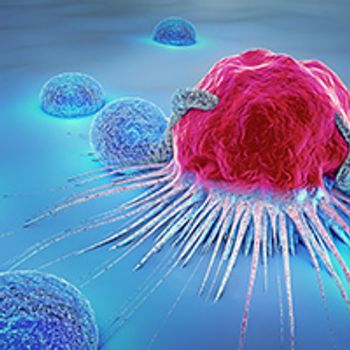
Frontline treatment with the combination of the CD40-directed monoclonal antibody agonist mitazalimab and modified FOLFIRINOX continued to produce responses in patients with metastatic pancreatic ductal adenocarcinoma.
The CD20-targeted CAR T-cell therapy MB-106 led to responses and was well tolerated in patients with Waldenström macroglobulinemia who were refractory to a BTK inhibitor.

The FDA has issued a complete response letter to the new drug application seeking the approval of ADX-2191 for the treatment of patients with primary vitreoretinal lymphoma.
Extended follow-up from the phase 3 SEQUOIA trial demonstrated that zanubrutinib maintained a progression-free survival benefit compared with bendamustine plus rituximab in previously untreated patients with chronic lymphocytic leukemia or small lymphocytic lymphoma.
The novel, autologous, anti-CD19 CAR T-cell therapy anbalcabtagene autoleucel produced durable responses and was well tolerated in patients with relapsed/refractory large B-cell lymphoma.
Neoadjuvant treatment with pembrolizumab plus chemotherapy, followed by adjuvant pembrolizumab plus chemotherapy, then pembrolizumab monotherapy, led to a statistically significant improvement in pathological complete response rates vs neoadjuvant chemotherapy alone in patients with locally advanced, resectable gastric and gastroesophageal junction adenocarcinoma.

The CAR T-cell therapy lisocabtagene maraleucel produced rapid and durable responses in heavily pretreated patients with relapsed/refractory mantle cell lymphoma.
China’s National Medical Products Administration has granted a breakthrough therapy designation to infigratinib for the treatment of patients with gastric cancer.