





Breast Cancer
Latest News


Emerging Data Help Steer CDK4/6 Inhibitor Choice in HR+/HER2– Breast Cancer
By Ryan Scott
Advertisement
Latest Videos








CME Content































Advertisement
More News

Manali Bhave, MD, discusses the effect of emerging therapies on the treatment landscape for patients with HR-positive, HER2-negative or -low breast cancer, highlighted her stance on sequencing decisions for these patients, and expanded on the additional work being done to optimize treatment sequencing from a growing list of options.

Kevin Kalinsky, MD, MS, discusses differences in efficacy data for CDK4/6 inhibitors in the treatment of patients with metastatic hormone receptor–positive/HER2-negative breast cancer.

Manali Bhave, MD, discusses the impact of new treatment strategies on the landscape of hormone receptor–positive/HER2-negative breast cancer.

Heather Han, MD, discusses prior research with gedatolisib that provided the rationale for the phase 3 VIKTORIA-1 trial (NCT05501886) in patients with hormone receptor (HR)–positive, HER2-negative metastatic breast cancer.

Adana A.M. Llanos, PhD, MPH, discusses the relationship between prediagnostic allostatic load and breast cancer clinicopathology in Black women.

Harikrishna Nakshatri, BVSc, PhD, discusses the investigation of TONSL in patients with breast cancer.

Erika P. Hamilton, MD, director, Breast and Gynecologic Cancer Research, Sarah Cannon Research Institute, discusses the potential of the PI3K inhibitor RLY-2608 in PI3K-mutated breast cancer.

Joyce A. O’Shaughnessy, MD, highlights multidisciplinary approaches including discussions on tumor boards, and discusses how to better assist patients with accessing care, and notable advances in the field particularly with the HER2 classification.

Foluso Bisi Ademuyiwa, MD, MPH, MSCI, discusses the optimal sequencing of current CDK4/6 inhibitors in the first-line setting for hormone receptor (HR)–positive, HER2-negative breast cancer based on updated efficacy and safety data.

University of Cincinnati Cancer Center researchers presented more than a dozen abstracts at the 2023 American Association for Cancer Research Annual Meeting, including findings that could advance treatments for head and neck and breast cancers.

Jane Lowe Meisel, MD, discusses previously reported data from the ELAINE-1 and ELAINE-2 trials, their significance within the ESR1-mutant, ER-positive, HER2-negative breast cancer treatment paradigm, and the purpose of the ongoing ELAINE-3 trial.
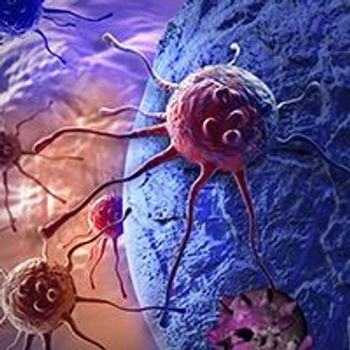
Preclinical data have demonstrated activity of a novel, small molecule CDK2 inhibitor INCB123667 in CDK2/cyclin E1 expressing cell lines prompting investigators to initiate a phase 1 study, and the agent may fill an unmet need for patients with cancers with primary or acquired CDK4/6 resistance.
Foluso Bisi Ademuyiwa, MD, MPH, MSCI, discusses the implications of the phase 3 KEYNOTE-522 trial in high-risk, early-stage triple-negative breast cancer.

Several landmark trials have led to FDA approval milestones across all breast cancer subtypes in the past 5 years, each continuing to change the navigation of treatment approaches in clinical practice.

Reshma Lillaney Mahtani, DO, discusses available therapies in the first-, second-, and later-line settings in patients with HER2-positive metastatic breast cancer.

Adrian González-González discusses findings from a preclinical study of trastuzumab deruxtecan in combination with DNA damage response (DDR) pathway inhibitors in xenograft models derived from patients with HER2-low triple-negative breast cancer.

Stephanie L. Graff, MD, discusses the evaluation of trastuzumab deruxtecan in patients with HER2-zero metastatic breast cancer in the ongoing, phase 2 DESTINY-Breast06 trial.

Joyce A. O’Shaughnessy, MD, discusses real-world data for the use of the phase 2 HER2CLIMB trial regimen of tucatinib plus trastuzumab and capecitabine in HER2-positive breast cancer.

Cynthia X. Ma, MD, PhD, discusses updates in triple-negative breast cancer treatment, recent data on HER2-targeted agents in metastatic and early-stage HER2-positive breast cancer, and the role of CDK4/6 inhibitors and oral selective estrogen receptor degraders in hormone receptor–positive disease.

Recent events threaten to seriously diminish the well-established and generally positively viewed role of both scientific and clinical expertise in health-related public policy.

Mary Anne Fenton, MD, discusses findings from the phase 3 DESTINY-Breast02 trial in patients with HER2-positive metastatic breast cancer.

William M. Sikov, MD, discusses the negative outcome seen with palbociclib in the phase 3 PALOMA-2 trial, and compares this to data on other CDK4/6 inhibitors in the first-line treatment of estrogen receptor–positive, HER2-negative breast cancers.

Stephanie L. Graff, MD, gives an overview of recently approved ADCs in TNBC and HR-positive, HER2-negative breast cancer, as well as the importance of continued research with these agents in the first-line setting.

Stephanie L. Graff, MD, discusses data from an exploratory analysis of patients with HER2-positive breast cancer and brain metastases enrolled to the phase 2 HER2CLIMB study, and emphasizes the need for such research efforts to move the needle forward for this population.

Heather Lynn McArthur, MD, MPH, discusses key factors considered in the optimal sequencing of first and second line treatment option in patients with advanced triple-negative breast cancer.
Advertisement
Advertisement
Trending on OncLive
1
Long-Term Cilta-Cel Data Show Low Rates of PFS Events in Standard-Risk R/R Myeloma
2
Single-Center, Retrospective Data Show Low Rate of Lifileucel Infusion Following Referral in Advanced Melanoma
3
Real-World Data Support Clinical Benefit With Lifileucel in Previously Treated Advanced Melanoma
4
Dr Riedell on the Long-Term Efficacy of Tisa-Cel in R/R Follicular Lymphoma
5