






Breast Cancer
Latest News
Advertisement
Latest Videos



CME Content































Advertisement
More News

A discussion on the use of circulating tumor DNA (ctDNA) as a prognostic biomarker in HR+/HER2- breast cancer.
The expert panel reviews data updates on neoadjuvant therapy in HR+/HR2- early breast cancer and discusses the role of CDK4/6 inhibition in this setting.

The combination of the oncolytic reovirus pelareorep and paclitaxel generated responses in patients with metastatic hormone receptor–positive/HER2-negative breast cancer.

Suzanne B. Coopey, MD, FACS, discusses the benefits seen with the de-escalation of axillary lymph node surgery for patients with breast cancer, as well as current recommendations for the de-escalation or omission of this procedure.
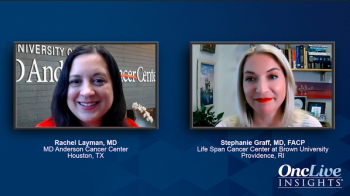
Rachel Layman, MD, describes her impression of the case and discusses risk assessment and a treatment plan for the patient.
Stephanie Graff, MD, presents a clinical case of a patient who is diagnosed with HR+ early-stage breast cancer.

An expert on HER2+ metastatic breast cancer reviews data from the DESTINY-Breast02 and DESTINY-Breast03 trials, which were updated at the 2022 San Antonio Breast Cancer Symposium.

Panelists expand upon the most important clinical factors that inform selection amongst available systemic therapy regimens in the neoadjuvant setting of HER2+ eBC, comment on the potential for treatment de-escalation in lower-risk patients, and discuss exciting treatments on the horizon.
Megan Kruse, MD, discusses the evolving treatment landscape for patients with HER2+ metastatic breast cancer.
Heather McArthur, MD, and Debu Tripathy, MD, lead a discussion on risk stratification and optimizing treatment for HER2+ early breast cancer (eBC), followed by a review of standard-of-care systemic therapy regimens in the preoperative/neoadjuvant setting.

Comprehensive insight to available gonadotropin-releasing hormone (GnRH) agonists in breast cancer and the role they play when thinking about fertility preservation.
Key opinion leaders on breast cancer management provide a broad overview of fertility preservation strategies available to patients.

Yuan Yuan, MD, PhD, discusses the OptimICE-pCR trial and other ongoing clinical trials in breast cancer being conducted at Cedars-Sinai, and expands on the role of CDK4/6 inhibitors and other novel treatment strategies for patients with hormone receptor-positive breast cancer.
Experts on HR+/HER2- breast cancer discuss unmet needs in the early-stage setting.
A panel of expert oncologists review standard-of-care treatment approaches for HR+/HER2- early breast cancer and genetic testing practices when utilizing PARP inhibitors.

Francisco Javier Esteva, MD, PhD, discusses key findings from the phase 3 NATALEE trial in patients with hormone receptor–positive, HER2-negative early breast cancer.

The FDA has approved the first and only iodine-based contrast agent iopromide-300, -370 injection for intra-arterial and intravenous contrast-enhanced mammography.

SONIA Trial Suggests Second-line Use May Be Optimal for CDK4/6 Inhibitors in HR+/HER2– Breast Cancer
The second line may be the optimal setting for patients with HR-positive, HER2-negative advanced breast cancer to receive CDK4/6 inhibitors plus an aromatase inhibitor followed by fulvestrant.

The EMA's Committee for Medicinal Products for Human Use has adopted a positive opinion regarding sacituzumab govitecan-hziy monotherapy in select patients with unresectable or metastatic hormone receptor–positive, HER2-negative breast cancer.

Erika P. Hamilton, MD, discusses the investigation of patritumab deruxtecan in heavily pretreated patients with metastatic estrogen receptor-positive or triple-negative breast cancer with varying levels of HER3 expression in a phase 2 trial.

Barbara Pistilli, MD, discusses the importance of understanding how HER2 expression can change over time when assessing target expression in metastatic breast cancer.
Focused discussion on the incidence of chemotherapy-induced menopause in patients receiving treatment for their breast cancer.
Expert oncologists Matteo Lambertini, MD, PhD, and Virginia Kaklamani, MD, DSc, reflect on the subset of patients with breast cancer who are premenopausal and how that impacts their approach to disease management.

Ezra Rosen, MD, PhD, discusses the investigation of the triplet combination of zotatifin, abemaciclib, and fulvestrant in a phase 1/2 trial in heavily pretreated patients with estrogen receptor-positive metastatic breast cancer.

Neelima Vidula, MD, discusses an ongoing phase 2 study evaluating the highly potent PARP inhibitor talazoparib in patients with somatic BRCA1/2-mutated metastatic breast cancer.
Advertisement
Advertisement
Trending on OncLive
1
Long-Term Cilta-Cel Data Show Low Rates of PFS Events in Standard-Risk R/R Myeloma
2
Single-Center, Retrospective Data Show Low Rate of Lifileucel Infusion Following Referral in Advanced Melanoma
3
Real-World Data Support Clinical Benefit With Lifileucel in Previously Treated Advanced Melanoma
4
Dr Riedell on the Long-Term Efficacy of Tisa-Cel in R/R Follicular Lymphoma
5