






Breast Cancer
Latest News
Advertisement
Latest Videos






CME Content































Advertisement
More News

Key opinion leaders detail various barriers to optimal care for patients with HR+/HER2- breast cancer, including transportation issues, financial difficulties, lack of family support, and challenges in coordinating care among different medical specialists.
A panel of experts explains the importance of a multidisciplinary team in treating HR+/HER2- breast cancer to ensure comprehensive and coordinated care throughout the patient's journey.

Paolo Tarantino, MD, discusses typical conversations oncologists should have with patients regarding the platinum chemotherapy shortage, as well as the importance of honest communication about treatment regimen changes.

Expert medical oncologists take a step into the future and discuss developments within the adjuvant setting of early-stage breast cancer they are most excited about.

Dr Kaklamani presents a profile of a patient with HER2+ breast cancer and liver metastases who had disease progression after first-line chemotherapy and a solitary new brain metastasis after second-line T-DM1.
Melinda L. Telli, MD, presents a profile of a patient with early stage breast cancer with residual nodal disease after neoadjuvant chemotherapy and surgery, whose tumor was initially HER2+ but became triple-negative after treatment.

Treatment with the all-oral triplet of tucatinib, letrozole, and palbociclib yielded clinically meaningful efficacy results and had an acceptable safety profile in patients with hormone receptor–positive, HER2-positive metastatic breast cancer.

Dr Gadi discusses recent data updates on the TROP-2–directed antibody-drug conjugate (ADC) sacituzumab govitecan (SG), including analyses performed in patients with HER2-low disease.
Experts on HR+/HER2- breast cancer discuss biomarker testing approaches, including sampling considerations and timing of testing.
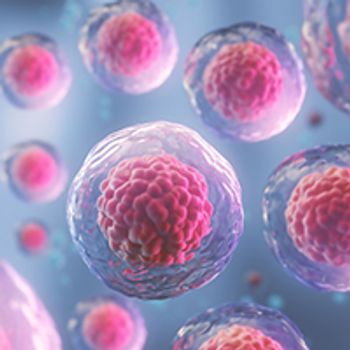
Treatment with the folate receptor–α antibody-drug conjugate BAT8006 led to responses with a manageable safety profile in patients with advanced solid tumors, including ovarian cancer, breast cancer, and cervical cancer.

Denise M. Wolf, PhD, discusses research into biomarkers predicting responses to immunotherapy in the phase 2 I-SPY2 trial in patients with early-stage breast cancer.
Stephanie Graff, MD, and Rachel Layman, MD, review common toxicities and adverse effects to watch out for with endocrine therapy and CDK4/6 inhibitors, and how to manage these.
Virginia G. Kaklamani, MD, DSc, presents a patient profile of early stage HER2+ breast cancer with residual nodal disease after neoadjuvant chemotherapy and surgery.
Expert medical oncologists talk about the impact of NATALEE trial data on their medical practice.
Experts share their go-to regimens in the third-line and higher setting of HER2+ metastatic breast cancer, and touch on the factors that support their decision-making.

Paolo Tarantino, MD, discusses how the ongoing shortages of carboplatin and cisplatin in the United States are affecting patients with breast cancer and the importance of overcoming this wave of shortages and preventing this issue from recurring in the future.

Bhuvaneswari Ramaswamy, MD, and colleagues highlight treatment for patients with HR-positive breast cancer, discuss the role of pembrolizumab plus chemotherapy in early-stage triple-negative breast cancer, and expand on unmet needs for patients with metastatic HER2-positive breast cancer.

Hemali Batra-Sharma, MD, discusses a single-institution, retrospective clinicopathologic analysis of patients with metaplastic breast cancer, findings from which were presented at the 2023 ASCO Annual Meeting.
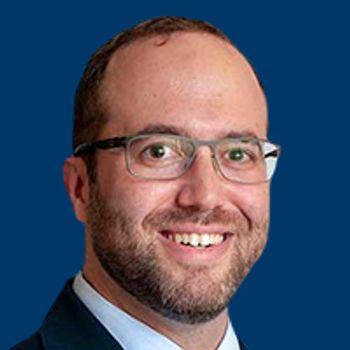
Seth Wander, MD, PhD, discusses evidence to support the investigation of PROTACs in patients with hormone receptor–positive breast cancer; preliminary efficacy and safety findings with vepdegestrant; and potential strategies for targeting acquired ESR1 resistance mutations.
Dr Vidal expands on use of PI3K/AKT/mTOR pathway inhibitors following frontline progression, focusing on the PI3K inhibitor alpelisib for patients with PIK3CA mutations, as well as capivasertib, an AKT inhibitor in development.
A focused discussion on trials that may address disease progression on first-line therapy, including those on ET and CDK4/6 inhibitor rechallenge and novel combination strategies.

Nancy U. Lin, MD, discusses selecting between systemic vs local therapy for patients with HER2-positive breast cancer displaying central nervous system metastases.

ADCs, CDK4/6 Inhibitors, and SERDs Broaden HR+ and Triple-Negative Breast Cancer Treatment Paradigms
Novel data with trastuzumab deruxtecan, sacituzumab govitecan, and ribociclib have demonstrated an influx of overall survival advantages compared with standard-of-care regimens across breast cancer patient subsets, including HER2-positive, hormone receptor–positive, and triple-negative disease.

Yara Abdou, MD, discusses treatment sequencing with CDK4/6 inhibitors across all lines of therapy in patients with hormone receptor–positive, HER2-negative breast cancer.

Debu Tripathy, MD, discusses novel therapies being developed for later-line treatment of HER2+ mBC.
Advertisement
Advertisement
Trending on OncLive
1
Long-Term Cilta-Cel Data Show Low Rates of PFS Events in Standard-Risk R/R Myeloma
2
Real-World Data Support Clinical Benefit With Lifileucel in Previously Treated Advanced Melanoma
3
Single-Center, Retrospective Data Show Low Rate of Lifileucel Infusion Following Referral in Advanced Melanoma
4
Dr Riedell on the Long-Term Efficacy of Tisa-Cel in R/R Follicular Lymphoma
5