







Breast Cancer
Latest News
Advertisement
Latest Videos





CME Content































Advertisement
More News
Jane Meisel, MD, discusses managing adverse events in patients receiving second- or third-line treatments for HER2+ metastatic breast cancer, emphasizing close monitoring, patient communication, and symptom-specific interventions.
Jane Meisel, MD, emphasizes the growing role of real-world evidence in guiding therapy sequencing for HER2+ metastatic breast cancer due to rapidly evolving treatment standards.

A nurse practitioner provides insights on toxicity management strategies for patients with lung cancer who are receiving antibody-drug conjugates.

A medical oncologist reviews the antibody-drug conjugate landscape in lung cancer.

Denise M. Wolf, PhD, discusses the methods used to conduct the I-SPY2 study and the implications that immune biomarkers could have on selecting treatment for patients with hormone receptor–positive, HER2-negative breast cancer in the future.
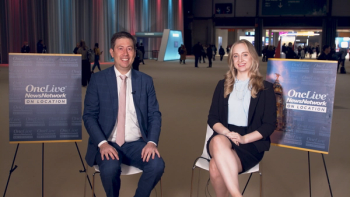
OncLive® will be LIVE with OncLive® News Network: On Location at the 2023 ESMO Congress. Each day, we will broadcast a series of interviews with top thought leaders, to learn their thoughts and reactions to data presented across oncology during the conference.

Heather Lynn McArthur, MD, MPH, discusses the primary results from the phase 3 KEYNOTE-756 study of neoadjuvant pembrolizumab plus chemotherapy in early-stage, high-risk, estrogen receptor–positive, HER2-negative breast cancer.


Datopotamab deruxtecan elicited a statistically significant and clinically meaningful improvement in progression-free survival vs chemotherapy for patients with hormone receptor-positive, HER2-low or -negative, metastatic breast cancer.

Francisco J. Esteva, MD, PhD, discusses the impact of the phase 2 MAINTAIN study of treatment with ribociclib following progression on CDK4/6 inhibition in patients with hormone receptor-positive, HER2-negative breast cancer.

Neoadjuvant pembrolizumab plus chemotherapy followed by adjuvant pembrolizumab plus endocrine therapy generated a statistically significant increase in pathologic complete response vs neoadjuvant placebo plus chemotherapy followed by adjuvant pembrolizumab and endocrine therapy in patients with high-risk, early-stage, estrogen receptor–positive, HER2-negative breast cancer.

Treatment with neoadjuvant pembrolizumab in combination with platinum-containing chemotherapy and followed by adjuvant pembrolizumab improved event-free survival compared with neoadjuvant chemotherapy alone in patients with high-risk triple-negative breast cancer.

Adjuvant treatment with the combination of abemaciclib and endocrine therapy (ET) maintained a benefit in invasive disease-free survival and distant relapse–free survival compared with ET alone in patients with hormone receptor-positive, HER2-negative, node-positive, high-risk early breast cancer.
Jane Meisel, MD, describes a personalized approach to later lines of treatment for HER2+ metastatic breast cancer, explaining the importance of considering patient priorities and individual circumstances.
Jane Meisel, MD, elaborates on the evolution and significance of the antibody-drug conjugate trastuzumab deruxtecan in treating HER2+ metastatic breast cancer, highlighting its effectiveness and considerations for its usage.

Specialists in breast cancer review toxicity management practices for T-DM1 and trastuzumab deruxtecan [T-DXd].

A breast medical oncologist provides insights on antibody-drug conjugates in the breast cancer space and discusses ongoing research.

The 2023 ESMO Congress, which is taking place in Madrid, Spain, and will continue to be accessible online via a virtual platform, is gearing up to kick off, and the oncology community is ready to learn more about the latest data across malignancies.

Francisco J. Esteva, MD, PhD, discusses the phase 3 monarchE and NATALEE trials in patients with hormone receptor–positive/HER2-negative breast cancer.
Kari Wisinski, MD, highlights the use of oral selective estrogen receptor degraders and CDK4/6 inhibitors in the treatment of patients with hormone receptor–positive/HER2-negative breast cancer, the growing role of antibody-drug conjugates across the breast cancer spectrum, and ongoing research taking place at Carbone Cancer Center.
The expert panel has a comprehensive discussion about best practices for patient education and the barriers to effective testing.
Medical oncologists review the complexities of molecular testing, including tissue exhaustion, and discuss management approaches.
Jane Meisel, MD, details the current standard-of-care for HER2+ metastatic breast cancer in the US, emphasizing personalized care and the importance of shared decision-making with patients.
Jane Meisel, MD, highlights how recent advancements in HER2+ advanced breast cancer treatments such as the introduction of tucatinib and trastuzumab deruxtecan are transforming patient care, particularly for those with brain metastases.

Elisa Krill-Jackson, MD, highlights the practice-changing effects of fam-trastuzumab deruxtecan-nxki in metastatic, HER2-positive breast cancer, as well as whether there is still a role for trastuzumab emtansine in this setting.
Advertisement
Advertisement
Trending on OncLive
1
Long-Term Cilta-Cel Data Show Low Rates of PFS Events in Standard-Risk R/R Myeloma
2
FDA Updates Axi-Cel Label to Remove Limitation of Use in R/R PCNSL
3
Real-World Data Support Clinical Benefit With Lifileucel in Previously Treated Advanced Melanoma
4
Nonresponse to Bridging Therapy and Peak ALC After Cilta-Cel Are Associated With Neurotoxicity, NRM in Myeloma
5