





Breast Cancer
Latest News
Advertisement
Latest Videos





CME Content

































Advertisement
More News

Dr Gradishar discusses the FDA approval of capivasertib plus fulvestrant for patients with advanced HR-positive, HER2-negative breast cancer harboring PIK3CA, AKT1, or PTEN alterations.

Sarah Sammons, MD, discusses the goals of treating patients with breast cancer who present with active vs stable brain metastasis.
In case you missed it, here is a recap of the most popular episodes of OncLive On Air® from 2023.

With perseverance, compassion, and energy, Ann H. Partridge, MD, MPH, has devoted her career to shrinking the gaps in research and care for young women with breast cancer and improving their outcomes and quality of life along the way.
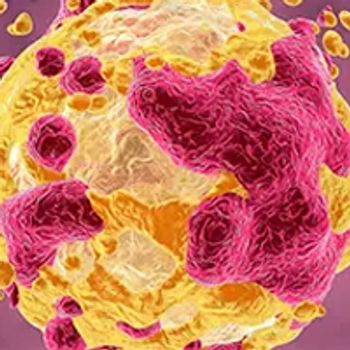
The 2023 ESMO Congress took place October 20 to 24 in Madrid, Spain, with global perspectives on groundbreaking data. We break down some of the key highlights from the annual meeting that oncology fellows should absorb, and apply to practice, as soon as possible.

Sara M. Tolaney, MD, MPH, discusses the significance of the FDA approval of capivasertib and fulvestrant in this patient population, highlights the efficacy and notable toxicities seen in the CAPItello-291 trial, and touches on key considerations when selecting between this and other standard regimens following CDK4/6 inhibitor progression.

Alisertib as monotherapy and in combination with fulvestrant stands at the forefront of the clinical investigation of selective AURKA pathway inhibition in patients with endocrine-resistant advanced breast cancer, according to Tufia C. Haddad, MD.

Komal Jhaveri, MD, FACP, discusses the rationale for investigating lasofoxifene alongside abemaciclib in ESR1-mutated estrogen receptor–positive, HER2-negative metastatic breast cancer.

Laura A. Huppert, MD, discusses the impact of sequential treatment with fam-trastuzumab deruxtecan-nxki and sacituzumab govitecan-hziy on outcomes in patients with HER2-low metastatic breast cancer, according to findings from a retrospective analysis.

Expert insights into the evolving therapeutic landscape for early-stage breast cancers, emphasizing targeted therapies and genomic testing for personalized treatment paradigms.

Tucatinib, which inhibits phosphorylation of HER2/3 resulting in inhibition of downstream MAPK and AKT signaling and cell proliferation, has shown promise for patients with brain metastases as the small molecule inhibitor of HER2 can cross the blood-brain barrier.

Adam M. Brufsky, MD, PhD, FACP, discusses the significance of the FDA approval of capivasertib in combination with fulvestrant for patients with hormone receptor-positive, HER2-negative, locally advanced or metastatic breast cancer harboring 1 or more PIK3CA, AKT1, or PTEN alterations.
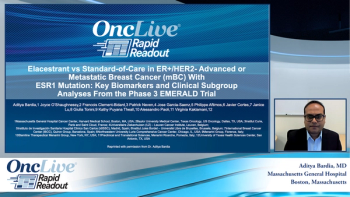
Aditya Bardia, MD, presents key data from biomarker and subgroup analyses of the EMERALD trial.

Experts provides an overview of HR-positive , HER2-negative metastatic breast cancer and current treatment approaches.

Aditya Bardia, MD, MPH, discusses key efficacy results from the phase 3 TROPION-Breast01 trial of datopotamab deruxtecan in hormone receptor–positive, HER2-negative breast cancer.

Sara M. Tolaney, MD, MPH, discusses the real-world efficacy of fam-trastuzumab deruxtecan in patients with HER2-positive or HER2-low metastatic breast cancer, including patients who experienced changes in HER2 status during the treatment course.

Beyond genomic testing, endocrine therapy response should be used to determine whether patients with hormone receptor–positive, HER2-negative, N0-1 early breast cancer.

Neoadjuvant nivolumab and non–anthracycline containing chemotherapy produced promising pathologic complete response rates regardless of whether nivolumab was administered before or during treatment with carboplatin and paclitaxel in patients with stage I to IIB triple-negative breast cancer.

Peter Schmid, MD, PhD, discusses updated event-free survival findings from the phase 3 KEYNOTE-522 trial of neoadjuvant pembrolizumab plus chemotherapy followed by adjuvant pembrolizumab in patients with early-stage triple-negative breast cancer.

Seema A. Khan, MD, discusses 5-year clinical outcomes from the ECOG-ACRIN E4112 trial, which is evaluating the use of MRI and a 12-gene expression assay to optimize local therapy for patients with ductal carcinoma in situ.

Neoadjuvant pembrolizumab combined with chemotherapy followed by adjuvant pembrolizumab compared with placebo plus chemotherapy continued to show a clinically meaningful improvement in event-free survival in patients with high-risk, early-stage triple-negative breast cancer.

Real-world data support the use of the MammaPrint index as a predictor of neoadjuvant chemosensitivity in patients with hormone receptor–positive, HER2-negative early-stage breast cancer.

Clinical, transcriptomic, and genomic differences that may contribute to aggressive tumor biology were observed between Latin-American and non-Hispanic White patients with breast cancer.

Adjuvant ado-trastuzumab emtansine continued to improve overall survival and invasive disease-free survival vs trastuzumab after 8.4 years of follow-up in patients with HER2-positive early breast cancer and residual invasive disease following neoadjuvant therapy enrolled in the phase 3 KATHERINE trial.

The brain-penetrant oral selective estrogen receptor degrader SIM0270 exhibited a favorable safety profile and early signals of antitumor activity in patients with estrogen receptor-positive, HER2-negative locally advanced or metastatic breast cancer, including those with ESR1 mutations.
Advertisement
Advertisement
Trending on OncLive
1
Single-Center, Retrospective Data Show Low Rate of Lifileucel Infusion Following Referral in Advanced Melanoma
2
Long-Term Cilta-Cel Data Show Low Rates of PFS Events in Standard-Risk R/R Myeloma
3
Real-World Data Support Clinical Benefit With Lifileucel in Previously Treated Advanced Melanoma
4
Dr Riedell on the Long-Term Efficacy of Tisa-Cel in R/R Follicular Lymphoma
5