


Gastrointestinal Cancer
Latest News
Advertisement
Latest Videos
CME Content































Advertisement
More News


Scott Kopetz, MD, PhD, FACP, associate professor, Department of Gastrointestinal Medical Oncology, Division of Cancer Medicine, The University of Texas MD Anderson Cancer Center, discusses the importance of molecular testing in colorectal cancer.
Bert H. O’Neil, MD, discusses the prevalence of neuroendocrine tumors and the agents that are used to treat patients who present with them.
Results from the regorafenib dose optimization study (ReDOS) presented at the 2018 World Congress on GI Cancer established that the strategy of escalating regorafenib from 80 mg to 160 mg per day was superior to starting at a dose of 160 mg per day.

TAS-102 (trifluridine/tipiracil; Lonsurf) continued to show consistent benefits and safety in a real-world treatment setting for patients with refractory metastatic colorectal cancer.

Eileen M. O’Reilly, MD, speaks to the progress being made with immune therapies in pancreatic cancer.

Eileen O'Reilly, MD, associate director for clinical research at Memorial Sloan Kettering Cancer Center, discusses the role of immunotherapy in the treatment of patients with pancreatic cancer.
Richard S. Finn, MD, assistant professor of medicine, Department of Medicine, Division of Hematology/Oncology, Geffen School of Medicine, University of California, Los Angeles, recaps recent second-line advancements in hepatocellular carcinoma.

Atezolizumab alone or in combination with cobimetinib failed to show superior overall survival compared with regorafenib for patients with chemorefractory metastatic colorectal cancer.

TAS-102 (trifluridine/tipiracil; Lonsurf) provided a 31% reduction in the risk of death compared with placebo in patients with heavily pretreated metastatic or advanced gastric cancer.

Second-line treatment with pembrolizumab (Keytruda) did not significantly improve overall survival or progression-free survival in patients with advanced or metastatic gastric or gastroesophageal junction cancer with a PD-L1 combined positive score ≥1.
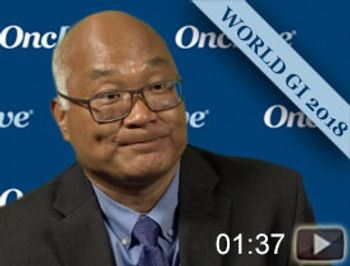
George P. Kim, MD, Orange Park Medical Center, discusses the results of the PRODIGE 37 trial in patients with pancreatic cancer.
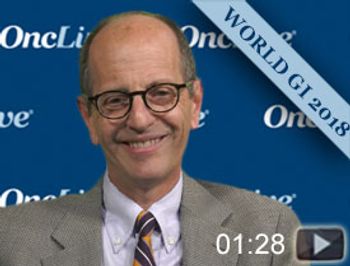
George D. Demetri, MD, director, Center for Sarcoma and Bone Oncology, senior vice president, Experimental Therapeutics, Dana-Farber Cancer Institute, professor of Medicine, Harvard Medical School, discusses the use of larotrectinib in patients with TRK-fusion gastrointestinal (GI) cancers.
Thierry Conroy, MD, discusses the PRODIGE 24/CCTG PA.6 trial and shares his insight on future research with this treatment regimen.
TAS-120 demonstrated a clinically meaningful benefit with a manageable toxicity profile in patients with cholangiocarcinoma harboring FGFR2 gene fusions, including patients who had progressed on an FGFR inhibitor.

Selective internal radiation therapy in combination with sorafenib (Nexavar) did not provide a significant survival improvement compared with sorafenib alone in patients with advanced hepatocellular carcinoma.
Advertisement
Advertisement
Trending on OncLive
1
Long-Term Cilta-Cel Data Show Low Rates of PFS Events in Standard-Risk R/R Myeloma
2
Single-Center, Retrospective Data Show Low Rate of Lifileucel Infusion Following Referral in Advanced Melanoma
3
Real-World Data Support Clinical Benefit With Lifileucel in Previously Treated Advanced Melanoma
4
Dr Riedell on the Long-Term Efficacy of Tisa-Cel in R/R Follicular Lymphoma
5