






Gastrointestinal Cancer
Latest News

Advertisement
Latest Videos


CME Content

































Advertisement
More News

Sajid A Khan MD, FACS, FSSO, discusses racial disparities with patient surgical outcomes in gastrointestinal tract cancer.

The combination of tislelizumab and chemotherapy resulted in a significant improvement in overall survival compared with chemotherapy alone in patients with locally advanced, recurrent or metastatic esophageal squamous cell carcinoma, irrespective of PD-L1 expression.

The FDA has accepted for priority review a biologics license application seeking the approval of a single priming dose of tremelimumab added to regular interval durvalumab in the treatment of patients with unresectable hepatocellular carcinoma.
Short-term radiotherapy followed by total neoadjuvant chemotherapy was found to be noninferior to long-term chemoradiotherapy in patients with locally advanced rectal cancer, according to findings from the phase 3 STELLAR study.

The FDA has granted a fast track designation to the antibody-drug conjugate CMG901 as a single-agent treatment for patients with unresectable or metastatic gastric and gastroesophageal junction cancer that is relapsed or refractory to approved therapies.

The safety, tolerability, and preliminary efficacy of the irreversible, small molecule pan-FGFR inhibitor KIN-3248 is under investigation in adult patients with advanced tumors harboring FGFR2 and/or FGFR3 gene alterations, as part of the phase 1 KN-4802 trial.

Traditional eligibility criteria for pancreatic cancer clinical trials reinforce underrepresentation of racial and ethnic minorities in clinical trial candidacy and skew standards of care in favor of non-Hispanic White participants.
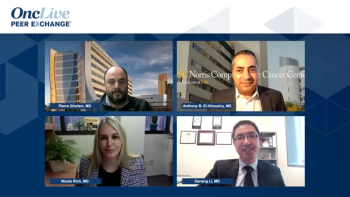
Drs Anthony B. El-Khoueiry, Daneng Li, Nicole Rich, and Pierre Gholam share treatment approaches for a 63-year-old woman who received an advanced HCC diagnosis with Child-Pugh A liver function.

Dr Nicole Rich discusses immunotherapy and potential combinations in intermediate and advanced hepatocellular carcinoma.
Key opinion leaders in gastrointestinal cancers provide insight on unmet needs and challenges in the treatment of advanced hepatocellular carcinoma in the second-line and beyond setting.

The China National Medical Products Administration has approved tislelizumab for use in patients with locally advanced or metastatic esophageal squamous cell carcinoma who have disease progression or who are intolerant to frontline standard chemotherapy.

Steven Maron, MD, MSc, discusses HER2-positive tumors in esophageal gastric cancers.
Experts in gastrointestinal cancers comment on their treatment approaches for patients with second-line advanced hepatocellular carcinoma who receive frontline TKI therapy.
Experts in gastrointestinal cancers share factors to consider when selecting the optimal second-line therapy for patients with advanced hepatocellular carcinoma.

The addition of the investigational anti-CD39 antibody TTX-030 to frontline treatment with the PD-L1 inhibitor budigalimab and mFOLFOX6 was determined to be safe and tolerable in patients with locally advanced or metastatic HER2-negative gastroesophageal junction adenocarcinoma.
Perioperative pembrolizumab plus standard of care chemotherapy followed by adjuvant pembrolizumab showed a meaningful pathological complete response rate in patients with resectable gastric and gastroesophageal junction adenocarcinoma.

The combination of nivolumab with chemotherapy elicited a higher overall survival rate compared with chemotherapy alone in patients with advanced gastric cancer, gastroesophageal junction cancer, and esophageal adenocarcinoma, regardless of tumor mutational burden (TMB) status.

Marketing authorization applications seeking the approval of tislelizumab in patients with advanced or metastatic esophageal squamous cell carcinoma following previous systemic chemotherapy and in select patients with non–small cell lung cancer have been submitted to the European Medicines Agency.
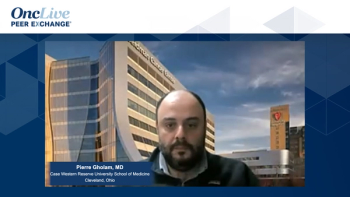
Pierre Gholam, MD, comments on systemic immunotherapy options for second-line and beyond treatment of advanced hepatocellular carcinoma.
Anthony B. El-Khoueiry, MD, reviews anti-angiogenic systemic therapy options for patients with advanced HCC in the second-line and beyond setting.

The European Commission has approved the dual immunotherapy combination of nivolumab and ipilimumab for use in the frontline treatment of adult patients with unresectable advanced, recurrent or metastatic esophageal squamous cell carcinoma who had a PD-L1 expression of 1% or higher on tumor cells.

The European Commission has approved nivolumab in combination with fluoropyrimidine- and platinum-based chemotherapy for the frontline treatment of adult patients with unresectable advanced, recurrent or metastatic esophageal squamous cell carcinoma with a PD-L1 expression of 1% or higher on tumor cells.

Distinctions in histology, molecular profiles, and tumor location have set diverging course of care for the treatment of patients with gastrointestinal cancers.
An expert gastroenterologist, Dr Pierre Gholam, discusses the phase 3 LAUNCH trial and shares insight on the potential role of liver-directed therapy in the treatment of advanced hepatocellular carcinoma.
Daneng Li, MD, discusses novel regimens in the pipeline being evaluated for the treatment of frontline advanced HCC.
Advertisement
Advertisement
Trending on OncLive
1
Single-Center, Retrospective Data Show Low Rate of Lifileucel Infusion Following Referral in Advanced Melanoma
2
Real-World Data Support Clinical Benefit With Lifileucel in Previously Treated Advanced Melanoma
3
Long-Term Cilta-Cel Data Show Low Rates of PFS Events in Standard-Risk R/R Myeloma
4
Dr Riedell on the Long-Term Efficacy of Tisa-Cel in R/R Follicular Lymphoma
5