



Gastrointestinal Cancer
Latest News

Advertisement
Latest Videos

CME Content































Advertisement
More News
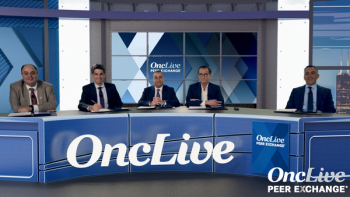
Taking into account respective data from IMbrave150 and HIMALAYA, experts consider how they might select frontline therapy for advanced HCC.
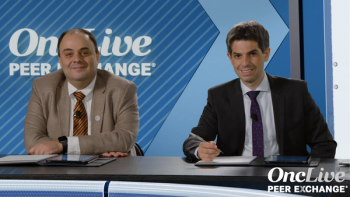
Shared insight on combination durvalumab + tremelimumab as frontline therapy for advanced HCC in the context of data from the HIMALAYA trial.

Centering discussion on a patient with advanced-stage HCC, expert panelists discuss the frontline use of atezolizumab + bevacizumab as a standard of care.

Alok A. Khorana, MD, discusses on-the-rise pancreatic and biliary cancer rates in younger patients, plus the rationale of potential future research into the role of the gut microbiome in these patients.

The FDA has deferred action on the biologics license application seeking the approval of tislelizumab as a second-line treatment in patients with unresectable or metastatic esophageal squamous cell carcinoma, citing the inability to conduct required inspections in China because of travel restrictions associated with COVID-19.
Panelists consider the role of systemic therapy in patients with intermediate-stage HCC who are ineligible for locoregional therapy.
The FDA has granted a fast track designation to abelacimab for the treatment of thrombosis associated with cancer.

Thierry André, MD, discusses the results of the phase 1 GARNET study with dostarlimab and the significance of these findings for patients with mismatch repair–deficient/microsatellite instqability–high solid tumors.
Locoregional Treatment Strategies in Early-/Intermediate-Stage HCC Locoregional Treatment Strategies in Early-/Intermediate-Stage HCC
Expert oncologists consider when it would be appropriate to use neoadjuvant therapy for early-/intermediate-stage hepatocellular carcinoma.
Patients with previously treated metastatic HER2-positive colorectal cancer experienced clinically meaningful and durable responses to treatment with tucatinib plus trastuzumab, according to data from the phase 2 MOUNTAINEER trial.

Tremelimumab/Durvalumab Produces Favorable OS Benefit in Unresectable HCC Irrespective of ALBI Grade
A single priming dose of tremelimumab added to regular interval durvalumab generated significantly improved overall survival compared with sorafenib in the frontline setting for patients with unresectable hepatocellular carcinoma, irrespective of of their baseline albumin-bilirubin grade, according to updated data from the phase 3 HIMALAYA trial.
Philip A. Philip, MD, PhD, FRCP, discusses unmet needs for patients with pancreatic cancer, emerging targets and agents in the space, and his hopes for future developments in the field.
The combination of tislelizumab and chemotherapy demonstrated a superior overall survival benefit compared with chemotherapy alone in patients with metastatic or unresectable esophageal squamous cell carcinoma

The addition of durvalumab to gemcitabine and cisplatin demonstrated an improvement in overall survival vs gemcitabine and cisplatin plus placebo as frontline therapy in patients with advanced biliary tract cancer, regardless of primary tumor location.

The combination of botensilimab and balstilimab elicited deep objective responses with evidence of durability and encouraging tolerability in heavily pretreated patients with microsatellite stable, metastatic colorectal cancer.
A brief discussion on the risks of neoadjuvant immunotherapy in early-/intermediate-stage HCC with regard for liver transplantation candidacy.
Centering discussion on a patient with early/intermediate-stage HCC, expert panelists consider the roles of transplant, resection, and adjuvant therapy, respectively.

The addition of the HER2-Vaxx vaccine to standard-of-care chemotherapy led to a significant improvement in overall survival vs SOC chemotherapy alone in patients with HER2-neu overexpressing advanced and metastatic gastric and gastroesophageal junction cancer.
Gregory Botta, MD, PhD, discusses unmet needs in the salvage setting of gastrointestinal cancers.

Alok Khorana, MD, discusses increasing rates of young-onset pancreatobiliary adenocarcinoma.
Lacey J. Padrón, PhD, discusses biosignatures found in a phase 2 study in pancreatic cancer.
Dr Khan expands on key data found on racial disparities in surgical outcomes for gastrointestinal tract cancer and addresses the need to reduce the gap in these outcomes.

HPN328, a novel half-life extended DLL3-targeting T-cell engager, demonstrated clinical activity and tolerability in patients with pretreated small cell lung cancer and other neuroendocrine tumors, according to findings from a phase 1/2 study (NCT04471727).
Gregory Botta, MD, PhD, discusses the rationale for investigating CT041 in patients with advanced gastric and pancreatic cancers in a phase 1b trial.
Advertisement
Advertisement
Trending on OncLive
1
Single-Center, Retrospective Data Show Low Rate of Lifileucel Infusion Following Referral in Advanced Melanoma
2
Long-Term Cilta-Cel Data Show Low Rates of PFS Events in Standard-Risk R/R Myeloma
3
Real-World Data Support Clinical Benefit With Lifileucel in Previously Treated Advanced Melanoma
4
Dr Riedell on the Long-Term Efficacy of Tisa-Cel in R/R Follicular Lymphoma
5