





Gastrointestinal Cancer
Latest News
Advertisement
Latest Videos





CME Content































Advertisement
More News

Zev A. Wainberg, MD, discusses the potential role of neoadjuvant chemotherapy in pancreatic cancer.

The FDA has granted a breakthrough therapy designation to the FGFR inhibitor futibatinib for the treatment of patients with previously treated, locally advanced or metastatic cholangiocarcinoma that harbors FGFR2 gene rearrangements, including fusions.
Experts discuss emerging data in immunotherapy combination approaches for the treatment of advanced HCC.
A summary of updates that explore ongoing data from various frontline combinations in unresectable HCC.
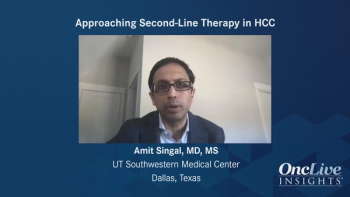
Amit Singal, MD, shares his thoughts on approaching second-line therapy for HCC (hepatocellular carcinoma) after first-line atezolizumab-bevacizumab as well as options for patients with Child-Pugh B disease who are ineligible for frontline atezolizumab-bevacizumab.
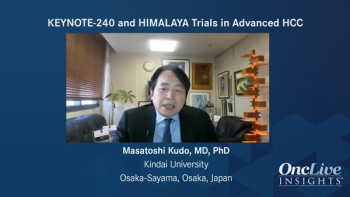
A review of currently available ongoing data for unresectable HCC (hepatocellular carcinoma), including data from the HIMALAYA trial.
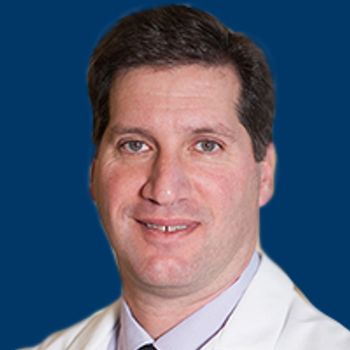
Investigators are seeking to determine the optimal protocol for monitoring patients with pancreatic cysts to better identify neoplasms that are more likely to become malignant.
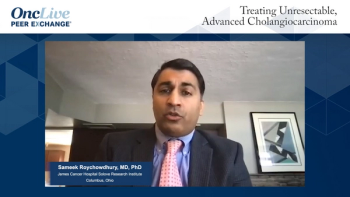
Treatment recommendations, including supportive care options and the role of liver-directed therapy for patients with an unresectable, advanced bile duct cancer.
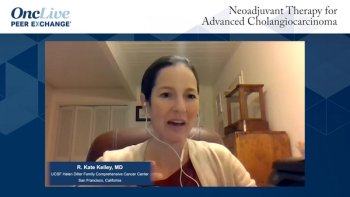
An overview of potential options, as well as trials, further exploring neoadjuvant approaches for the management of patients with advanced cholangiocarcinoma.

A regimen comprised of a single 300-mg priming dose of tremelimumab and 1500 mg of durvalumab every 4 weeks yielded favorable efficacy and an acceptable safety profile in patients with advanced HCC.
Options for systemic treatment for patients with hepatocellular carcinoma have significantly expanded since 2017, when the sole available option was sorafenib. Now, the arsenal includes checkpoint inhibitors, targeted therapies, and combinations of both classes of drugs.

Although the combination of atezolizumab and bevacizumab has become the standard frontline treatment for patients with advanced hepatocellular carcinoma, whether immunotherapy could play a role in earlier lines of treatment remains the subject of ongoing research.

Combinations of checkpoint inhibitors and VEGF TKIs, as well as dual checkpoint blockade, are affording patients with advanced hepatocellular carcinoma greater potential for disease control and deep, long-lasting responses, underscoring the need for biomarkers of response to combination regimens and single-agent TKIs, the latter of which still play a role for select populations.

Amit Singal, MD, discusses downstaging strategies for patients with hepatocellular carcinoma.
An examination of the use of second-line therapies after atezolizumab-bevacizumab, and the role of TKIs for the treatment of advanced HCC.

Experts expand on treatment strategies and sequencing approaches used for Child-Pugh B liver disease.
Amit Singal, MD, MS, and Stephen L. Chan, MD, review the IMbrave150, LEAP-002, and CheckMate 9DW trials for unresectable hepatocellular carcinoma.
Stephen L. Chan, MD, reviews data from key trials of emerging combinations of TACE (transarterial chemoembolization), plus systemic therapies for BCLC (Barcelona Clinic Liver Cancer) stage B or C hepatocellular carcinoma.
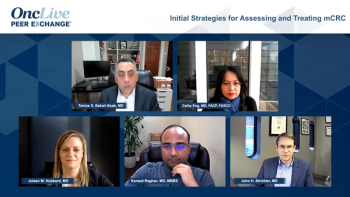
Experts in gastrointestinal oncology highlight their approaches to assessing patients with newly diagnosed metastatic colorectal cancer and explain the variables that factor into first-line treatment decisions.

Riad Salem, MD, discusses outcomes with TheraSphere™ Yttrium-90 Glass Microsphere as a bridging therapy prior to transplantation in hepatocellular carcinoma.

Racial disparities affecting all aspects of patient care are a major issue across cancer types, including for patients with gastrointestinal cancers.

Namrata (Neena) Vijayvergia, MD, discusses the emerging role of immunotherapy in resectable and metastatic esophageal and gastric cancers, as well as key nuances that could complicate these agents’ utility in clinical practice.

The pipeline of new agents in gastrointestinal cancers is robust, with the emergence of several antibody-drug conjugates, KRAS G12C inhibitors, and novel TKI/immune checkpoint inhibitor combinations.
Riad Salem, MD, discusses considerations for selecting the appropriate treatment approach for patients with hepatocellular carcinoma.

Michael A. Choti, MD, discusses challenging treatment decisions in patients with neuroendocrine tumors.
Advertisement
Advertisement
Trending on OncLive
1
Long-Term Cilta-Cel Data Show Low Rates of PFS Events in Standard-Risk R/R Myeloma
2
FDA Updates Axi-Cel Label to Remove Limitation of Use in R/R PCNSL
3
Real-World Data Support Clinical Benefit With Lifileucel in Previously Treated Advanced Melanoma
4
Single-Center, Retrospective Data Show Low Rate of Lifileucel Infusion Following Referral in Advanced Melanoma
5